
Creality Filament Dryer Box 4 Spools
4.6Editor score
Dual heating chambers
Holds 4 spools
High-temperature capability
This guide compares the top filament dryer for 3D printing to help you choose the best model for drying and storing your printing materials effectively.
Filament dryers are essential tools for maintaining print quality by removing moisture from sensitive materials. They prevent defects like stringing and ensure consistent performance during your 3D printing projects.
We compared ten top models based on capacity, heating technology, and user feedback to find the most effective solutions. Each product offers unique features designed to meet different storage and drying needs.
Each pick highlights key specifications and real-world performance to help you make an informed decision. Prices and availability may change, so verify current details before purchasing your next filament dryer.
4.6Editor score
4.4Editor score

4.3Editor score
This side-by-side comparison highlights the core specifications of each model to help you identify the best fit for your specific printing and storage requirements.



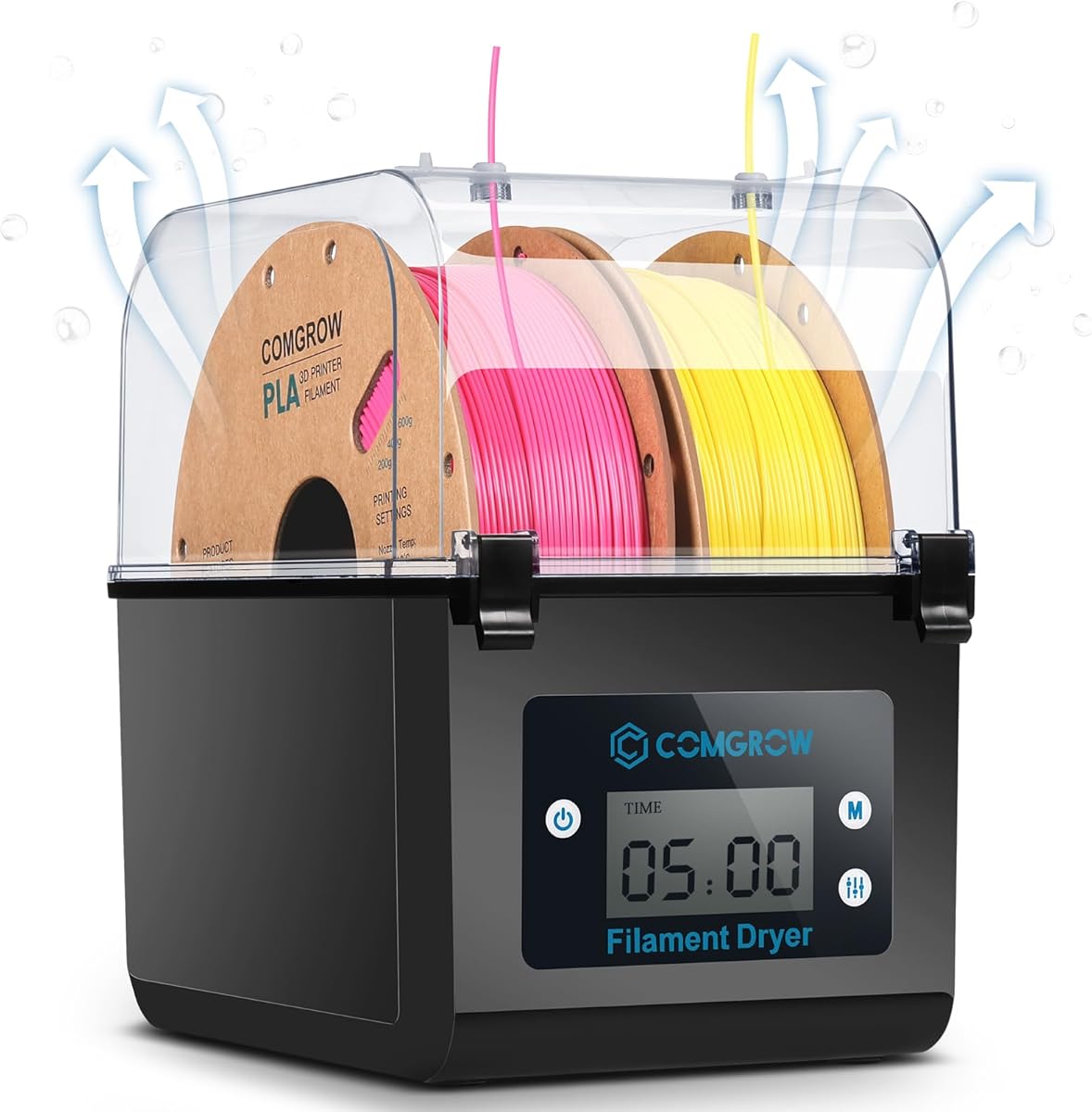
The Comgrow 3D Printer Filament Dryer Box offers a robust solution for users seeking reliable moisture removal. It holds two standard spools and features a clear LCD for monitoring conditions during drying.
We may earn a commission when you buy through this link, at no additional cost to you.
Its large storage volume allows for drying two 1kg spools simultaneously. The adjustable temperature and timer settings make it adaptable for various materials like PLA and ABS. The sealed design ensures consistent dryness.
While effective, the maximum temperature of 50°C might limit its use with high-temperature filaments. Additionally, troubleshooting requires checking the motherboard manually. These are minor trade-offs for the price.
Ideal for hobbyists needing dual-spools drying and storage in a compact form. The straightforward controls and decent sealing make it a practical choice for regular printing workflows.
The box accommodates two 1kg spools at once, saving time when managing multiple filament types.
Real-time temperature and humidity readings help you maintain optimal drying conditions without guesswork.
We may earn a commission when you buy through this link, at no additional cost to you.
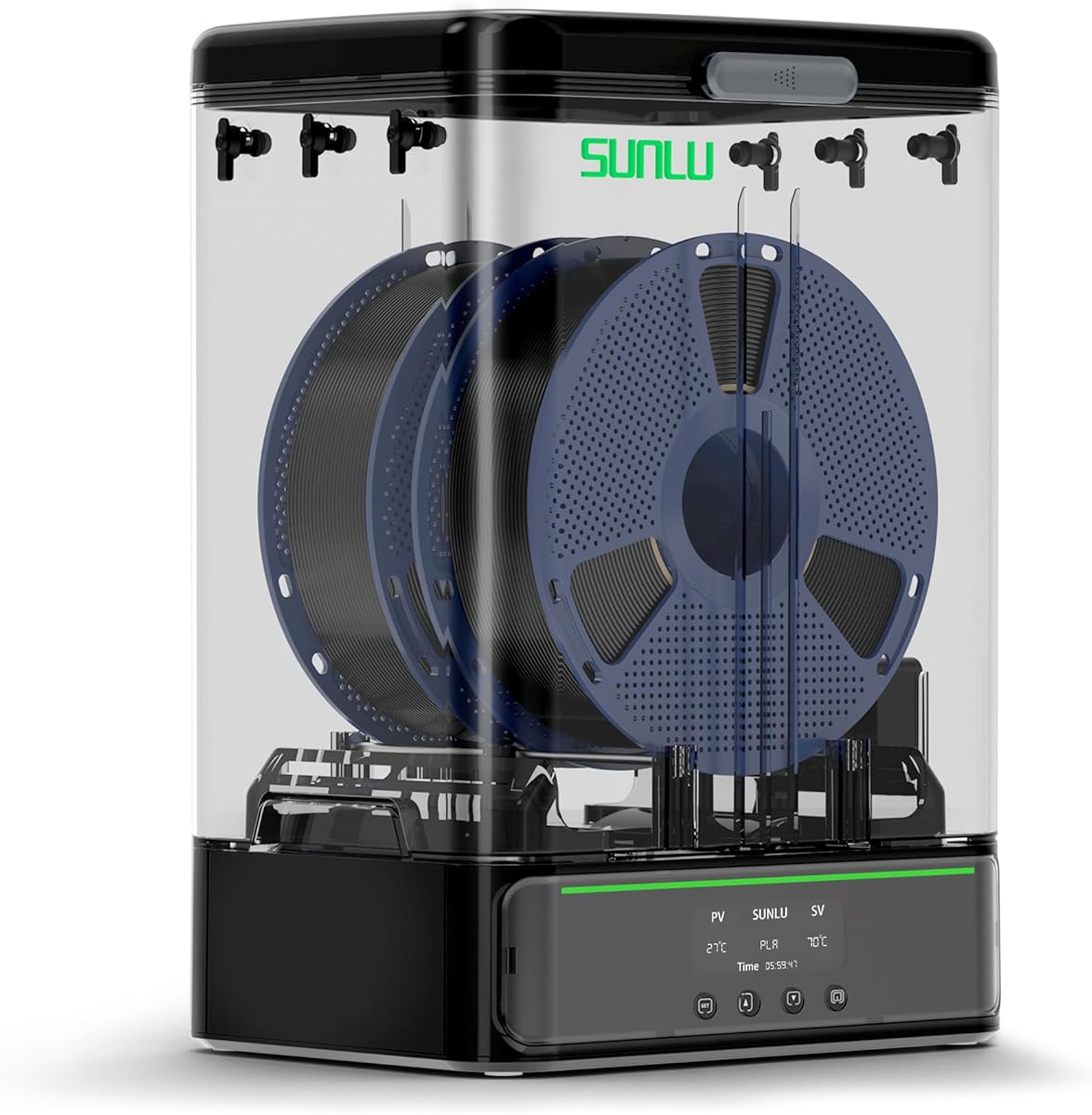
The SUNLU Filament Dryer Box 2026 delivers efficient drying with a new fan design. It speeds up water removal and prevents wet filament issues with simple touch controls.
We may earn a commission when you buy through this link, at no additional cost to you.
Its fan enhances airflow to discharge excess water faster than passive models. The adjustable temperature range suits various materials. Visual monitoring ensures you track progress easily.
It only holds one spool which limits volume for large users. The controls are simple but less advanced than higher-end models. Still, it remains effective for single-spools users.
Great for entry-level users needing an affordable dryer with reliable results. The fan upgrade and clear display make it a strong choice for basic drying needs.
The upgraded fan accelerates moisture removal, improving drying speed for standard filaments.
An LCD screen displays temperature and time, letting you adjust settings without opening the box.
We may earn a commission when you buy through this link, at no additional cost to you.
The Creality Filament Dryer Box 4 Spools is designed for high-volume users with dual heating chambers. It reaches 85°C and supports advanced filaments with a precise touch UI.
We may earn a commission when you buy through this link, at no additional cost to you.
Its dual chambers dry 30% faster than single units. The capacity for four spools or two large ones is ideal for studios. High heat unlocks advanced materials like PC.
While the price and size are higher, the efficiency justifies the investment for professionals. The illuminated window allows monitoring without breaking the seal. It is a top-tier choice.
Perfect for serious makers needing maximum capacity and temperature range. The advanced heating and storage features ensure high-quality prints for complex projects.
Holds four 1kg spools for efficient drying of large batches without manual reloading.
Dual 200W chambers reach 85°C, suitable for high-performance materials like PC and ASA.
We may earn a commission when you buy through this link, at no additional cost to you.
The SUNLU S4 3D Printer Filament Dryer supports up to four spools with eight exit holes. Its 350W heater and three fans ensure even drying across all filaments.
We may earn a commission when you buy through this link, at no additional cost to you.
Designed for multi-printer setups, it allows direct feeding from multiple outlets. The large internal volume accommodates standard and custom spools well. The high-power heater ensures consistent temperatures.
Its physical size and weight make it less portable. Setup requires some space planning. However, for a studio environment, its capacity and efficiency are unmatched.
Ideal for labs or workshops running multiple printers simultaneously. The eight outlets and large capacity make it a practical workhorse for high-volume operations.
Eight exit holes allow you to connect multiple printers to one dryer at once.
The 350W PTC heater provides 50% higher efficiency, ensuring fast and even drying.
We may earn a commission when you buy through this link, at no additional cost to you.
The Creality Space PI Dryer Plus offers one-key presets for 12 filament types. Its PTC heater and 360° hot-air ensure uniform drying with a large touch interface.
We may earn a commission when you buy through this link, at no additional cost to you.
Custom presets simplify setup for common materials. The touch screen supports both Celsius and Fahrenheit readings. The real-time humidity monitor helps track moisture levels accurately.
It lacks support for high-temperature materials above 70°C. However, for standard materials, its speed and ease of use are excellent. It balances features and simplicity.
Best for users who want easy one-touch drying for common filaments. The preset system and clear display make it very user-friendly for daily tasks.
Select from 12 presets to automatically set the correct temperature for your material.
Circulating hot air ensures even drying across the spool, preventing cold spots.
We may earn a commission when you buy through this link, at no additional cost to you.
The Polymaker Polydryer combines heating and sealed storage to maintain dryness throughout printing. It includes a hygrometer to monitor humidity accurately during use.
We may earn a commission when you buy through this link, at no additional cost to you.
Its connected design minimizes exposure to ambient moisture when moving spools. The hygrometer lets you verify dry conditions before printing. Sealed storage protects between sessions.
It does not feature an internal fan like some models, which may slow airflow. Also, it handles one spool. Despite this, the sealing quality is robust.
Great for users prioritizing long-term storage alongside drying. The integrated hygrometer and seal make it a solid choice for humidity-sensitive environments.
Move filament from dryer to printer without breaking the sealed environment.
Built-in hygrometer helps track humidity levels to ensure filament remains dry.
We may earn a commission when you buy through this link, at no additional cost to you.
The Creality Space Pi SE features thermal insulation to maintain heat and ensure safety. It reaches 65°C quickly and displays real-time humidity with a countdown timer.
We may earn a commission when you buy through this link, at no additional cost to you.
Its insulation keeps the chamber warm, reducing energy use. The knob and screen make operation simple. Humidity monitoring helps avoid under-drying or over-drying issues.
You must manually store the filament in a vacuum bag after drying for best results. This adds a step compared to built-in storage models. It remains efficient for its size.
Perfect for small workspaces needing a compact dryer. The quick heating and clear display make it suitable for occasional or regular printing sessions.
Insulation cotton retains heat, keeping the chamber safe and energy-efficient.
Real-time humidity readings help you verify filament readiness before printing.
We may earn a commission when you buy through this link, at no additional cost to you.
The SUNLU S4 offers four spool capacity with three circulation fans for consistent heat. Its 350W heater and eight exit holes support multi-printer workflows.
We may earn a commission when you buy through this link, at no additional cost to you.
The fans ensure temperature consistency across all spools. The design allows direct feeding for multiple machines. The high efficiency reduces drying time significantly.
Its size and weight require dedicated space and handling. This may not suit small desks. However, the capacity and output make it ideal for studios.
Best for multi-printer setups requiring high throughput. The eight exit holes and large capacity streamline workflow and reduce manual handling.
Three high-quality fans ensure even heating across the entire chamber.
Eight filament exits support feeding multiple printers simultaneously from one dryer.
We may earn a commission when you buy through this link, at no additional cost to you.
The SUNLU SP2 handles large 3kg spools with rapid 15-minute heating. Its detachable design lets you seal storage after drying to keep filament fresh.
We may earn a commission when you buy through this link, at no additional cost to you.
The base holds larger spools securely with rollers. The 250W PTC heater provides quick warmup. The lid seals well to protect filament between uses.
While it holds large spools, only one at a time. The heater requires stable power. Still, the quick heat and seal make it practical for larger filament rolls.
Ideal for users with large spools needing fast drying. The ability to dry and seal in one unit saves time and space.
The 250W PTC heater reaches 70°C in just 15 minutes for quick drying.
Rollers support 3kg spools as well as smaller 250g options.
We may earn a commission when you buy through this link, at no additional cost to you.
The SUNLU S2 is a user-friendly dryer with a spindle to ensure even drying. It reaches 70°C and lets you check filament through the translucent lid.
We may earn a commission when you buy through this link, at no additional cost to you.
The spindle spins filament continuously, preventing uneven moisture removal. The touch screen simplifies temperature and time settings. It effectively revives old damp filament.
Its single spool limit and basic features restrict complex workflows. However, for standard users, the spindle and easy interface are highly effective and reliable.
Great for beginners or those with limited needs. The simple operation and effective drying make it a cost-efficient solution for filament care.
Built-in spindle rotates filament for even heat distribution and consistent results.
Translucent lid lets you monitor filament without opening the dryer.
We may earn a commission when you buy through this link, at no additional cost to you.
Choosing the right filament dryer involves evaluating key factors like capacity, heating technology, and control features. Below are essential considerations to help you find the perfect match for your needs.
Capacity determines how many spools you can dry simultaneously. If you print with multiple materials or large batches, look for models holding two or more spools.
For compact setups, single spool models work well. Measure your workspace to ensure the unit fits without obstruction.
PTC heaters are energy-efficient and heat faster than traditional elements. Models with internal fans ensure even airflow, preventing hot spots.
Check if the heater supports your material range. Higher temperatures are needed for advanced filaments like ABS or PC.
Standard PLA and PETG need lower heat around 45-60°C. Advanced materials may require up to 80°C. Ensure the dryer covers your required range.
Adjustable settings allow precise control. Look for units with clear displays to monitor real-time temperatures.
Touch screens offer precise settings but may be more complex. Knobs and buttons are simpler to operate for quick changes.
Some models include preset settings for common materials. This simplifies the process for beginners or frequent users.
Integrated storage with sealing lids keeps filament dry after drying. Models with desiccant support add extra protection against humidity.
Check for quality seals and plugs. Good sealing prevents re-absorption of moisture when not actively drying.
Multiple exit holes allow feeding from different angles or multiple printers. Teflon tubes ensure smooth filament feeding without friction.
For single printers, a simple exit works fine. Multi-exit designs are better for shared workspaces.
Thermal insulation and robust materials ensure safety and long-term use. Insulated walls prevent external heat loss.
Check warranty and support options. A reliable brand offers better after-sales service for troubleshooting.
Built-in hygrometers show internal humidity levels. This helps you verify filament dryness without opening the box.
Real-time monitoring ensures you dry filament correctly. It prevents under-drying or over-drying issues.
Before use, ensure your filament dryer is placed on a flat surface. Remove any internal packing materials and connect the power supply securely. Check the exit ports are clear.
Set the temperature and timer according to your filament type. Most filaments require 45-60°C. Load the spool and secure the lid properly. Start the dryer and monitor progress.
After drying, let the filament cool inside before handling. Store unused filament in sealed bags or the dryer. Clean the box occasionally to prevent dust buildup.
Drying time varies by humidity and material. Typically, 2 to 6 hours are sufficient for PLA and PETG. High-absorption materials like Nylon may require longer times. Always check real-time monitoring for best results.
Yes, most modern dryers allow printing while drying. The sealed box feeds filament directly to the printer. Ensure the exit tube is aligned correctly to prevent tangling or friction.
Set the temperature based on filament type. PLA and PETG generally need 45-60°C. ABS and Nylon may require 60-80°C. Check manufacturer guidelines to avoid damaging materials.
Yes, by reviving damp filament and preventing print failures. They extend spool life and reduce waste. Consistent prints mean less time wasted on reprints and troubleshooting.
Yes, models like the SUNLU S4 or Creality Space X4 support multiple spools. They have larger chambers and multiple exits. These are ideal for users with diverse filament needs.
Unplug the unit and let it cool completely. Remove the spool holder and clean the interior with a dry cloth. Avoid water inside the chamber to prevent electrical damage.
Choosing the right filament dryer ensures consistent print quality and longer filament life. Our top picks include the Comgrow for general use and the SUNLU S4 for multi-printer setups.
Prioritize capacity and temperature range based on your specific materials. High-temperature users should look for models with 80°C+ capabilities to handle advanced filaments.
Always verify current availability and specifications before purchasing. These models are reliable tools for maintaining optimal filament conditions across all 3D printing projects.