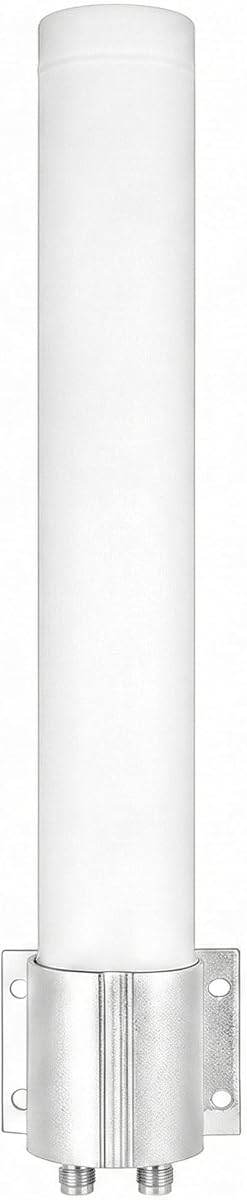
Pro-Gain 2.4G/5.8G MIMO WIFI Antenna
4.8Editor score
8dBi high gain dual-band MIMO
UV-resistant fiberglass enterprise durability
Optimized for remote and rural areas
This expert guide compares the top marine WiFi antennas for boats, yachts, and coastal setups to help you choose the best signal booster for reliable connectivi
Maintaining reliable internet connectivity on the water is essential for modern boaters who need navigation updates, weather alerts, and communication with shore. A high-quality marine WiFi antenna extends your network range significantly, allowing you to connect to distant shore-based hotspots while anchored or cruising near coastlines.
We evaluated ten leading marine WiFi antennas based on signal gain, durability against saltwater and UV exposure, frequency compatibility, and ease of installation. Our analysis focuses on models specifically designed for marine environments to ensure they withstand harsh conditions while delivering consistent performance for routers and mobile devices.
Each product review highlights key specifications, pros and cons, and ideal use cases to help you match the right antenna to your vessel and connectivity needs. Please note that prices and availability can change frequently on Amazon, so verify current details before purchasing to ensure you get the best value for your investment.
4.8Editor score

5.0Editor score

4.2Editor score
The following table provides a side-by-side comparison of all ten marine WiFi antennas reviewed in this guide, highlighting their key specifications, compatibility, and unique features to help you make an informed decision.


The Poynting Omni-496 stands out as the top choice for serious boaters needing reliable long-range WiFi connectivity on the water. With a perfect 5.0 rating and comprehensive dual-band support, it delivers exceptional performance for both current and future Wi-Fi standards like Wi-Fi 7 and 5G. Its marine-specific engineering ensures it thrives in harsh saltwater environments where generic antennas would fail quickly.
We may earn a commission when you buy through this link, at no additional cost to you.
This antenna supports frequencies from 2.4 GHz up to 7.2 GHz, making it future-proof for emerging wireless technologies. The 8 dBi gain significantly boosts signal strength to connect with distant shore stations. Certified IP68 waterproof and resistant to UV and salt spray, it maintains performance even in stormy conditions or after prolonged exposure to the elements.
While it is priced higher than consumer-grade options, the investment is justified by its durability and specialized marine mounting bracket. You will need to source an N-Type to SMA adapter if your router uses standard connectors, which adds a small complexity to installation. However, the reliability and signal quality make these trade-offs acceptable for professional or frequent marine users.
If you own a yacht or cruiser and need to stay connected while offshore, this is the antenna we recommend without hesitation. It bridges the gap between consumer WiFi routers and professional marine communications. For those prioritizing longevity and consistent connectivity over initial cost, the Omni-496 offers the best value in this category.
By supporting bands up to 7.2 GHz, this antenna prepares your network for upcoming Wi-Fi 7 devices without needing replacement.
Constructed with UV and saltwater resistance, the housing withstands corrosion and degradation common in coastal environments.
We may earn a commission when you buy through this link, at no additional cost to you.
The Pro-Gain 2.4G/5.8G MIMO WIFI Antenna is engineered for challenging environments where standard signals struggle to penetrate obstacles. Its 8dBi gain combined with advanced MIMO technology ensures consistent data speeds even in remote marinas or valleys where interference is high. This makes it ideal for boaters who also use remote offices or work from anchorages with weak coverage.
We may earn a commission when you buy through this link, at no additional cost to you.
Built from UV-resistant architectural fiberglass, this antenna is rated for extreme temperatures and all-weather operation. The VSWR under 1.8 minimizes signal reflection, allowing more power to reach the router for better throughput. Its omni-directional pattern means you do not need to realign it during high winds, providing true set-and-forget convenience.
The package includes a manual and mounting hardware but recommends specific low-loss cables for optimal performance. Proper installation using KMR240 cables and silicone tape at connections is key to achieving the advertised speeds. While the initial setup requires attention to detail, the resulting stability for video calls and large file transfers is worth the effort.
For users needing reliable throughput for multiple devices simultaneously, this antenna outperforms many competitors. It is perfect for enterprise routers or advanced DIY hotspots. If you demand professional-grade connectivity for work or entertainment on the water, the Pro-Gain MIMO antenna delivers the robust performance you need.
The low VSWR rating ensures minimal power loss, maximizing the range and speed of your WiFi signal.
Supporting over 10 devices at once, it prevents lag during critical meetings or streaming sessions.
We may earn a commission when you buy through this link, at no additional cost to you.
The 4G/WiFi/GPS 3-in-1 Combination Antenna offers an affordable entry point for boaters needing basic connectivity and positioning. With a 4.2 rating, it combines cellular, WiFi, and GPS signals into one rugged marine puck, simplifying deck space usage. This makes it an excellent choice for smaller vessels where installing multiple antennas is impractical.
We may earn a commission when you buy through this link, at no additional cost to you.
Designed for through-hole mounting, installation is straightforward and requires minimal tools. The included 24-inch leads reduce the need for extra cabling, keeping the setup neat. While it does not offer the massive range of higher-gain units, it provides reliable baseline connectivity for modern devices within reasonable proximity to shore.
The trade-off is that you cannot independently optimize each signal band since they are integrated into one unit. However, for casual users needing basic internet and navigation data, this simplification is a benefit. The weatherproof construction ensures it survives rain and spray without degradation over time.
If you are looking for a cost-effective solution that covers multiple needs without complexity, this antenna fits the bill. It is particularly suitable for kayaks, sailboats, or budget-conscious cruisers. For those prioritizing simplicity and low cost over maximum range, this 3-in-1 antenna is a solid choice.
Combining three functions into one puck saves valuable deck space and reduces cable clutter on small vessels.
The compact outdoor puck design withstands marine conditions without requiring additional protective housing.
We may earn a commission when you buy through this link, at no additional cost to you.
The Poynting OMNI-496 Coastal variant is specifically tuned for marine and coastal frequency bands, making it ideal for anchorages near populated shorelines. With a 4.7 rating, it delivers solid performance for both 2.4 GHz and 5 GHz networks commonly used by public hotspots. Its design focuses on reliable signal capture in environments where water interference is significant.
We may earn a commission when you buy through this link, at no additional cost to you.
This model operates across 2.4 GHz to 6.0 GHz, covering most standard Wi-Fi bands plus LTE frequencies. The 7.5 dBi gain is sufficient for connecting to nearby stations without overwhelming your router. It is weatherproof with an IP68 rating, ensuring it stays functional even during heavy rain or sea spray exposure.
The mounting hardware uses a standard 1-inch marine adapter, but note that the bracket is not included with the purchase. You will also need to source the appropriate N-Type connector cable separately. These small additions are common in professional setups but should be considered when budgeting for the total installation cost.
For boaters primarily docking near towns or marinas, this antenna provides the right balance of performance and cost. It simplifies connectivity planning by focusing on the bands most likely to be available. If you need a dedicated marine antenna that handles coastal networks effectively, this OMNI-496 variant is a dependable choice.
Tuned to the specific bands found in coastal regions, this antenna maximizes your chances of locking onto available signals.
With an IP68 rating, the housing protects internal components from water ingress in heavy storms.
We may earn a commission when you buy through this link, at no additional cost to you.
The ALFA AOA-2458-59-TF delivers a potent 9 dBi gain for long-range outdoor WiFi connectivity at a competitive price point. Boasting a 4.6 rating, it is built from lightweight fiberglass that resists corrosion and maintains stability in wind. While marketed for outdoor use generally, many boaters adapt it for marine setups to extend signal reach from distant access points.
We may earn a commission when you buy through this link, at no additional cost to you.
Its integrated N-Female connector simplifies attachment to your router or extender without needing extra adapters. The antenna is weatherproof, making it suitable for roof or mast mounting where it faces the elements. This gain level allows you to pull signals from further away than typical stock antennas, improving download speeds in low-coverage areas.
Because it is not explicitly marine-certified, you should ensure all connections are sealed properly against salt spray. You will also need to purchase a coaxial cable separately to complete the setup, which is a standard requirement for this type of antenna. These steps add slight complexity but are manageable for most DIY installers.
For those wanting a significant range boost without spending a fortune on specialized marine hardware, this ALFA unit is a strong contender. It works well for RVs and boats that dock in semi-rural areas. If your priority is raw signal strength and cost efficiency, this antenna provides excellent value.
The 9 dBi gain significantly improves reach, allowing you to connect to WiFi sources several hundred feet away.
Fiberglass ensures the antenna is easy to mount and less likely to add top-heavy weight to your mast.
We may earn a commission when you buy through this link, at no additional cost to you.
The M19B 2-Lead MIMO antenna is designed for robust cellular data connectivity, supporting 4G LTE and 5G NR frequencies. With a 4.5 rating, it features a heavy-duty ABS housing built to withstand enterprise-level environmental conditions. This makes it a viable solution for boats relying on cellular hotspots rather than traditional marina WiFi networks.
We may earn a commission when you buy through this link, at no additional cost to you.
It comes with two 1-foot N Female leads for MIMO configuration, enabling faster data speeds through multiple signal paths. The L-bracket mounting design allows secure placement on flat surfaces or rails. Its approval by federal and local agencies indicates a high level of quality and reliability for public safety or professional marine use.
This antenna is focused on cellular bands rather than standard 2.4/5 GHz WiFi, so it fits specific router setups using external antenna ports for cellular data. The ABS housing is tough but ensure you seal connectors to prevent water intrusion over time. It is best for users prioritizing mobile broadband access while cruising.
If your strategy for internet on the water depends on cellular networks, this MIMO antenna helps maximize that signal. It is suitable for industrial IoT or professional vessel monitoring. For those needing reliable 5G or LTE uplinks, the M19B offers the durability and performance required for consistent data transfer.
Dual leads enable MIMO technology, doubling potential speeds by using multiple signal streams simultaneously.
Compatible with various networks, ensuring you can switch providers if one signal is weak in your area.
We may earn a commission when you buy through this link, at no additional cost to you.
The Bingfu Dual Band WiFi Antenna is a budget-friendly 2-pack that offers basic signal extension for routers and adapters. With a 4.3 rating, these antennas use 3dBi gain and RP-SMA male connectors compatible with many consumer-grade devices. While not designed for marine exposure, some boaters use them inside protected enclosures for short-range improvements.
We may earn a commission when you buy through this link, at no additional cost to you.
They operate on 2.4 GHz and 5.8 GHz bands, covering the most common WiFi frequencies. Their compact size makes them easy to tuck into cabinets or inside sealed marine routers. However, their gain is low compared to dedicated outdoor marine options, so they serve best as internal range extenders.
Because they are not waterproof, they must be installed indoors or within a waterproof box to survive ocean conditions. The low gain means they are not suitable for reaching distant shore hotspots directly. They work best for reducing dead zones within a cabin where the router signal is already present but weak.
If you need a cheap way to boost signal for indoor devices or cameras on board, these packs are a good choice. For main internet connectivity, consider higher-gain outdoor models. For users on a strict budget looking to improve internal network coverage, the Bingfu 2-pack provides a quick and easy solution.
These compact antennas help fill in WiFi dead zones inside cabins without taking up much space.
RP-SMA connectors fit a wide range of standard routers and USB adapters for broad compatibility.
We may earn a commission when you buy through this link, at no additional cost to you.
The LINOVISION 4G LTE MIMO 3-in-1 antenna combines two 4G LTE and one dual-band WiFi connection into one roof unit. With a 4.0 rating, it is designed for IoT routers and remote devices needing both cellular and WiFi. This integration simplifies wiring for systems requiring both types of connectivity on a single mount.
We may earn a commission when you buy through this link, at no additional cost to you.
It offers global 4G LTE support and dual-band WiFi coverage, making it versatile for various international travel or local needs. The IP67 waterproof rating ensures reliability in harsh outdoor environments. The unit comes with short RG174 cables, which may require extensions for longer runs to your router.
Installation is straightforward for most IoT routers, but the short cable length means you might need additional extension cables for proper setup. This makes it ideal for setups where the router is mounted directly under the roof. It delivers consistent performance for surveillance systems and industrial monitoring applications.
If you have a router that supports external antenna ports for both cellular and WiFi, this unit simplifies your rigging. It is perfect for RVs and small boats where space is limited. For those needing integrated connectivity options without separate mounting points, this LINOVISION antenna is a practical and efficient choice.
Combining LTE and WiFi into one unit reduces the number of roof penetrations needed on your vessel.
Rated for submersion and heavy rain, the unit handles outdoor marine weather reliably over time.
We may earn a commission when you buy through this link, at no additional cost to you.
The Eifagur 9dBi Long Range antenna is a high-gain outdoor unit suitable for routers and access points. With a 4.7 rating, it delivers a powerful signal boost for extending network range. While designed for general outdoor use, its strength makes it a viable option for marine setups where you need to reach distant shore networks.
We may earn a commission when you buy through this link, at no additional cost to you.
It supports both 2.4GHz and 5GHz frequencies, ensuring compatibility with most modern devices. The build is designed to withstand outdoor elements, making it tough enough for deck or mast mounting. However, like other generic outdoor units, additional sealing may be required for long-term saltwater exposure.
Installation is simple, requiring no complex tools or configuration to upgrade your existing wireless setup. It is particularly effective for security cameras or monitoring points on a boat where strong backhaul connectivity is critical. The price point makes it accessible for budget-conscious boaters needing a range boost.
If you need to secure a strong signal for remote devices on your vessel, this antenna is a solid performer. It is best used in conjunction with a waterproof enclosure for maximum longevity. For those needing an affordable range extender for onboard devices, the Eifagur provides excellent value.
The 9dBi gain ensures you can maintain stable connections even with weak incoming signals.
Works with a wide range of routers and cameras, making it easy to integrate into existing systems.
We may earn a commission when you buy through this link, at no additional cost to you.
The HYS VHF Marine Antenna is designed for marine communication safety, covering the VHF band and NOAA weather alerts. With a 4.5 rating, it is a critical tool for distress signals and weather forecasts rather than internet access. Its fiberglass radome ensures durability against UV and saltwater corrosion.
We may earn a commission when you buy through this link, at no additional cost to you.
It features a built-in nylon ratchet mount allowing you to fold the antenna for storage or bridge clearance. This adds convenience for smaller boats that need to clear height limits when passing under bridges. The included 22.9ft low-loss cable ensures you can mount the antenna high for optimal range.
This antenna uses a PL-259 connector, which is standard for marine radios but not for WiFi routers. While it does not provide WiFi internet, it is essential for general communication safety. For any vessel needing to maintain communication with shore and other vessels, this unit is a reliable choice.
If you are outfitting a boat for safety and communication, this VHF antenna is a standard requirement. It is not a replacement for a dedicated WiFi antenna but complements it for comprehensive connectivity. For boaters prioritizing safety channels and weather alerts, this antenna is an essential investment.
Provides access to Channel 16 and NOAA alerts, ensuring you stay informed and safe while at sea.
The adjustable ratchet base allows for easy folding to avoid bridges or save space when not in use.
We may earn a commission when you buy through this link, at no additional cost to you.
Selecting the right antenna involves balancing range, durability, and connector compatibility to match your vessel's needs.
Gain is measured in dBi and indicates how much the antenna amplifies the signal. Higher gain like 9dBi is better for reaching distant shore stations while lower gain like 3dBi is sufficient for local networks. Choose based on how far your router needs to reach to establish a connection.
Select a gain that matches your typical distance to shore to avoid signal loss or router overload.
Ensure the connector matches your router or extender ports. Common types include N-Type, RP-SMA, and SMA. Mismatches require adapters that can introduce signal loss if not high quality. Check your device specifications before buying to avoid extra costs.
Match the connector type exactly to your equipment to minimize signal degradation and installation hassle.
Look for IP ratings like IP67 or IP68 which indicate waterproof protection against rain and salt spray. UV resistance is also crucial to prevent housing degradation from constant sun exposure. Marine-grade units often have fiberglass radomes that resist corrosion better than plastic.
Choose an antenna rated for marine conditions to ensure longevity and reliable performance over time.
Dual-band antennas support both 2.4GHz and 5GHz frequencies. This flexibility helps you switch between range and speed depending on what the access point offers. Single-band units are cheaper but may limit your connection speed potential in congested areas.
Opt for dual-band models to maximize compatibility with modern routers and access points.
Antennas come with brackets for masts, poles, or flat surfaces. Some include folding ratchets for clearance needs while others require separate mounts. Consider where you plan to install the antenna and whether it fits your existing hardware.
Ensure the mounting bracket matches your vessel's available space to simplify installation.
The distance between the antenna and router affects signal loss. Coaxial cables degrade signal over distance so keep the run as short as possible. If long runs are necessary use low-loss cables like KMR240 to maintain quality.
Measure the distance and buy appropriate low-loss cabling to avoid weak signals.
MIMO antennas use multiple internal paths to increase data throughput. This is ideal for streaming video or large file transfers. If your router supports MIMO investing in a compatible antenna boosts speeds significantly.
Use MIMO antennas only if your router supports it to get the full speed benefit.
Check the frequency range supported by the antenna. Modern units support Wi-Fi 6 and 5G bands alongside standard Wi-Fi. Ensure it covers the bands used by your service provider or network setup.
Verify frequency support matches your network equipment to ensure it functions correctly.
Mount the antenna as high as possible on the mast or roof for optimal line of sight. Ensure the mount is secure and tightened against vibration. High placement reduces interference from the hull and increases range significantly.
Apply weatherproof sealant to all connector joints to prevent saltwater ingress. Use silicone tape or heat shrink tubing for extra protection. Check connections regularly during the season to ensure no corrosion has formed.
Store or fold retractable antennas when not in use or when passing under low bridges. Inspect the radome for cracks or UV damage and replace if needed. Keeping the antenna clean with fresh water after saltwater exposure extends its life.
Not all outdoor antennas are suitable for marine environments. Marine-specific models have coatings and designs to resist saltwater and UV rays. Using generic antennas may lead to corrosion and signal failure. Always check for marine ratings before installing on a boat.
Range depends on the gain of the antenna and the power of the router. A high-gain 9dBi antenna can reach several miles under ideal conditions. However, line of sight and obstacles like buildings or hills affect this significantly. Most reliable connections are within 3 to 5 miles.
WiFi antennas operate on 2.4GHz or 5GHz bands to connect to wireless access points. Cellular antennas work on LTE or 5G frequencies to connect to mobile networks. Some devices support both but they require different connectors and frequency tuning.
Most marine antennas use N-Type connectors which require specific low-loss coaxial cables. Regular cables may introduce too much resistance and reduce signal quality. Always use marine-rated or low-loss cables recommended for your specific antenna model.
Use self-fusing silicone tape or heat-shrink tubing to seal the connectors. Wrap the tape tightly around the joint ensuring no gaps are left. This prevents water from entering the cable and causing signal loss or damage.
Weak signal could be due to poor placement or interference from the boat's electronics. Ensure the antenna is mounted high and away from large metal structures. Check that all cables are low-loss and properly sealed against water intrusion.
Choosing the right marine WiFi antenna depends on your specific connectivity needs and budget constraints. Our top picks offer the best balance of performance, durability, and ease of use for various vessel types and docking scenarios.
Prioritize weather resistance and gain based on where you typically anchor or cruise. For long-range needs invest in high-gain models while short-range users may benefit from versatile combo units.
Remember that prices and availability can change so verify current details before purchasing. Always double-check connector compatibility and cable requirements to ensure a smooth installation process.