
NVD RTX PRO 6000 Blackwell Professional Workstation
4.3Editor score
96GB DDR7 ECC memory
4th Gen Ray Tracing
PCIe Gen 5 support
Discover the top GPUs for DaVinci Resolve performance. This guide compares ten professional graphics cards for video editing, color grading, and visual effects.
Choosing the right GPU for DaVinci Resolve is critical for smooth playback and fast rendering. Professional editors need powerful hardware to handle 4K and 8K timelines efficiently without dropping frames.
We evaluated ten top-rated graphics cards based on architecture, memory capacity, and creative performance. Our list includes options from NVIDIA and AMD designed for workstation and gaming environments.
Each selection highlights key features and real-world benefits for video production. Prices fluctuate frequently so check current listings before purchasing to ensure you get the best deal available today.
4.3Editor score

4.6Editor score

4.7Editor score
Compare the specifications and features of our top ten graphics card recommendations for DaVinci Resolve below to find the perfect match for your workflow.



This card leads our list with its powerful Blackwell architecture and 16GB of GDDR7 memory. It delivers exceptional performance for complex color grading and visual effects workloads in DaVinci Resolve.
We may earn a commission when you buy through this link, at no additional cost to you.
The WINDFORCE cooling system ensures stable clock speeds during long rendering sessions. AI features like DLSS 4 further accelerate tasks and reduce export times significantly.
Power consumption is high so ensure your PSU meets the 850 watt minimum. The physical size is also substantial requiring adequate case clearance for installation.
Editors needing top-tier performance should choose this model first. It balances raw power and efficiency better than competitors in its class.
The 256-bit GDDR7 interface provides massive bandwidth for 8K timelines.
Advanced cooling keeps noise levels low under heavy GPU loads.
We may earn a commission when you buy through this link, at no additional cost to you.
The Quadro RTX 4000 offers reliable performance for professional applications. It features early ray tracing technology and dedicated driver optimization for creative software.
We may earn a commission when you buy through this link, at no additional cost to you.
ISV certification ensures stability during critical production phases. This card handles moderate timelines well and supports VR workflows effectively.
Memory capacity is limited compared to newer models. Rendering large projects might require additional optimization to prevent bottlenecks.
Ideal for budget-conscious professionals needing certified hardware. It remains a solid choice for 4K editing tasks.
Certified drivers prevent crashes during intensive rendering jobs.
Immersive VR features are enabled for spatial audio and design.
We may earn a commission when you buy through this link, at no additional cost to you.
This Titan card combines gaming and workstation capabilities effectively. With thousands of CUDA cores it handles parallel processing tasks with ease.
We may earn a commission when you buy through this link, at no additional cost to you.
Tensor cores accelerate AI operations which are increasingly common in modern editing software. The build quality is exceptional with heavy metal components.
Finding new units may be difficult due to its age. Power requirements are significant and cooling needs attention in tight enclosures.
Consider this if you already own one or find a deal. It remains a capable machine for diverse creative workloads.
Tensor cores speed up noise reduction and upscaling tasks.
Supports both Windows and Linux operating systems reliably.
We may earn a commission when you buy through this link, at no additional cost to you.
This professional card offers a massive 32GB of memory for complex projects. It is engineered specifically for AI development and content creation workflows.
We may earn a commission when you buy through this link, at no additional cost to you.
RDNA 4 architecture provides advanced compute power alongside ray tracing. The blower cooler design helps dissipate heat in multi GPU setups.
Driver support for DaVinci Resolve varies compared to NVIDIA. Testing is recommended to ensure full feature compatibility before purchase.
Editors needing high VRAM at a lower cost should look here. It challenges the dominance of competitors in workstation markets.
256-bit bus ensures smooth playback of 8K footage.
Metal shroud provides structural integrity for 24/7 operation.
We may earn a commission when you buy through this link, at no additional cost to you.
This card brings high performance at a reasonable price point. Its 16GB memory handles most 4K workflows without stuttering or issues.
We may earn a commission when you buy through this link, at no additional cost to you.
Thermal conductive gel ensures efficient heat transfer under load. The Hawk fan design directs airflow precisely to hotspots on the PCB.
Software support for creative apps is improving but still trails NVIDIA. Gamers might prefer this over professional workstation cards.
It is an excellent choice for hybrid users or startups. Performance per dollar makes it hard to ignore in reviews.
Server grade gel maintains low temps during long exports.
RGB lighting adds style for home studio environments.
We may earn a commission when you buy through this link, at no additional cost to you.
This is the ultimate workstation solution for massive data tasks. With 96GB of ECC memory it handles enterprise scale workloads effortlessly.
We may earn a commission when you buy through this link, at no additional cost to you.
FP4 precision reduces memory usage while accelerating AI models locally. The cooling design sustains peak performance under heavy 600 watt loads.
The cost is prohibitive for most individual creators or teams. It is strictly for high-end production facilities or research labs.
Buy this only if memory is your critical bottleneck. No other card matches its capability for complex visual workflows.
96GB allows for multiple 8K streams simultaneously.
MIG technology splits resources for secure multi-user access.
We may earn a commission when you buy through this link, at no additional cost to you.
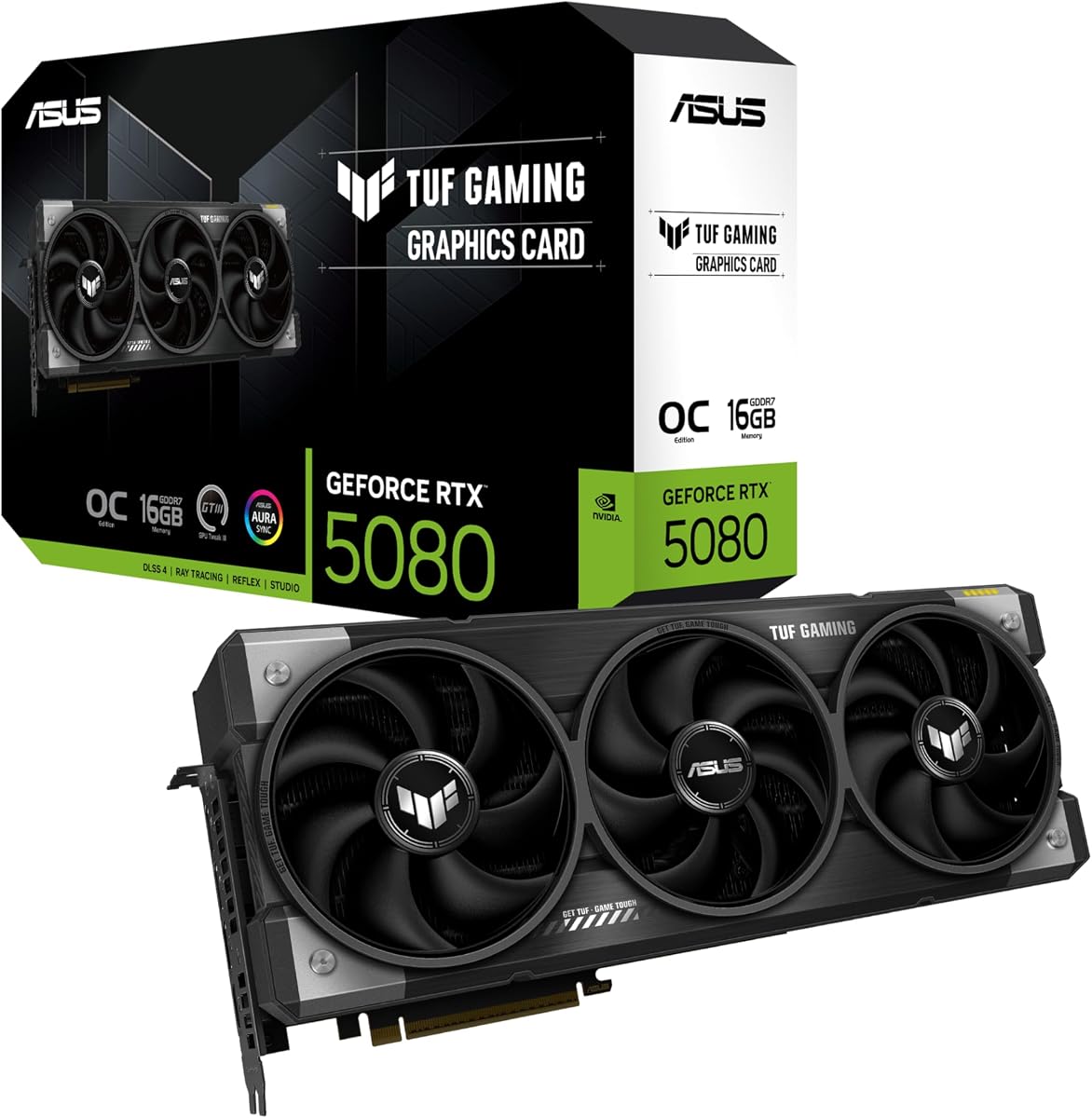
The TUF series is known for durability and long-term reliability. It features military grade components that resist moisture and dust effectively.
We may earn a commission when you buy through this link, at no additional cost to you.
Phase change thermal pads ensure consistent performance over time. Auto-Extreme manufacturing reduces defects for a better user experience.
The 3.6 slot design requires a spacious case for proper fit. Verification of clearance is essential before purchase.
Editors looking for a card that lasts choose this model. It combines power with exceptional build quality standards.
Protective coating guards against short circuits in humid environments.
Phase change pads outlast traditional pastes under heat.
We may earn a commission when you buy through this link, at no additional cost to you.
This card supports four high-resolution displays simultaneously for extended workflows. It includes twin media transcoders for fast video export tasks.
We may earn a commission when you buy through this link, at no additional cost to you.
Intel Xe2-HPG architecture brings competitive AI and rendering speeds. The blower cooler stops at low loads to save power silently.
Driver maturity is still improving compared to established rivals. Verify software compatibility with your specific editing tools first.
It is a strong contender for studios needing many screens. The 24GB memory offers decent capacity for modern demands.
Dual engines speed up AV1 and HEVC export processes.
Four DP 2.1 outputs allow expansive multi-monitor setups.
We may earn a commission when you buy through this link, at no additional cost to you.
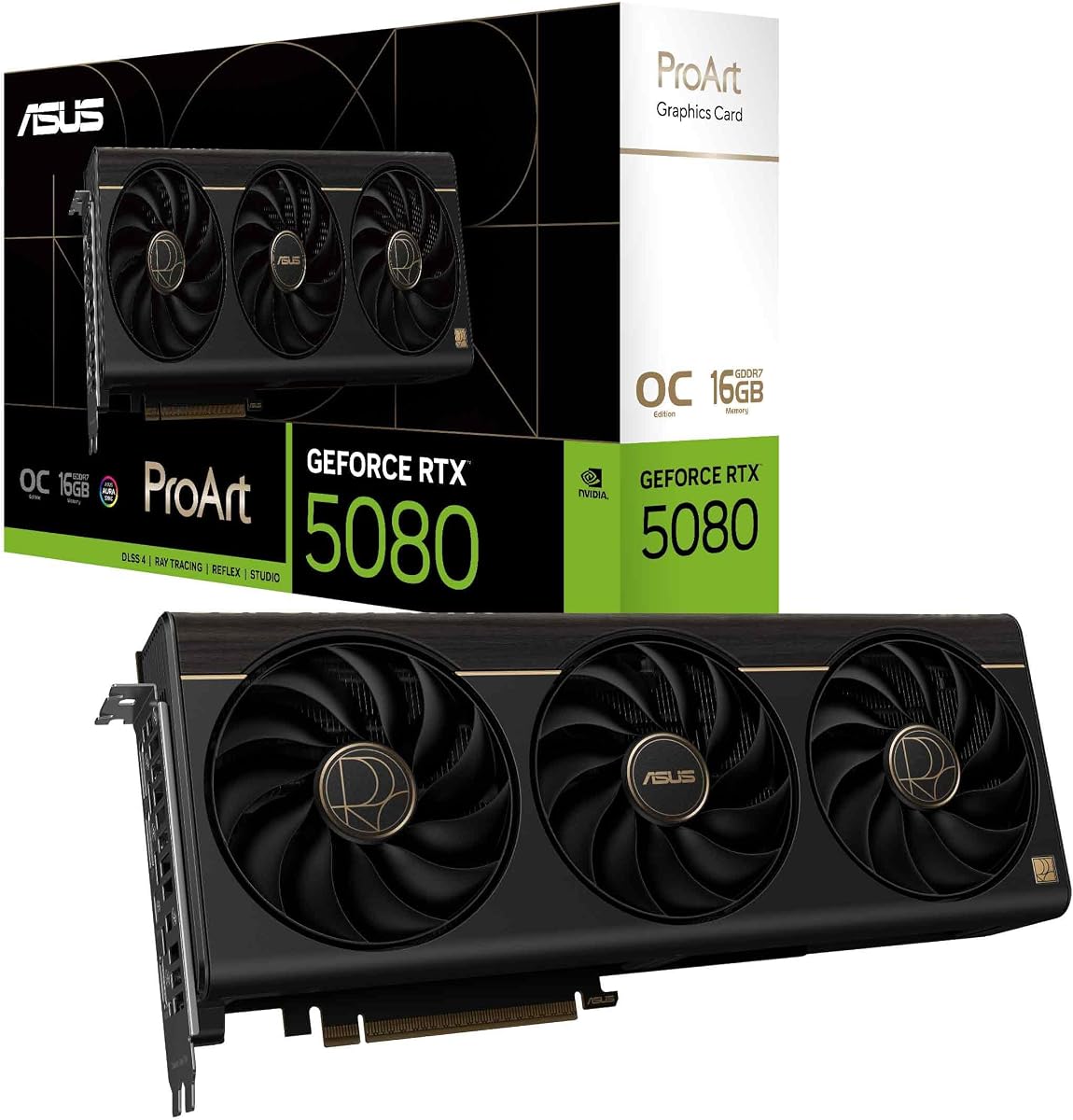
The ProArt line targets professional creators with specific needs. It achieves a 4.9 rating reflecting user satisfaction and reliability standards.
We may earn a commission when you buy through this link, at no additional cost to you.
MaxContact heatsink design ensures efficient heat transfer during rendering. The USB Type-C port adds versatility for connected devices.
Design includes wood-patterned trim for a stylish studio look. Performance is balanced with thermal efficiency for silent operation.
Creators prioritizing color accuracy and build quality pick this. It fits seamlessly into professional environments perfectly.
4.9 rating indicates consistent high performance for users.
Minimalist aesthetic fits professional studio decor well.
We may earn a commission when you buy through this link, at no additional cost to you.
This card offers entry-level access to advanced memory features. The 16GB GDDR7 capacity is rare at this price point.
We may earn a commission when you buy through this link, at no additional cost to you.
0dB technology keeps fans silent during light editing tasks. Dual ball bearings increase longevity compared to traditional sleeve designs.
Raw power is lower than 5080 options for heavy tasks. It suits lighter workflows or secondary rendering stations well.
Budget builders needing large VRAM should consider this model. It delivers value without compromising memory capacity standards.
2.5-slot design maximizes compatibility with small cases.
0dB technology ensures silence during non-intensive work.
We may earn a commission when you buy through this link, at no additional cost to you.
Selecting the right graphics card requires understanding your specific workflow needs and system constraints.
Video resolution and effects usage dictate memory needs. 8K projects require at least 24GB of VRAM for smooth playback.
Always choose higher VRAM than strictly necessary to allow room for future software updates.
Newer architectures provide better efficiency and feature support. Look for Blackwell or RDNA 4 models for modern acceleration.
Avoid older generations if you plan to use AI tools or new codecs.
Bandwidth determines how fast data moves between memory and cores. Higher bandwidth reduces bottlenecks during timeline scrubbing.
Look for GDDR7 or GDDR6X interfaces for maximum throughput.
NVIDIA cards generally enjoy better optimization in DaVinci Resolve. AMD cards work but may lack certain codec or plugin features.
Verify driver compatibility with your specific OS version before buying.
High-performance GPUs demand significant wattage and connectors. Ensure your power supply meets the minimum rating for stability.
Check physical connector types like 12VHPWR for correct cable fit.
Thermal management impacts sustained performance during rendering. Blower fans fit tight spaces but run louder than open designs.
Choose airflow-focused coolers for single GPU workstations.
Measure your case clearance before purchasing to avoid fit issues. Large cards may block drive bays or other expansion slots.
Multi GPU setups need sufficient spacing between cards for airflow.
Selecting newer technologies like PCIe 5.0 extends system lifespan. This helps maintain speeds as software demands increase.
Investing in current gen tech reduces upgrade frequency over time.
Always install the latest drivers from the manufacturer before editing. Regular updates fix bugs that may cause crashes during playback.
Set GPU usage to Performance mode in BIOS for maximum rendering speeds. Adjust power settings to prevent throttling under heavy load.
Clean dust from fans periodically to maintain optimal cooling. Overheating can lead to reduced performance and system instability.
For 4K editing, aim for at least 12GB of VRAM to handle standard effects smoothly. Complex timelines with many layers benefit from 16GB or more to avoid stutters.
Yes, AMD GPUs are supported but NVIDIA offers broader feature support. Check the software requirements to ensure full codec compatibility with your chosen card.
Higher end GPUs can display color data more accurately. They reduce artifacts in the waveform monitor for precise adjustments during grading.
Cards with strong AI acceleration excel at noise reduction. Look for Tensor Core features which handle the processing tasks faster than CPU methods.
ECC memory ensures data integrity for critical professional work. It prevents rare errors that might corrupt project files in high-end production environments.
Multiple GPUs can speed up rendering but require software support. DaVinci Resolve supports multi GPU setups for faster encode times in some versions.
The RTX 5080 requires a minimum of 850 watts for stable operation. Always check your power supply headroom before installing the card.
Upgrading your GPU often improves smooth playback for heavy timelines. It reduces dropped frames and latency during high-resolution preview rendering.
Our top picks cover a wide range of needs from budget to enterprise. The GIGABYTE RTX 5080 offers the best balance for most creators today.
Prioritize memory capacity and architecture to ensure longevity. Investing in higher specs now prevents early obsolescence as projects grow in complexity.
Prices fluctuate frequently so check current listings before purchasing. Verify system compatibility and driver requirements to avoid installation issues.