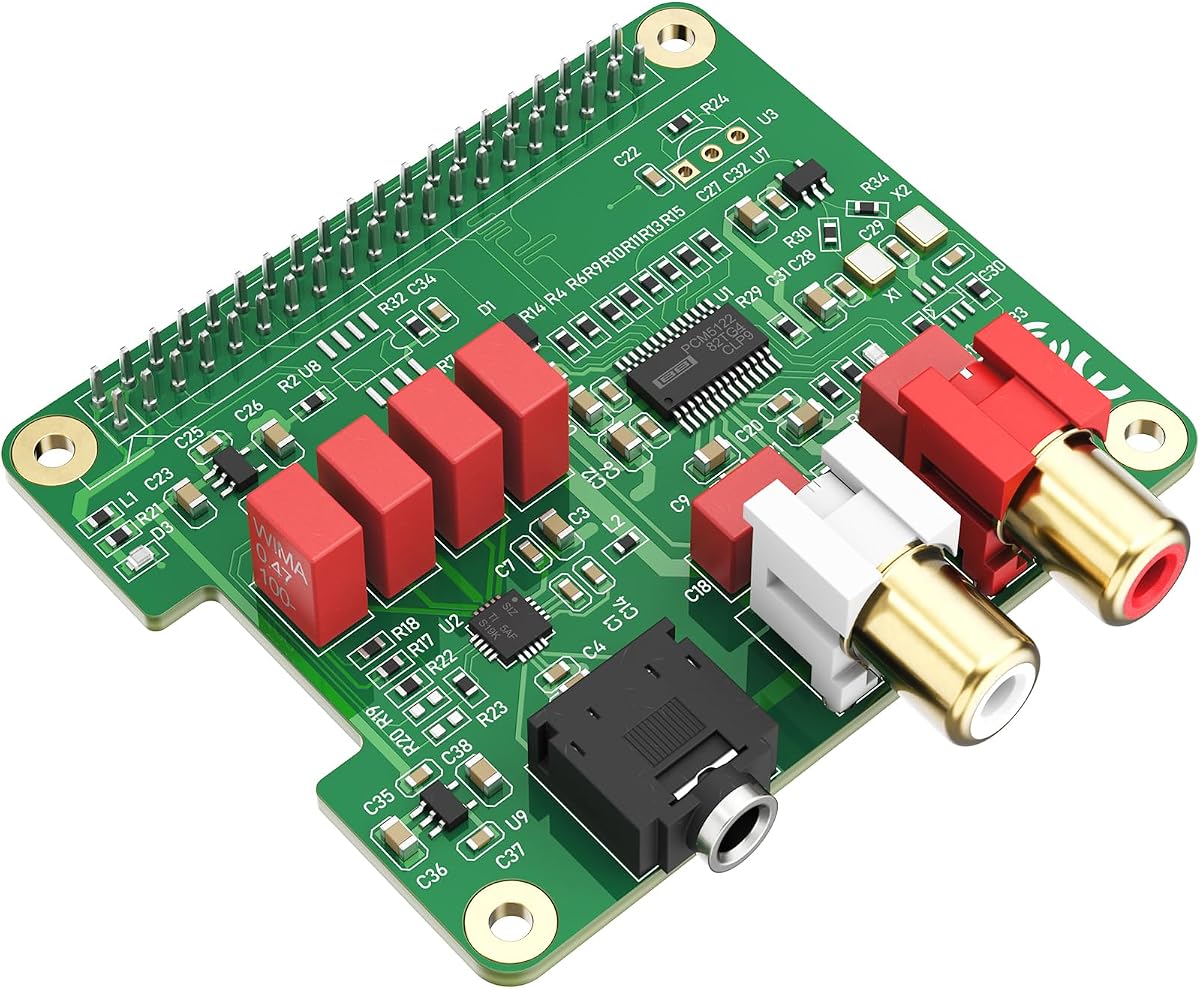
HiFi DAC HAT for Raspberry Pi 5/4/3B+/Zero
4.5Editor score
PCM5122 384kHz DAC
Dual ultra-low jitter oscillators
RCA and 3.5mm outputs
This comprehensive guide compares the top ten DAC for Raspberry Pi options to help audiophiles find the best audio enhancement for their single-board computer
Choosing the right digital to analog converter for your Raspberry Pi can transform your music streaming setup into a high fidelity system. These devices bridge the gap between digital files and analog sound, delivering clarity that onboard audio cannot match. Whether you build a media center or a dedicated streamer, the right DAC matters.
We evaluated ten distinct models based on chip performance, software compatibility, build quality, and ease of integration. Each entry offers unique features like balanced outputs, independent clocks, or digital isolation. Our analysis focuses on real-world performance and community support to ensure you find a reliable solution for your specific hardware.
Each pick highlights key specifications, pros and cons, and ideal use cases to streamline your decision process. Keep in mind that product availability and pricing can shift quickly due to market demand and inventory changes. Always verify current details before purchasing to ensure the best value for your budget.
4.5Editor score

4.5Editor score

4.1Editor score
The following table provides a side-by-side comparison of all ten models to help you quickly identify which hardware features align with your audio setup and budget constraints.


This HiFi DAC HAT represents an exceptional entry point for users seeking high fidelity sound without breaking the bank. With a solid 4.5-star rating and broad compatibility across Pi models, it integrates seamlessly via the GPIO header. The inclusion of dual oscillators significantly improves timing accuracy compared to standard onboard audio.
We may earn a commission when you buy through this link, at no additional cost to you.
The TI PCM5122 chip delivers reference-class performance with 112dB SNR and -78dB THD+N. Independent grounding minimizes crosstalk, ensuring clean audio even when connected to sensitive equipment. Onboard EEPROM enables plug-and-play configuration, making setup straightforward for users running Volumio or Moode.
While the headphone amplifier is functional, it may struggle with high-impedance headphones compared to dedicated amps. Additionally, the lack of balanced outputs limits connectivity options for pro-grade gear. However, for the price point, these trade-offs are acceptable for most home listening scenarios.
If you want studio-grade audio at a fraction of the cost, this board is the top recommendation. Its universal support and robust design make it ideal for DIY enthusiasts building a Pi 5 or 4 based streamer. It offers the best balance of features and affordability available today.
Dual ultra-low jitter oscillators eliminate timing errors common in budget DACs, ensuring crystal-clear reproduction of complex musical passages.
Gold-plated RCA outputs ensure reliable signal transmission while preventing corrosion over time, maintaining consistent performance.
We may earn a commission when you buy through this link, at no additional cost to you.
Designed specifically for compact boards like the Raspberry Pi Zero 2W, this Mini Hat ensures a perfect fit without overhanging. It maintains full compatibility with larger models while offering high-performance audio capabilities. The PCM5122 chip delivers exceptional clarity, making it a strong choice for portable media players.
We may earn a commission when you buy through this link, at no additional cost to you.
Equipped with a TPA6133 amplifier, it drives headphones powerfully with 2.1Vrms output. This allows for clean, dynamic sound even with demanding earphones. The low noise floor challenges expensive standalone DACs, providing audiophile-grade quality at a fraction of the cost.
Without dedicated external clocks, jitter performance may not match higher-end models like the HiFi DAC Pro Hat. Additionally, documentation is less extensive than some competitors. Despite these minor drawbacks, it remains a reliable and unbeatable value for space-constrained projects.
Ideal for makers building compact Pi-based audio streamers, this board combines convenience with high quality. It is perfect for those prioritizing portability and value. If your project demands a small form factor without sacrificing sound fidelity, this Mini Hat is an excellent choice.
The compact PCB design ensures compatibility with Zero and Zero W models, avoiding overhang issues common with standard HATs.
The integrated TPA6133 provides sufficient power to drive high-impedance headphones, delivering clear and dynamic audio.
We may earn a commission when you buy through this link, at no additional cost to you.
This Pro Hat stands out as a top-tier option, engineered with the flagship ESS ES9038Q2M converter. It delivers an unparalleled audio experience with 129dB dynamic range and -120dB THD+N, ensuring bit-perfect sound reproduction. Independent clocks eliminate jitter, a critical feature for high-resolution playback.
We may earn a commission when you buy through this link, at no additional cost to you.
Supporting playback up to 32-bit/384kHz PCM and DSD512, this board meets the needs of serious audiophiles. It features robust 2.1Vrms output through both 3.5mm and balanced outputs, driven by three TI SoundPlus op-amps. This versatility accommodates headphones and professional equipment alike.
The premium pricing reflects its advanced features, which may exceed the budget of casual users. Additionally, the larger size may not fit tight enclosures designed for standard HATs. However, these are acceptable compromises for the superior audio fidelity and connectivity options provided.
If you demand professional-quality audio from your Pi, this Pro Hat is the definitive choice. It bridges the gap between hobbyist projects and high-end systems. For enthusiasts who value bit-perfect playback and balanced connections, this board is worth every penny.
The ESS ES9038Q2M chip provides industry-leading noise performance, allowing for the accurate reproduction of the most complex audio recordings.
Dedicated balanced XLR outputs reduce interference, ensuring cleaner signal transmission to professional amplifiers or mixers.
We may earn a commission when you buy through this link, at no additional cost to you.
The Digi One Hat is a specialized board designed for digital audio transmission via S/PDIF. With a 4.8-star rating, it is highly regarded for its ability to isolate digital signals from the Raspberry Pi's noisy environment. This ensures bit-perfect output to external DACs or amplifiers.
We may earn a commission when you buy through this link, at no additional cost to you.
Adopting a 150M industrial-grade signal isolator and automotive-grade power isolator, it provides complete galvanic isolation. Two low jitter external crystal oscillators ensure accurate clocking across frequency ranges. This design minimizes noise, making it ideal for connecting to high-end external gear.
Since it outputs only digital signals, you must pair it with an external DAC for analog playback. It cannot drive headphones or speakers directly. This limitation requires additional hardware, increasing the total system cost and complexity for users seeking a standalone solution.
This board is perfect for integrators building a system where the Pi serves as a source rather than a player. If you have a high-quality external DAC and want to preserve signal integrity, the Digi One Hat is an outstanding choice for its isolation capabilities.
Galvanic isolation prevents ground loops and electrical interference, ensuring pristine digital data reaches the external DAC.
External crystal oscillators provide precise clocking, reducing jitter and ensuring stable audio transmission at various sample rates.
We may earn a commission when you buy through this link, at no additional cost to you.
This expansion board is designed specifically for older Raspberry Pi models like the B+ and 2. It features PCM5122 DAC chip and uses the I2S interface for digital audio transmission. With a 4.8-star rating, it is a reliable budget option for legacy systems.
We may earn a commission when you buy through this link, at no additional cost to you.
The board includes LED indicators for power and decoding status, allowing users to easily verify operation. It also provides an infrared receiver interface for remote control integration. Its high 120dB SNR ensures excellent dynamic range despite the budget-friendly price.
The physical design is quite basic compared to full HATs, with less robust mounting options. Support documentation may be less detailed than modern products. For users needing simple, functional upgrades for older hardware, these trade-offs are acceptable given the low cost.
If you have an older Raspberry Pi and need a basic audio upgrade, this module offers excellent value. Its clear indicators and high SNR make it a dependable choice for simple projects. It is an ideal solution for extending the life of legacy hardware.
Specifically engineered for Pi B+ and Model 2, it ensures compatibility with older hardware that lacks modern audio capabilities.
LED indicators provide immediate visual confirmation of power and decoding status, simplifying troubleshooting during setup.
We may earn a commission when you buy through this link, at no additional cost to you.
The RASPIAUDIO Audio DAC Hat offers a balanced solution for Pi 5 and earlier models. With an EEPROM chip, it eliminates the need for manual driver installation, making it truly plug-and-play. Its unique colored PCB design adds an aesthetic touch to your project.
We may earn a commission when you buy through this link, at no additional cost to you.
It features a high-performance DAC with 112dB SNR and 384kHz 32-bit support, delivering superior quality compared to standard USB DACs. Universal compatibility ensures it works seamlessly across various Pi generations. The included 3.5mm and RCA outputs cover most consumer needs.
While reliable, it lacks advanced features like balanced outputs or dedicated clocks found in premium models. The mid-range pricing places it between budget options and high-end boards. For general users, this is sufficient, but audiophiles might seek more specialized gear.
This board is ideal for users seeking a reliable, no-hassle audio upgrade for any Pi model. Its plug-and-play nature and clean design make it perfect for media centers. If you want solid performance without complicated configuration, this RASPIAUDIO hat is a safe bet.
The onboard EEPROM handles boot and configuration, ensuring the board functions immediately without driver installation on the host.
Colored PCB design adds a unique aesthetic to your build, distinguishing it from standard black or green electronics.
We may earn a commission when you buy through this link, at no additional cost to you.
This Argon BLSTR DAC is designed specifically for the Raspberry Pi 5, offering a perfect audio solution. With a perfect 5.0 rating, it is highly trusted by users. It features an integrated Ground Loop Isolator to eliminate unwanted noise or hum common in standard setups.
We may earn a commission when you buy through this link, at no additional cost to you.
Powered by the Texas Instruments PCM5122 digital audio codec, it ensures high-quality audio conversion. The plug-and-play board simplifies installation, requiring no complex wiring. This focus on user experience makes it ideal for hobbyists and professionals alike.
Its compatibility is limited to the Pi 5, making it unusable for older models. The lack of RCA outputs means it relies solely on the 3.5mm jack. While the isolator improves sound, it may limit connectivity for external gear requiring RCA connections.
For Pi 5 owners, this board delivers a premium audio experience with minimal effort. It is perfect for those seeking clean, noise-free sound. If you have the latest Pi and want a simple, high-quality upgrade, this BLSTR DAC is the definitive choice.
The integrated Ground Loop Isolator prevents electrical interference, ensuring a quiet background and clearer audio playback.
Designed specifically for Pi 5, it ensures perfect physical fit and electrical compatibility with the newer hardware.
We may earn a commission when you buy through this link, at no additional cost to you.
The HiFiBerry DAC+ DSP is a powerful tool for advanced audio control, featuring a 300 MHz Digital Signal Processor. It can run up to 6144 instructions per sample, allowing for complex DSP tasks like room equalization and up/downsampling. This versatility makes it a unique choice.
We may earn a commission when you buy through this link, at no additional cost to you.
It includes a high-quality asynchronous sample rate converter to manage audio sources without quality loss. Onboard EEPROM allows the board to run standalone, even without the Pi. This functionality transforms your Pi into a professional-grade DSP unit.
The board requires a specific enclosure (CaseIII) which limits physical flexibility. The higher cost reflects its advanced DSP capabilities which may be overkill for basic playback. However, for custom audio environments, these constraints are minor compared to the functional benefits.
This board is best for users who need room correction or custom DSP processing for their audio setup. If you want to fine-tune sound based on your listening space, it is unrivaled. For advanced projects, this DSP is the ultimate solution.
The onboard DSP allows for precise room equalization, correcting acoustic anomalies in your listening environment for better sound.
With 300 MHz processing power, it handles complex audio transformations efficiently without impacting system performance.
We may earn a commission when you buy through this link, at no additional cost to you.
This HiFiBerry Digi+ Standard Version is a dedicated digital sound card with Toslink and Coaxial connectors. It supports up to 192kHz/24bit resolution via S/PDIF, ensuring high-fidelity digital transmission. The board is compatible with Raspberry Pi 2 Model B and A+ models.
We may earn a commission when you buy through this link, at no additional cost to you.
The dedicated S/PDIF interface chip delivers bit-perfect output, meaning data streams remain unmodified. Optical and electrical outputs provide flexibility for connecting to external DACs or receivers. It is a robust solution for users needing digital connectivity rather than analog.
Since it lacks analog outputs, it cannot drive speakers directly. It requires an external DAC to convert digital signals to sound. Additionally, support is limited to older Pi 2 models which may restrict compatibility with newer hardware projects.
For those needing reliable digital output from older Pi hardware, this board is excellent. It is perfect for connecting to AV receivers or external DACs. If you need a straightforward digital interface for legacy projects, this HiFiBerry option is highly recommended.
The board ensures that audio data streams are not modified in any way, preserving the original quality for external processing.
Both optical and coaxial outputs allow flexible connection to external equipment, ensuring compatibility with most AV gear.
We may earn a commission when you buy through this link, at no additional cost to you.
This HiLetgo PCM5102 module is a super affordable high-quality DAC for the Pi and Arduino. It uses the PCM5102A DAC and I2S interface for clean audio conversion. With a 4.2-star rating, it is known for sounding much better than onboard analog audio.
We may earn a commission when you buy through this link, at no additional cost to you.
The stereo jack is soldered onto the board, simplifying connection for simple projects. It supports lossless digital audio decoding, ensuring clear sound reproduction. For a module of this price, it offers excellent performance and ease of use for beginners.
It lacks a full HAT form factor, requiring manual wiring to the GPIO pins. This increases installation complexity compared to plug-and-play boards. Additionally, it lacks features like balanced outputs or advanced filtering found in premium options.
This module is ideal for hobbyists on a tight budget who want better audio than the Pi provides. It is a practical solution for simple voice or playback projects. If you need an affordable upgrade without expensive features, this module is a solid choice.
This module provides high-quality digital-to-analog conversion at a very low price point, making it accessible to everyone.
The stereo jack is soldered onto the board, reducing the need for additional components and simplifying physical setup.
We may earn a commission when you buy through this link, at no additional cost to you.
Selecting the right DAC involves considering several technical factors to ensure compatibility with your Pi model and audio requirements.
The core of any DAC is the chip that converts digital signals to analog. Look for chips like PCM5122, ES9038Q2M, or PCM5102A which offer high resolution and low distortion. Higher sampling rates like 384kHz and 32-bit depth ensure compatibility with high-resolution audio files.
Prioritize chips with high SNR and low THD+N ratings for cleaner sound. A good chip ensures your hardware can handle modern high-fidelity streams without quality loss.
Ensure the board physically fits your specific Raspberry Pi model. HATs like the Digi One or HiFi DAC HAT fit standard GPIO headers, while Mini Hats are designed for Zero models. Check for GPIO conflicts with other accessories you plan to use.
Always verify compatibility with your Pi generation. Newer boards support Pi 5, while older modules may only work with Pi 2 or 3 models.
Decide if you need analog outputs like RCA or 3.5mm jacks for speakers and headphones. Some advanced boards offer balanced outputs for professional equipment. Digital outputs like S/PDIF are essential if you plan to use an external DAC unit.
Choose the right outputs for your audio chain. RCA and 3.5mm work for most home users, while balanced outputs suit professional setups.
Jitter affects audio timing and quality. Advanced boards feature independent clocks or dual oscillators to reduce timing errors. Standard models rely on the Pi's internal clock which can introduce noise into the audio signal.
For audiophile setups, prioritize boards with external clocking. This ensures accurate sample rates and better sound quality.
Ensure the DAC is supported by your preferred media player software like Volumio, Moode, or LibreELEC. Some boards offer EEPROM plug-and-play features which simplify setup. Others may require manual configuration of device tree overlays.
Check community support and documentation. Strong software support makes installation easier and ensures reliable long-term performance.
Some boards offer galvanic isolation to prevent ground loops and noise from the Pi's power supply. This is critical for high-end systems where signal purity is paramount. Consider boards with dedicated power isolators if noise is a concern.
Isolation ensures that electrical noise does not degrade your audio. For critical listening, look for models with this feature.
If you plan to connect headphones directly, check the amplifier power output. Boards with dedicated amp chips like TPA6133 deliver more power for high-impedance headphones. Without a strong amp, some headphones may sound weak or lack dynamics.
Select a board with sufficient power for your headphones. A dedicated amp ensures clear and dynamic sound even with demanding gear.
Prices range from budget modules to premium DSP boards. Evaluate whether advanced features like DSP or balanced outputs justify the cost. Budget options often provide 90% of the performance of expensive models for a fraction of the price.
Consider your specific needs and budget. For general listening, mid-range options often offer the best value for money.
Begin by installing the DAC board securely onto the GPIO header of your Raspberry Pi. Ensure the connectors are aligned correctly to avoid damaging pins. Use standoffs if provided to keep the board stable within your enclosure.
Next, configure your software to recognize the audio device. Most modern players like Volumio will detect the board automatically, but some may require enabling I2S settings in the config file. Verify the output device is selected in your media player settings.
For optimal longevity, keep your Pi in a well-ventilated area. Avoid placing metal objects directly on the board to prevent short circuits. Periodically check connections to ensure they remain secure and free from corrosion over time.
Yes, a dedicated DAC significantly improves audio quality by converting digital signals with higher precision. It reduces noise and distortion common in integrated audio circuits, offering clearer and more dynamic sound. This makes it essential for any serious listening setup.
No, most HAT boards like the HiFi DAC HAT or HiFiBerry Digi+ connect directly to the GPIO header without soldering. Simply align the pins and press the board down. This plug-and-play design makes installation easy even for beginners.
Not all boards support every model. While many modern HATs support Pi 4 and 5, older boards like the HiFiBerry Digi+ are limited to Pi 2. Always check product specifications to ensure your specific Pi model is listed.
Analog DACs output sound directly to speakers or headphones via jacks like RCA or 3.5mm. Digital DACs output signals via S/PDIF to an external DAC. Choose based on whether you need direct playback or external integration.
Yes, most HATs listed are fully supported by Moode and Volumio. These systems include device tree overlays for easy configuration. Check the documentation for your specific board to ensure seamless setup.
If you hear humming noise from your speakers, a ground loop isolator can help. Some boards include this feature. However, for most setups, proper grounding and shielding on the board are sufficient to prevent noise.
We reviewed ten exceptional models ranging from budget modules to professional DSP boards. The HiFi DAC HAT leads as the best budget option offering premium features at a low cost. The HiFi DAC Pro Hat stands out as the top choice for audiophiles seeking high-resolution playback.
Prioritize your specific needs when selecting a board. If you require balanced outputs or DSP features, invest in the HiFiBerry DAC+ DSP or Pro Hat. For standard music streaming, the DAC Mini Hat or RASPIAUDIO Audio DAC Hat provide excellent reliability.
Remember that product availability and pricing can change quickly in this fast-moving market. Always verify current stock and compatibility details before purchasing to ensure you get the right product for your build. Enjoy your enhanced audio experience.