
TP-Link Tapo Motion Sensor
4.5Editor score
Long battery life with Sub-1G protocol
Wide 120-degree detection angle
Smart actions work offline via Hub
Explore our expert review of the best light sensor for home security systems. We compare top wireless motion detectors and daylight sensors to help you secure
Securing your home requires smart technology that adapts to your environment. A light sensor for home security detects motion and ambient light to trigger alarms or lights automatically. These devices enhance safety by ensuring visibility when intruders might strike.
We evaluated ten top-rated products based on connectivity, range, and integration capabilities. Our analysis covers Zigbee, Wi-Fi, and proprietary protocols to help you choose the right ecosystem. Each product was reviewed for reliability and ease of installation in various settings.
This guide shows you exactly how each sensor performs in real-world scenarios. We highlight unique features like mmWave radar and weather resistance to guide your decision. Keep in mind that availability and details may vary over time, so check current listings.
4.5Editor score

4.5Editor score

4.4Editor score
The following comparison table outlines the key specifications and capabilities of the ten selected light sensors. Use this side-by-side view to quickly identify which device matches your specific security and automation needs.


The Zigbee Motion Sensor with Light Sensor stands out as a top choice for home security enthusiasts. It combines a standard motion detector with a lux sensor to enable complex automations. This allows lights to turn on only when it is dark and motion is detected.
We may earn a commission when you buy through this link, at no additional cost to you.
Its integration with Home Assistant and SmartThings provides robust local control options without relying on the cloud. The adjustable sensitivity levels help reduce false alarms from pets or heat sources. This ensures your security system remains reliable in varied environments.
While it requires a specific Zigbee hub for operation, the trade-off is significant power efficiency and stability. The battery life is impressive, lasting over a year with standard use. However, you must ensure your hub supports the specific Zigbee protocols.
This sensor is ideal for smart home users looking to automate lighting and security simultaneously. It fits discreetly into hallways or entryways. We recommend it for those who prioritize local control and energy efficiency in their security setup.
The built-in lux sensor allows you to create rules that react to both movement and ambient light levels, saving energy effectively.
The 360-degree adjustable ball-joint base ensures you can aim the sensor exactly where you need detection coverage.
We may earn a commission when you buy through this link, at no additional cost to you.
The TP-Link Tapo T100 offers an affordable entry point into smart security monitoring. It uses a Sub-1G protocol to extend battery life significantly compared to standard Wi-Fi sensors. This makes it a cost-effective solution for large homes needing multiple sensors.
We may earn a commission when you buy through this link, at no additional cost to you.
It integrates seamlessly with the Tapo ecosystem to trigger lights or alarms without constant internet access. The adjustable viewing angle helps prevent false triggers from sunlight or passing cars. Its compact design allows for installation on almost any surface.
While the initial setup requires a hub, the investment pays off through reliability and low maintenance. The magnetic base simplifies repositioning if you need to change detection zones. You get robust security features without breaking the budget.
This sensor is best for renters or homeowners who want easy installation and smart automation. It works well with other Tapo devices to create a unified security network. We suggest it for those seeking a balance between cost and advanced features.
The Sub-1G wireless protocol provides a wider coverage area and better battery efficiency than standard Wi-Fi connections.
Smart actions can still function even if the network is disconnected, ensuring your lights turn on during motion events.
We may earn a commission when you buy through this link, at no additional cost to you.
The Akamatis Litos v3 is a premium option designed for advanced smart home users. Unlike traditional PIR sensors, it uses mmWave radar to detect both motion and stationary presence. This ensures lights stay on even if you are sitting still in a room.
We may earn a commission when you buy through this link, at no additional cost to you.
Its integrated light sensor matches the human eye sensitivity for precise automation rules. The light-permeable front panel ensures accurate readings without needing a separate device. Pre-flashed ESPHome firmware makes setup straightforward for those familiar with Home Assistant.
While it requires a Home Assistant installation, the level of control and reliability is unmatched. It is excellent for rooms where you spend long periods without moving much. However, casual users might find the setup process too technical for their needs.
This sensor is perfect for tech enthusiasts who want granular control over their home automation. It solves the common problem of lights turning off while reading or watching TV. We recommend it for those who already run a Home Assistant server.
The mmWave radar can detect humans who are stationary, ensuring lights do not turn off while you are reading or working.
An integrated VEML7700 sensor provides accurate ambient light data to trigger rules based on darkness or brightness.
We may earn a commission when you buy through this link, at no additional cost to you.
The Philips Hue Secure Contact Sensor is designed to monitor doors and windows rather than movement. It triggers an alarm or notification when a point of entry opens while your home is armed. This makes it a critical component for perimeter security.
We may earn a commission when you buy through this link, at no additional cost to you.
It integrates seamlessly with your existing Hue ecosystem to trigger lights or alarms immediately. The app provides detailed logs of when the sensor was triggered, helping you track activity over time. Its adhesive backing makes installation quick without tools.
While it requires a Hue Bridge to function, the connection is stable and secure. The sensor is built for indoor use, so it may not withstand outdoor elements. This limitation ensures longevity within controlled environments like hallways and cabinets.
This sensor is ideal for families who want a simple way to secure their entry points. It provides peace of mind by alerting you to open windows or doors. We suggest it for those already invested in the Philips Hue smart lighting system.
When armed, the sensor sends real-time alerts to your mobile device the you know instantly if a door or window opens.
You can automate indoor lights to turn on automatically when the front door opens for convenience and safety.
We may earn a commission when you buy through this link, at no additional cost to you.
The Philips Hue Outdoor Motion Sensor is built to withstand the elements while providing reliable detection. Its IP44 rating ensures it functions well in rain or snow, making it perfect for patios and driveways. The sensor detects motion across a wide area to cover entry points.
We may earn a commission when you buy through this link, at no additional cost to you.
It features an automatic dusk to dawn mode that ensures lights are only active when needed. This saves battery life and reduces light pollution. The sensor works with major voice assistants, giving you flexibility in how you control your security.
While it requires a Hue Bridge, the robust features justify the investment for outdoor safety. The battery-powered design simplifies installation where outlets are scarce. You get consistent performance without worrying about power cables.
This sensor is best for securing outdoor spaces like garages or backyards. It enhances safety by illuminating paths when you arrive home at night. We recommend it for homeowners who want durable, weather-resistant smart security.
The weatherproof design ensures the sensor performs reliably even in heavy rain or snow conditions.
The dusk to dawn feature automatically turns lights off at dawn to save battery and reduce light pollution.
We may earn a commission when you buy through this link, at no additional cost to you.
The YCA1030 Dusk to Dawn sensor is a hard-wired solution for controlling outdoor lighting. It detects ambient light levels to automatically switch lights on and off. This eliminates the need for manual operation or battery replacements.
We may earn a commission when you buy through this link, at no additional cost to you.
Its electrical specs allow it to handle a wide range of bulbs and power levels. The built-in time delay prevents lights from flickering due to passing cars or lightning. This reliability makes it a solid choice for commercial and residential use.
While installation requires some electrical knowledge, the long-term maintenance is minimal. It is designed for outdoor conditions, ensuring durability against rain and dust. However, it lacks smart features like remote control via an app.
This sensor is ideal for users who want simple, reliable lighting control without smart complexity. It works well for porch lights or yard lighting that needs to be on nightly. We suggest it for those comfortable with basic home wiring.
The sensor automatically turns lights on at dusk and off at dawn for convenient hands-free operation.
A built-in time delay prevents the load from switching off temporarily due to car headlights or lightning flashes.
We may earn a commission when you buy through this link, at no additional cost to you.
This two-pack of day night sensors offers excellent value for lighting multiple areas. Each unit features a swivel mount, allowing you to aim the light precisely. The IP65 rating ensures they can withstand heavy rain and outdoor conditions effectively.
We may earn a commission when you buy through this link, at no additional cost to you.
They support a wide range of voltages, making them compatible with most outdoor fixtures. The UL listing provides peace of mind regarding safety and compliance. These sensors provide automatic control without requiring complex smart home hubs.
While they lack connectivity options, they are reliable for basic lighting needs. The two-pack allows you to secure a driveway and a porch simultaneously. However, they do not integrate with your mobile devices for remote control.
These sensors are perfect for users seeking an affordable, reliable way to manage outdoor lighting. They are easy to install and maintain over time. We recommend them for those prioritizing simplicity and cost over advanced features.
The swivel mount allows the controller to be installed at a precise spot focusing the light exactly where needed.
The IP65 water-resistant rating ensures the photocell can function well even in heavy rain or snowstorms.
We may earn a commission when you buy through this link, at no additional cost to you.
The Ring Motion Detector simplifies home security by eliminating the need for a complex base station. It connects over Amazon Sidewalk to extend coverage throughout your home. This makes setup incredibly easy for anyone who already uses Amazon products.
We may earn a commission when you buy through this link, at no additional cost to you.
Its pet-friendly mode helps reduce false alarms from smaller animals roaming around. You receive instant alerts on your device if motion is detected while your system is armed. This feature provides reassurance when you are away from home.
While it relies on Amazon Sidewalk, the coverage is often sufficient for standard homes. The 90-degree field of view covers most indoor rooms effectively. However, users outside the Ring ecosystem may not find it as useful.
This detector is ideal for those seeking a straightforward security solution. It works well as part of a broader Ring system to monitor entryways. We suggest it for Ring users who want reliable motion alerts.
The sensor connects over Amazon Sidewalk for simple coverage throughout your home without needing a dedicated base station.
Customize settings to reduce false alerts from pets under 50 lbs ensuring you are only alerted to real intruders.
We may earn a commission when you buy through this link, at no additional cost to you.
The YoLink Indoor Motion Sensor stands out for its exceptional wireless range and stability. It uses LoRa technology to penetrate obstructions better than standard Wi-Fi or Zigbee. This makes it perfect for large properties or multi-story homes.
We may earn a commission when you buy through this link, at no additional cost to you.
It includes notification features that alert you via text or push notifications when motion is detected. The device-to-device links allow sensors to trigger alarms even without internet or power. This ensures your security remains active during outages.
While you must buy a YoLink hub, the setup is quick and user-friendly. The magnetic mounting simplifies installation on any metal surface. However, it does not integrate with other smart home ecosystems easily.
This sensor is best for those who prioritize range and reliability over smart integration. It is ideal for securing large properties where distance is a challenge. We recommend it for users needing robust wireless coverage.
The LoRa wireless system offers superior range and obstruction penetration compared to Wi-Fi or older RF types.
Links between devices allow them to operate when needed even if the internet and power is down.
We may earn a commission when you buy through this link, at no additional cost to you.
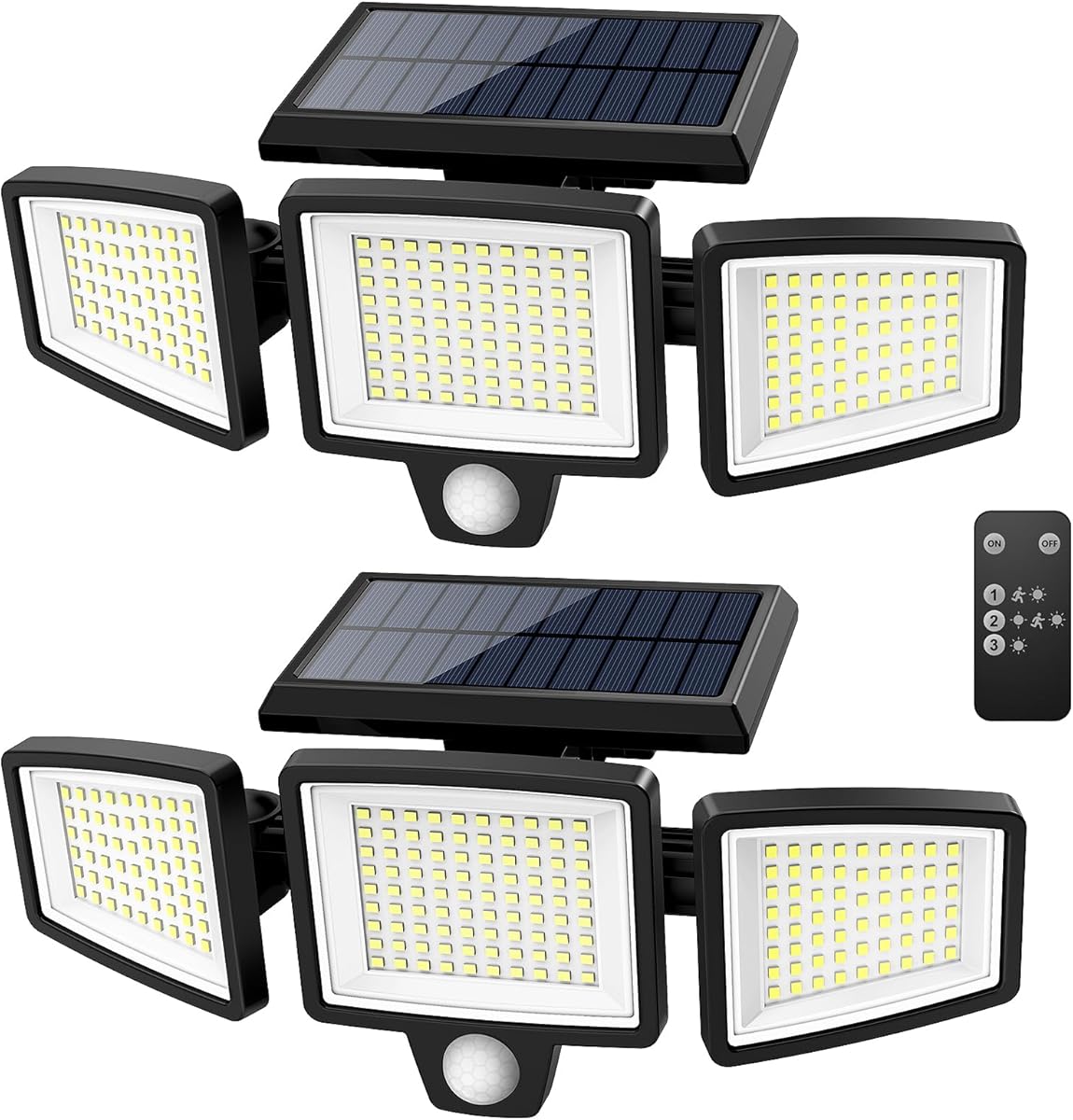
The Tuffenough Solar Outdoor Lights combine illumination with motion detection in one package. They feature three adjustable heads to provide wide-angle coverage for your property. The solar panel ensures they operate without needing electrical wiring.
We may earn a commission when you buy through this link, at no additional cost to you.
They produce 2500 lumens, which is bright enough to deter intruders effectively. The motion sensor detects movement up to 26 feet away to trigger the lights. The IP65 rating ensures they remain functional even in heavy rain.
While their performance depends on sunlight exposure, they include remote controls for convenience. You can switch between strong light or dim sensor modes easily. However, cloudy days might affect the battery charge duration.
These lights are ideal for securing dark areas like driveways or backyards. They provide both security and convenience by lighting paths automatically. We suggest them for those needing high-intensity outdoor lighting.
The solar lights produce up to 2500 lumens to perfectly illuminate your courtyard or garage.
Three adjustable heads and intelligent induction control provide extra brightness and a larger visible area.
We may earn a commission when you buy through this link, at no additional cost to you.
Selecting the right light sensor for home security requires understanding your specific needs and environment. This section breaks down the most important factors to consider before making your purchase.
Most modern sensors use Zigbee, Wi-Fi, or proprietary protocols. Zigbee is preferred for stability and low power consumption in smart hubs. Wi-Fi is convenient but may drain batteries faster.
Choose a protocol that matches your existing smart home ecosystem for seamless integration.
The range of motion detection varies from 15 feet to over 30 feet. Consider the size of the area you need to monitor to ensure coverage.
Select a sensor with a range that covers your entry points without triggering false alarms from distant movements.
Some sensors include built-in ambient light sensors to prevent activation during the day. This feature saves energy and reduces wear on connected devices.
Prioritize models with lux sensors if you want lights to operate only when necessary.
Sensors are either battery-powered or hard-wired. Battery units offer flexibility in placement but require periodic changes. Hard-wired options provide continuous power but need professional installation.
Choose battery-powered for easy placement or hard-wired for permanent, low-maintenance setups.
Outdoor sensors must be weatherproof to handle rain and temperature changes. Look for an IP65 or higher rating for durability.
Ensure your outdoor sensor has a weatherproof rating to ensure long-term reliability.
Verify that the sensor works with your current smart home platform like Alexa or Google. Some devices require specific hubs to function properly.
Check compatibility lists to ensure the device works with your existing setup.
Mounting styles include magnetic, adhesive, or screw-in bases. Magnetic mounts allow for easy repositioning if the initial angle is incorrect.
Select a mounting style that fits your surface material and desired security level.
If you have pets, ensure the sensor has a pet-friendly mode. This filters out movement from animals below a certain weight to reduce false alarms.
Look for sensors with adjustable sensitivity or pet filters to avoid unnecessary alerts.
Installation typically begins with pairing the device to your hub using the manufacturer's app. Follow the on-screen instructions to link the sensor and name it correctly for your system.
Position the sensor high enough to cover the entry point but away from heat sources or vents. Avoid placing it near windows where sunlight might trigger false alarms during the day.
Regularly check the battery status in the app to ensure the device remains active. Clean the sensor lens periodically to remove dust or debris that could obstruct motion detection.
Not all sensors require a hub. Some connect directly to Wi-Fi or cellular networks like Amazon Sidewalk. However, many Zigbee and proprietary sensors need a compatible hub to function.
A light sensor detects ambient light levels to trigger automations. It ensures lights only turn on when it is dark, preventing unnecessary usage during daylight hours.
Battery life varies from six months to two years depending on usage. Sensors with Sub-1G technology or low power modes generally last longer than Wi-Fi models.
Yes, but you must choose a weatherproof model. Look for sensors with an IP65 or IP44 rating to ensure they can withstand rain and dust.
Many sensors support integration with Alexa, Google Assistant, and Apple HomeKit. Check the product description to confirm voice control capabilities.
Many modern sensors offer pet-friendly modes that ignore animals under a certain weight. Adjust the sensitivity settings to minimize triggers from your pets.
Some sensors operate locally via hubs or device-to-device links even without internet. Others rely on cloud connections, so verify offline capabilities before buying.
Most battery-powered sensors are DIY friendly with adhesive or magnetic mounts. Hard-wired options usually require professional installation due to electrical wiring.
We have reviewed ten top light sensors ranging from advanced mmWave tech to simple hard-wired photocells. The Zigbee and Tapo sensors offer great value for home automation users.
When choosing, prioritize connectivity and battery life to ensure your system stays active. Look for features like pet-friendly modes to avoid annoying alerts.
Always verify the current specifications and compatibility before buying. Prices and stock change frequently, so review the latest listings to secure the best deal.