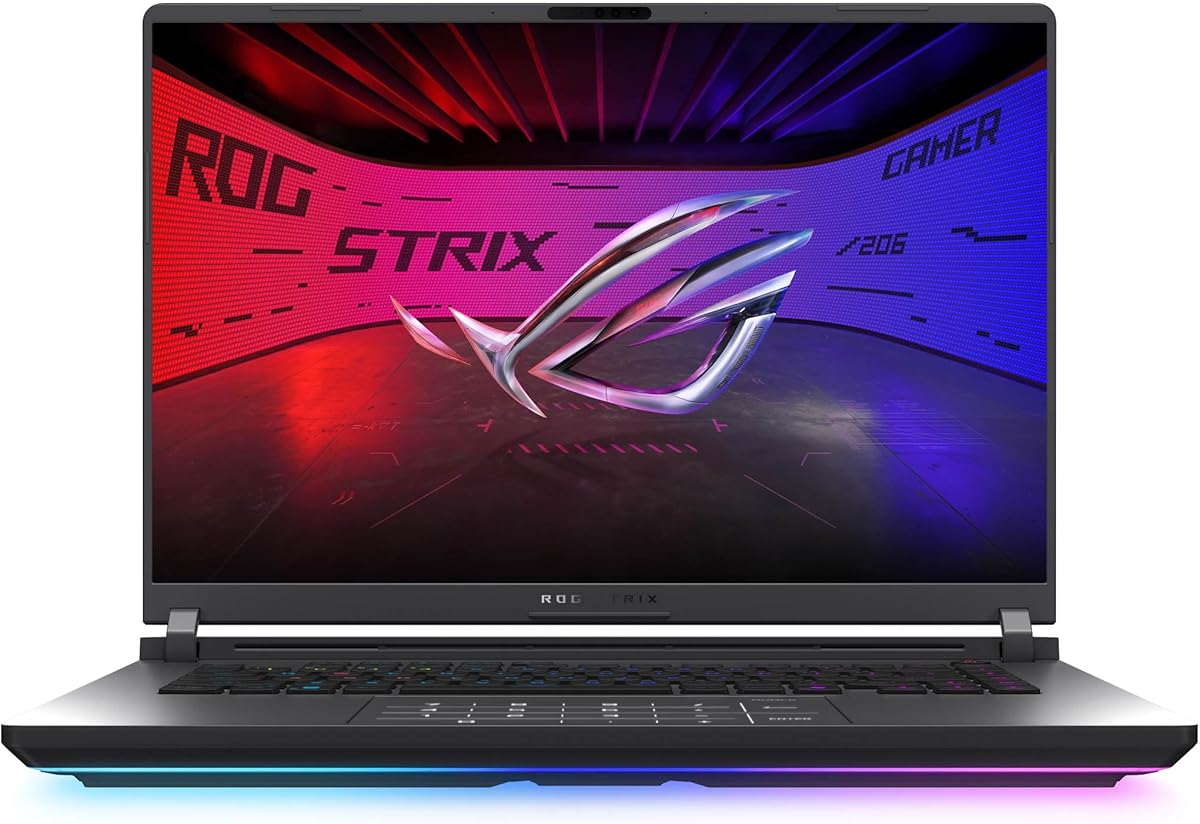
ASUS ROG Strix G16 2025 Ultra
4.3Editor score
Intel Core Ultra 9 Processor 275HX
NVIDIA GeForce RTX 5070 Ti
240Hz ROG Nebula Display
Finding the right laptop for flight simulators requires balancing powerful graphics, fast processors, and high refresh rate displays. Enthusiasts need machines capable of rendering detailed global terrain without stuttering or lag during critical maneuvers.
We evaluated ten top-rated products based on performance benchmarks, display quality, cooling systems, and user feedback. Our analysis covers gaming laptops, essential peripherals, and software packages designed to enhance realism and control.
Each pick highlights specific strengths like GPU power, screen fidelity, or ergonomic design to match different pilot needs. Keep in mind that product availability and pricing may change frequently, so verify current offers before purchasing.
4.3Editor score

4.4Editor score

4.2Editor score
As an Amazon Associate we earn from qualifying purchases.
The following table provides a side-by-side comparison of all ten selected products, highlighting key specifications such as processors, graphics cards, memory, and storage options to facilitate informed decision-making for simulation enthusiasts.




This ASUS ROG Strix G16 combines high-end performance with a reliable design, earning its spot as our top pick for flight simulation enthusiasts seeking a versatile machine. With a 4.4 star rating, it delivers consistent frame rates and smooth visuals essential for complex atmospheric rendering. The integration of the NVIDIA GeForce RTX 5060 ensures DLSS 4 support, which is critical for maintaining performance in demanding titles like Microsoft Flight Simulator 2024.
We may earn a commission when you buy through this link, at no additional cost to you.
The processor, an Intel Core i7 14650HX, handles background tasks such as voice communication or telemetry data without stuttering. Users benefit from 16GB of DDR5 memory and a massive 1TB Gen 4 SSD, allowing for quick loading of extensive airport scenery packs and add-on assets. The 165Hz display reduces motion blur during high-speed approaches, while the ROG Intelligent Cooling system keeps thermals in check during long flights. RGB lighting customization adds a touch of personalization, though stealth mode is available for professional use.
While battery life is typical for gaming laptops under heavy load, the device compensates with robust connectivity and fast charging capabilities. The price point reflects the premium components, but for serious simmers, the reliability justifies the investment. It strikes an excellent balance between raw power and portability.
We recommend this laptop for users who want a reliable daily driver that can handle the most demanding simulation tasks without compromise. Its blend of modern architecture and efficient cooling makes it the ideal foundation for building a home cockpit setup.
The ACR film on the display enhances contrast and reduces glare, making it easier to read instrument panels even in bright environments.
Wi-Fi 7 support ensures low-latency online multiplayer sessions, which is vital for coordinated flight training and air traffic control simulations.
We may earn a commission when you buy through this link, at no additional cost to you.
The ASUS ROG Strix G16 Ultra represents the pinnacle of mobile simulation performance, featuring the latest Intel Core Ultra 9 processor and NVIDIA GeForce RTX 5070 Ti. With a 4.3 rating, this machine is built for those who demand absolute fidelity in their virtual skies. The 2.5K ROG Nebula display at 240Hz offers exceptional clarity, making it possible to spot distant landmarks and terrain features with ease during cruising altitudes. This level of visual detail is crucial for pilots focused on visual flight rules training.
We may earn a commission when you buy through this link, at no additional cost to you.
Equipped with 32GB of DDR5 RAM, this laptop can run simulation software alongside resource-intensive streaming or recording tools without performance degradation. The thermal management system utilizes liquid metal on the chipset and a tri-fan design, ensuring that the high-performance components remain cool even during extended sessions. The full-surround RGB lightbar provides a sleek aesthetic, though it can be dimmed for professional settings. Storage is ample with a 1TB Gen 4 SSD, providing space for a large library of custom aircraft models and global terrain packages.
The main trade-off is the premium price, which reflects the cutting-edge hardware and specialized display technology. However, for serious enthusiasts, the investment pays off in smoother frame rates and more immersive visuals. The build quality is robust, ensuring durability over years of use.
This is the definitive choice for users who prioritize graphical fidelity and processing power above all else. If you are building a high-end flight station and need a laptop that can keep up, this model is unmatched in its class.
The 240Hz refresh rate minimizes motion blur significantly, offering a smoother experience during rapid maneuvers or turbulent weather scenarios.
State-of-the-art cooling with vapor chambers and liquid metal ensures stable performance even during intensive rendering tasks or long flight logs.
We may earn a commission when you buy through this link, at no additional cost to you.
The NIMO 17.3 Gaming Laptop offers an impressive value proposition for those looking to enter the world of flight simulation without breaking the bank. With a 4.2 rating, it proves that budget-friendly machines can still deliver a functional experience. The large 17.3-inch screen provides ample workspace for cockpit views and navigation maps, while the 32GB of DDR5 RAM ensures that multitasking remains fluid even with multiple windows open. Its AMD Ryzen 5 6600H processor handles basic simulation workloads effectively.
We may earn a commission when you buy through this link, at no additional cost to you.
Storage is handled by a fast 1TB PCIe SSD, reducing load times for the operating system and essential flight software. The 100W PD fast charging feature helps keep the laptop powered during travel or long sessions without constant wall outlet access. Users appreciate the 180-degree hinge for sharing screens and the physical webcam shutter for privacy. Connectivity is comprehensive with USB-C, USB-A, and HDMI ports, supporting external monitors or peripherals.
While the Radeon 660M graphics are not as powerful as dedicated RTX options, they are sufficient for older or less demanding flight simulators. The trade-off is lower frame rates on maximum settings, but this is acceptable for the price point. The build quality feels solid, and the backlit keyboard aids usability in low-light cockpits.
We recommend this laptop for students, hobbyists, or those who primarily use the system for flight planning and basic simulation training. It is an excellent starting point that can be upgraded with external peripherals later as needs grow.
The 17.3-inch anti-glare display offers a comfortable viewing experience, reducing eye strain during long planning or flying sessions.
Dual SO-DIMM slots allow for easy memory upgrades up to 64GB, ensuring longevity as simulation software requirements increase.
We may earn a commission when you buy through this link, at no additional cost to you.
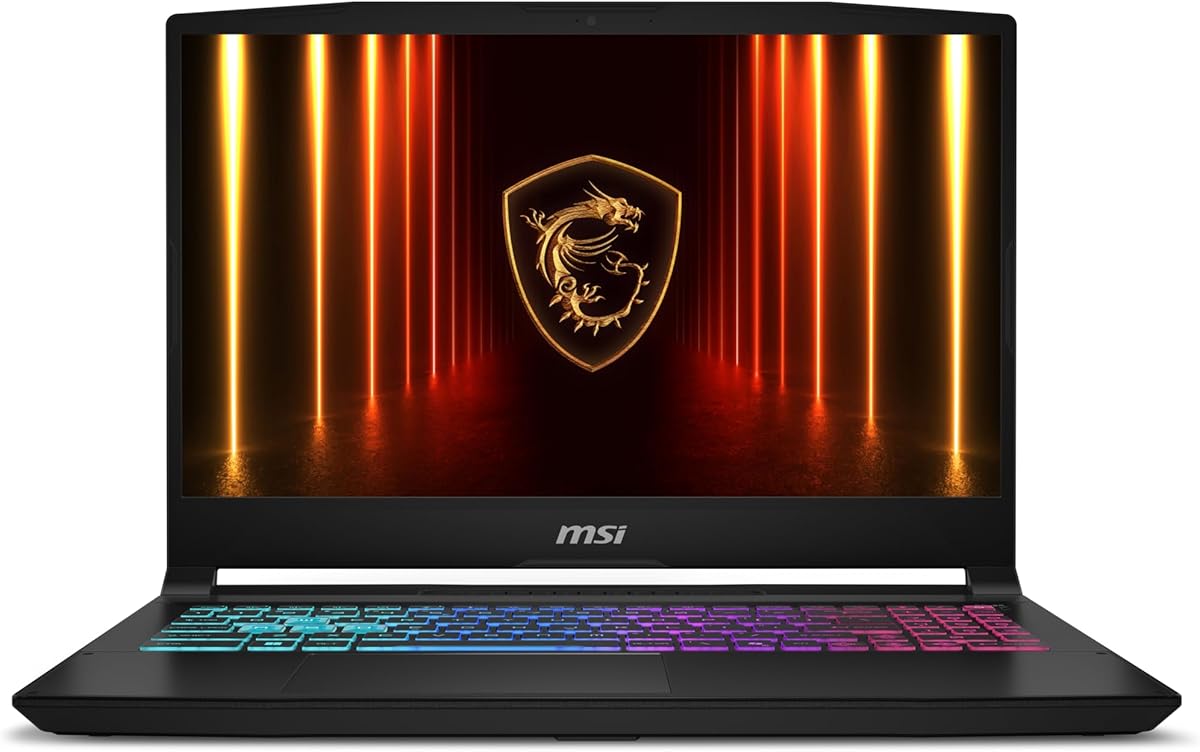
The MSI Katana 15 HX is engineered for enthusiasts who prioritize raw computing power. Rated at 4.0 stars, it brings an Intel Core i9-14900HX processor and NVIDIA GeForce RTX 5070 to the table, delivering exceptional performance for complex simulation scenarios. The QHD+ display with 165Hz refresh rate ensures sharp visuals and smooth motion, ideal for navigating detailed global maps. Users benefit from 32GB of DDR5 memory, which handles heavy multitasking and large scenery mods with ease.
We may earn a commission when you buy through this link, at no additional cost to you.
MSI's Cooler Boost 5 technology uses dual fans and a 5-heat-pipe design to keep the system stable during intensive sessions. This prevents thermal throttling, ensuring consistent frame rates even when simulating long-distance flights with complex weather patterns. The RGB keyboard with highlighted WASD keys adds a gaming-oriented aesthetic, while the port selection includes HDMI up to 8K and USB-C Gen 2 for versatile connectivity options.
While the cooling system is effective, it can generate noticeable noise during high-load scenarios, which may require headphones for full immersion. The build quality is functional and sturdy, though not quite as premium as some competitors. However, the performance per dollar makes it a strong contender for serious users who need reliability.
This laptop is recommended for pilots who want to run demanding aircraft add-ons or multiple simulators simultaneously. Its powerful CPU and GPU combination ensures that you can push settings higher without worrying about performance bottlenecks.
The 24-core hybrid architecture of the Core i9 processor delivers fast load times and smooth multitasking for complex flight planning tools.
The QHD+ panel with 100% DCI-P3 color coverage provides rich, accurate colors, making it easier to distinguish terrain and weather formations.
We may earn a commission when you buy through this link, at no additional cost to you.
REALFLIGHT Evolution is a specialized solution designed for RC aircraft enthusiasts rather than full-scale aviation pilots. With a 4.4 rating, it offers a realistic training environment for hobbyists looking to master radio-controlled flight. The software includes the Interlink DX controller, which simplifies setup and removes the need for a mouse or keyboard. This controller mimics real RC equipment, allowing users to build muscle memory that translates directly to real-world flying.
We may earn a commission when you buy through this link, at no additional cost to you.
The software features over a dozen popular aircraft models, ranging from ultra-micro trainers to EDF jets and helicopters. It includes access to the PhotoField at Triple Tree Aerodrome, adding authenticity to the simulation experience. The platform supports online multiplayer options, enabling users to train with others or participate in virtual events. Regular updates ensure fresh content is available, keeping the library current with new models and fields released quarterly.
While not suitable for training for real pilot licenses, it is the gold standard for RC hobbyists. The interface is designed to be accessible, lowering the barrier to entry for beginners. However, users must be aware that this software focuses on radio control rather than full-scale cockpit management.
We recommend this package for anyone looking to get into RC aviation without risking expensive real hardware. The included controller and software combination provides a complete package that is ready to fly right out of the box.
The Interlink DX controller integrates seamlessly with the software, offering a hands-on learning experience that improves skills faster than keyboard inputs.
Online multiplayer options allow users to connect with other pilots, share flights, and participate in community challenges or training sessions.
We may earn a commission when you buy through this link, at no additional cost to you.
The Logitech G PRO Flight Yoke System is designed for pilots who seek a professional-grade control setup for their home simulator. With a 4.3 rating, it offers realistic feel and robust construction that mirrors actual aircraft control columns. The stainless steel shaft provides smooth, accurate movement, ensuring precise control during critical flight phases. It includes a throttle quadrant with 4.92 feet of cabling, allowing for flexible positioning across desks or cockpits.
We may earn a commission when you buy through this link, at no additional cost to you.
Users can customize the setup with 54 programmable controls, covering most aircraft functions under their fingertips. The 2-position desk clamp ensures the system stays secure even during aggressive inputs. Additional features include a POV hat and 14 button controls, managed by a 3-position mode switch. While it works with major simulators like Microsoft Flight Simulator and X-Plane, it requires an optional software download for full compatibility with certain legacy systems.
The build quality is exceptional, ensuring durability over years of use. However, mounting the yoke requires a sturdy desk, which might not be suitable for all setups. The learning curve for mapping controls can be steep for beginners, but it offers significant depth for experienced users.
We recommend this yoke for serious enthusiasts building a dedicated flight station who value realistic feel and extensive programmability. It bridges the gap between consumer gear and professional training hardware effectively.
The realistic yoke design helps build muscle memory that is essential for transitioning from simulator to real-world flight training.
The 2-position desk clamp provides mounting flexibility for a wide range of desk thicknesses, ensuring a stable control platform.
We may earn a commission when you buy through this link, at no additional cost to you.
The Thrustmaster T-Flight Stick X is an excellent entry-level controller for pilots who want a compact but functional joystick. Rated at 4.2 stars, it offers instant plug-and-play setup, requiring no complex driver installation to start flying. The ergonomic design ensures comfort during long sessions, while the adjustable resistance control allows users to tune the stick tension to their preference. This flexibility makes it suitable for both gentle banking and intense dogfight maneuvers.
We may earn a commission when you buy through this link, at no additional cost to you.
It features a solid weighted base that prevents sliding on the desk, ensuring stability during critical flight moments. The integrated throttle lever and rudder twist provide a complete control system in one device, saving desk space. There are 12 programmable buttons and a mapping button, offering internal memory to store configurations for different aircraft. This makes it easy to switch between profiles without reconfiguring every time.
While it lacks the advanced features of high-end yokes, it is reliable and sturdy enough for most casual and semi-serious simmers. The price point is very accessible, making it a great starter stick for new users. However, the build materials are more plastic-focused compared to premium metal options.
We recommend this joystick for users with limited desk space or those looking for a reliable, affordable control input for various flight and space sims. Its simplicity and reliability make it a solid choice for everyday use.
The integrated throttle and rudder controls eliminate the need for separate pedals or throttle levers, making it ideal for smaller setups.
The internal memory allows you to store specific configurations, so you can instantly switch between different aircraft profiles or game types.
We may earn a commission when you buy through this link, at no additional cost to you.
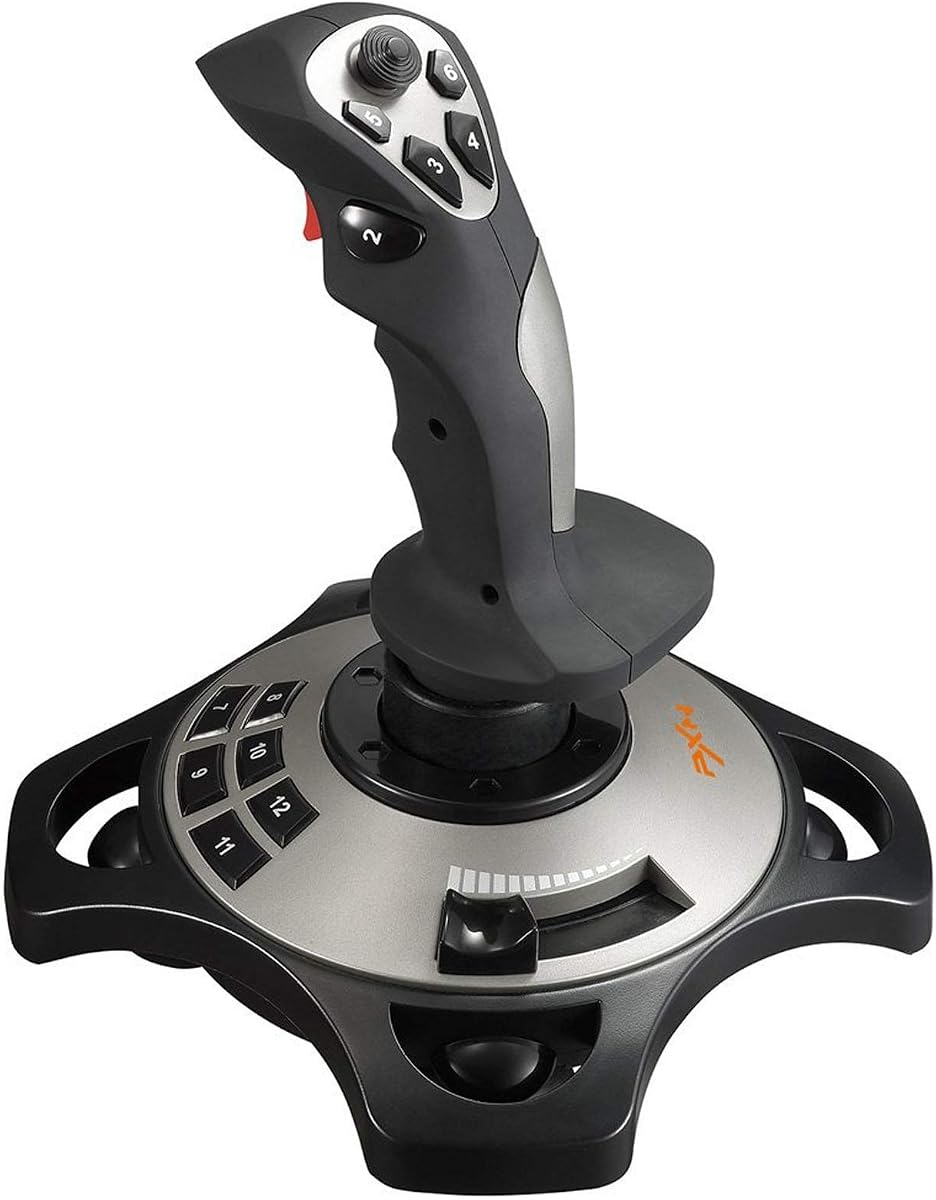
The PXN 2113PRO Joystick offers a budget-friendly option for those wanting to experiment with flight simulation on a tight budget. With a 3.6 rating, it serves well for basic control inputs and casual flying. The device features a vibration function that adds feedback to the flight experience, though this may need to be adjusted to at least 50% to be noticeable. It is compatible with various titles, including Microsoft Flight Simulator and War Thunder.
We may earn a commission when you buy through this link, at no additional cost to you.
It includes 12 programmable buttons and an 8-Way hat switch, allowing for decent customization of aircraft functions. The ergonomic design ensures a comfortable hold during operation, and the suction cups on the base help keep it stable on smooth tables. Setup is generally straightforward with no driver installation required for basic use, though the official website offers drivers for deeper configuration if needed.
Users should note that this joystick is only compatible with Windows PCs and does not support Mac or gaming consoles. The vibration switch must be manually turned on for effects to work. While it lacks the durability of premium options, it provides a functional entry point for new hobbyists.
We recommend this controller for students or beginners who want to test their interest in flight sims without a significant financial commitment. It is a cost-effective way to add hands-on control to a setup.
At an affordable price point, this joystick provides essential flight control features without breaking the bank for new enthusiasts.
The comfortable hand grip and suction cup base ensure stability and reduce fatigue during extended gaming or simulation sessions.
We may earn a commission when you buy through this link, at no additional cost to you.
The Thrustmaster TFRP Precision Flight Sim Rudder Pedals are designed to enhance realism by adding foot control to your setup. With a 4.4 rating, they deliver precise control for coordinated turns and landing approaches. The long range of travel on the rudder axis allows for smooth adjustments, which is critical for handling crosswinds or maintaining runway alignment. The self-centering axis ensures the pedals return to neutral accurately after inputs.
We may earn a commission when you buy through this link, at no additional cost to you.
They feature an Advanced S.M.A.R.T. Rail Sliding System that ensures smooth, friction-free motion over aluminum rails. This engineering detail delivers consistent inputs without stickiness or lag, which is vital for realistic training. The ergonomic design maintains comfort during long flights, while the sturdy construction keeps the pedals stable even during aggressive use. Compatible with PC, PS5, and Xbox, they offer broad platform support.
While they provide excellent performance, they require sufficient floor space, which might be a constraint for smaller apartments. The basic braking controls are functional but not as detailed as high-end systems. However, for the price, the build quality and smooth operation are impressive.
We recommend these pedals for users who want to improve their landing precision and overall control realism without breaking the budget. They are a key upgrade for anyone serious about virtual aviation.
The S.M.A.R.T. rail system ensures consistent, friction-free movement, allowing for accurate rudder inputs during complex maneuvers.
Compatibility with PC, PS5, and Xbox Series X|S means these pedals can adapt to various home setups and gaming platforms.
We may earn a commission when you buy through this link, at no additional cost to you.
Microsoft Flight Simulator 2004: A Century of Flight remains a classic choice for enthusiasts who prefer reliable performance over cutting-edge visuals. With a 4.4 rating, it is known for its robust dynamic weather system based on realistic atmospheric physics. The worldwide scenery features accurate 3D terrain and auto-gen objects that fill in the world with appropriate buildings and vegetation. This level of detail was groundbreaking at its time and still holds up for many training purposes.
We may earn a commission when you buy through this link, at no additional cost to you.
The software includes improved support for 3D graphics hardware acceleration, allowing for multiple windows and monitor setups. It supports multiplayer over LAN or the internet, enabling users to fly with others in virtual formations. The interactive air traffic control adds depth to the experience, simulating real-world communication procedures. Despite its age, it is still used by many for basic training and familiarization with cockpit layouts.
Modern users may need to apply compatibility patches to run it smoothly on Windows 10 or 11, which can be a hurdle for non-technical users. The graphics do not match modern standards, but the core simulation physics are respected. It is a nostalgic yet functional tool for pilots looking for a simple, stable platform.
We recommend this package for those who enjoy classic aviation simulation or need a lightweight option that runs on older hardware. Its historical value and reliable flight model make it a staple in many aviation libraries.
The dynamic weather system models atmospheric physics accurately, allowing for realistic practice of instrument procedures and weather avoidance.
Multiplayer support over LAN or Internet allows users to engage with a community of pilots, enhancing the realism of shared airspace.
We may earn a commission when you buy through this link, at no additional cost to you.
Selecting the right hardware for flight simulation requires balancing performance, display quality, and connectivity. This guide breaks down the essential factors to consider when building or upgrading your virtual cockpit setup.
Flight simulators like Microsoft Flight Simulator 2024 and X-Plane 12 require significant GPU power to render detailed clouds, terrain, and lighting effects smoothly. Look for laptops equipped with dedicated NVIDIA GeForce RTX series cards, as features like DLSS and Ray Tracing are essential for high-fidelity visuals. Integrated graphics may work for older simulators but will struggle with modern global scenery rendering.
Prioritize models with at least an RTX 4060 or higher to ensure consistent frame rates. Higher-end options like the RTX 5070 provide more headroom for texture-heavy add-ons and high-resolution displays.
The CPU handles physics calculations and background processes, while RAM allows for multitasking. Aim for at least an Intel Core i7 or AMD Ryzen 7 with multiple cores to manage complex simulation logic. Flight simulators often run alongside comms software, weather tools, or recording apps, so 16GB of RAM is the baseline.
For serious users, 32GB of DDR5 memory is recommended to prevent stuttering when large airports or global textures are loaded. DDR5 offers faster speeds than previous generations, ensuring data moves quickly between components.
A high-quality display is crucial for spotting distant landmarks and reading instruments. Look for screens with high resolution (QHD or 4K) to reduce pixelation on distant objects. A refresh rate of 120Hz or higher ensures smooth motion during high-speed approaches or turbulent weather scenarios.
Consider laptops with OLED or high-quality IPS panels that offer accurate colors and contrast. This makes it easier to distinguish terrain features and weather formations. Screen size also matters; 16-inch or larger displays provide a better view of the cockpit and world map.
Flight simulators push hardware for extended periods, often over an hour or more. Effective cooling is essential to prevent thermal throttling, which causes frame drops. Look for laptops with advanced cooling systems such as vapor chambers, multiple fans, or liquid metal compounds.
Models with robust cooling allow the CPU and GPU to maintain peak performance during long flights. This is particularly important for laptops used in warm environments or for multi-simulator setups that generate significant heat.
A flight station often involves multiple peripherals like yokes, pedals, and throttles. Ensure the laptop has enough USB ports, including USB-C and USB-A, to support all your devices. Wi-Fi 6E or Wi-Fi 7 is also vital for low-latency online multiplayer or weather updates.
Check for HDMI or DisplayPort outputs if you plan to use external monitors or VR headsets. A versatile port selection ensures you can expand your setup as you add more hardware over time.
Modern flight simulators have massive installation sizes, often exceeding 100GB for base files alone. Additional aircraft and airport packages can quickly fill up storage space. A 1TB SSD is recommended to provide room for the OS, game files, and customization packs.
Fast PCIe Gen 4 SSDs reduce loading times significantly. This is valuable when loading into busy airports or switching between different scenarios. Ensure the laptop allows for storage upgrades in the future to accommodate growing libraries.
Most flight simulators run on Windows 11, so ensure your laptop comes with this OS installed. Some legacy software may still work on older versions, but modern titles require the latest drivers and security updates available on current systems.
If you plan to use specific training tools or hardware plugins, verify their compatibility with the OS version. A clean Windows installation ensures you have the necessary drivers for gaming peripherals and networking features.
Flight simulators are often used for long periods, so the laptop must withstand daily wear. Look for robust chassis materials and reliable keyboards that can handle extensive use. Durability ensures the device remains stable on your desk during active control sessions.
Consider the warranty and support options provided by the manufacturer. A reliable warranty protects your investment against hardware failures, which is important for expensive machines used in professional or serious hobbyist contexts.
Set up your laptop on a stable, flat surface to ensure proper airflow. Avoid placing it on soft fabrics like beds or couches, as these can block vents and cause overheating. Elevate the back of the laptop slightly using a stand to improve ventilation and reduce heat buildup.
Keep the screen and keyboard clean using microfiber cloths. Avoid using harsh chemicals on the display to prevent damage to the coating. Regularly clean the cooling vents with compressed air to remove dust that can restrict airflow and impact performance.
Update your graphics drivers regularly to ensure compatibility with new simulation software. Use the official tools from NVIDIA or AMD to install the latest patches. Proper maintenance extends the lifespan of your hardware and keeps your simulation experience smooth and responsive.
Microsoft Flight Simulator 2024 requires a minimum of an Intel Core i5-4460 or AMD Ryzen 3 1200 processor, 8GB RAM, and a GPU like NVIDIA GTX 970. For a smooth experience with higher settings, an Intel Core i5-8400 or AMD Ryzen 5 1500X with 16GB RAM and a GTX 970 or RX 570 is recommended. Higher-end GPUs are needed for 4K resolution or complex weather effects.
Yes, you can use a laptop during flight, but ensure it is secured properly to avoid movement during turbulence. Using a sturdy mount or lap desk is recommended for stability. Be mindful of battery life and ensure you have enough power to run the software for the duration of your flight.
While integrated graphics can run older or basic simulators, a dedicated GPU is highly recommended for modern titles like MSFS 2024 or X-Plane. Dedicated cards handle the complex rendering required for detailed scenery and weather. Without one, you may experience significant lag or low frame rates.
For smooth performance, 16GB of RAM is the minimum recommended. Serious users often benefit from 32GB to handle large scenery packs and multitasking. Flight simulators are memory-intensive, and having extra RAM prevents stuttering when loading complex airports.
Yes, most modern laptops support multiple monitors via USB-C or HDMI outputs. You can extend your display to show cockpit instruments on one screen and a world map on another. Ensure the laptop's graphics card supports the desired resolution and refresh rate for all connected screens.
Internet access is important for downloading updates, weather data, and using online multiplayer features. While you can fly offline, real-time weather requires a connection. Wi-Fi 6E or 7 ensures low latency and stable connection speeds for these features.
Yes, gaming laptops are excellent for flight simulation due to their powerful GPUs and CPUs. They are designed to handle intensive graphical workloads and offer high refresh rate displays. The only downside may be battery life, so use it plugged in for best performance.
Windows 11 is the preferred operating system for modern flight simulators. It offers the latest driver support and security features. Some tools may require specific versions of Visual C++ or DirectX that are included or optimized for Windows 11.
In conclusion, selecting the right laptop for flight simulators involves balancing power and value. The ASUS ROG Strix G16 series leads the pack for high-performance users, while the NIMO 17.3 offers an accessible entry point for beginners. Each product brings unique strengths to the table.
Prioritize your needs based on the type of flying you plan to do. If you require maximum graphical fidelity, choose a premium GPU. If you focus on training or planning, a mid-range model may suffice. Consider the accessories you plan to pair with the laptop.
Always check current pricing and availability before purchasing as market conditions can change. We hope this guide helps you find the perfect machine for your virtual aviation adventures. Safe flying awaits your choice.