
Professional 2/3-Way Stereo & 4-Way Mono Audio Crossover
4.3Editor score
Versatile crossover modes
Independent gain controls
Balanced XLR I/O
This guide compares ten top audiophile active crossover options for home and pro audio, detailing features, performance, and ideal use cases for precise sound.
Audiophile active crossovers are essential for splitting audio signals into precise frequency bands before amplification. They ensure each speaker driver receives only the frequencies it can reproduce efficiently, reducing distortion and enhancing clarity.
We evaluated ten leading options based on build quality, flexibility, and sound shaping capabilities. Our analysis covers everything from budget-friendly units to high-end analog designs suitable for critical listening environments.
Each pick highlights unique strengths like phase control, balanced I/O, and modular design. Remember that prices fluctuate based on market demand and availability, so always verify current listings before purchasing.
4.3Editor score

5.0Editor score

4.5Editor score
The following comparison table provides a side-by-side overview of specifications and key features across all ten selected audiophile active crossover options to help you make an informed decision.




The Marchand XM66 stands out as the top choice for audiophiles seeking a high-end fully analog solution. It achieves a perfect five-star rating due to its impeccable build and precise control over crossover frequencies using an integrated digital display.
We may earn a commission when you buy through this link, at no additional cost to you.
Its standout feature is the ability to switch between analog processing while displaying exact frequencies digitally, blending classic warmth with modern convenience. This dual approach ensures signal purity while making tuning intuitive without guesswork.
Trade-offs include a limited two-way design and a five-day lead time, but these are acceptable for those prioritizing sound integrity and custom manufacturing. The infrasonic filter further protects drivers by rolling off below 20Hz effectively.
If you demand the best audio integrity and customization, this model is ideal. It fits home studios or critical listening rooms where signal path purity outweighs the need for multi-way complexity.
The digital display provides accurate frequency settings while the analog circuit ensures zero latency or digital artifacts in the audio path.
Custom builds allow tailored configurations ensuring top-tier component quality and long-term reliability for your specific system needs.
We may earn a commission when you buy through this link, at no additional cost to you.
This professional crossover delivers exceptional value for budget-conscious users needing robust stereo and mono configurations. With a solid 4.3-star rating, it offers selectable modes for studios or PA systems, ensuring flexible frequency distribution tailored for various applications.
We may earn a commission when you buy through this link, at no additional cost to you.
Key strengths include independent output gain, phase invert, and low-cut filters per band, allowing precise tuning. Balanced XLR I/O ensures clean signal transmission in long cable runs, essential for live or installed environments.
Trade-offs involve a less analog-focused path compared to high-end units and a slightly complex interface. However, the rugged chassis and LED indicators justify this for professional use where stability and durability are critical.
Ideal for live sound or installations where reliability is key, this model provides great control. Its versatility makes it a strong entry-level option for expanding your audio system capabilities.
Select 2/3-way stereo for monitors or 4-way mono for subwoofers, adapting to any venue or setup requirement quickly and efficiently.
Balanced XLR connectors reject noise during long runs, maintaining signal integrity critical for large-scale audio installations or tours.
We may earn a commission when you buy through this link, at no additional cost to you.
For those needing maximum channel separation, this 6-way active unit offers premium features with a 4.5-star rating. It features a multiplier switch for continuous frequency adjustment and separate inputs for front, rear, and subwoofer channels.
We may earn a commission when you buy through this link, at no additional cost to you.
Strengths include adjustable low-pass gain and subwoofer bass boost, enabling deep customization of bass response. The ground loop isolation circuit eliminates hum, ensuring pristine audio even in electrically noisy environments like cars.
Trade-offs involve complex wiring and a car-audio focus that may require adapters for home use. The compact size with ISO holes supports custom installs, but users should plan carefully for routing and placement.
This model is perfect for high-end car or home setups requiring granular control. If you value flexibility and bass precision, its multi-way capabilities deliver superior separation and performance.
Use the remote knob to adjust subwoofer volume independently, giving precise control over bass presence without leaving your seat.
Specialized isolation prevents hum and interference, critical for maintaining audio clarity in vehicles or areas with unstable power.
We may earn a commission when you buy through this link, at no additional cost to you.
This professional crossover offers solid performance for PA systems with a 4.4-star rating. Its selectable modes handle 2/3-way stereo or 4-way mono, ensuring each amplifier receives precise frequency bands for optimized power delivery.
We may earn a commission when you buy through this link, at no additional cost to you.
Key features include separate gain controls, phase reverses, and a 40Hz low-cut filter. These tools allow deep fine-tuning of frequency response, essential for avoiding distortion and achieving balanced sound across channels.
Trade-offs involve basic analog filters without advanced DSP and no digital display for settings. However, the robust construction and clear LED matrix make it reliable for indoor or outdoor venues needing consistent performance.
Ideal for DJs or venues needing straightforward, reliable control, this unit excels in durability. Its balance of features supports professional setups without unnecessary complexity.
Select modes to match your speaker setup, ensuring amplifiers focus only on relevant bands for cleaner, more efficient operation.
Separate gain and phase switches let you solve polarity and balance issues easily, ensuring every channel works in harmony.
We may earn a commission when you buy through this link, at no additional cost to you.
A simple yet effective solution, this 1-way passive crossover achieves a perfect 5.0-star rating. It focuses on isolating treble for tweeters using premium capacitors, ensuring smooth roll-off and eliminating harshness in high frequencies.
We may earn a commission when you buy through this link, at no additional cost to you.
Key strengths include a heavy-duty inductor and flame-retardant PCB, minimizing signal loss and heat. Its 80W power handling suits many speakers, while screw connectors make installation straightforward without specialized tools.
Trade-offs involve its passive nature requiring careful impedance matching and limited power compared to active units. For dedicated tweeter protection and simplicity, these constraints are acceptable for focused upgrades.
Perfect for simple speaker upgrades in cars or homes, this unit improves clarity affordably. If you need to protect tweeters and enhance vocal detail without a full active system, it is ideal.
Use of premium capacitors and thick traces ensures signal integrity and heat resistance, vital for long-term performance.
Pre-wired leads and screw terminals allow quick setup in car pillars or home speakers without soldering expertise.
We may earn a commission when you buy through this link, at no additional cost to you.
This compact processor optimizes vehicle audio with a 4.2-star rating. Its remote bass control and 180-degree phase shift help align subwoofers with front outputs, enhancing integration and eliminating cancellation issues in tight spaces.
We may earn a commission when you buy through this link, at no additional cost to you.
Strengths include its small size and straightforward level adjustments, enabling easy fine-tuning without a complex setup. The dedicated remote control offers convenient adjustments for bass levels while driving or seated.
Trade-offs involve limited input channels and lower voltage compared to standard pro units. However, for compact car setups needing quick bass alignment, its portability and ease of use are valuable.
Ideal for DIY car audio enthusiasts, this model simplifies subwoofer integration. If space is limited and remote adjustments are a priority, its compact design fits well.
Shift sub output phase by 180 degrees to match front speakers, ensuring bass adds rather than cancels in the listening spot.
Adjust bass levels remotely to suit your preference or music genre, adding flexibility to your sound system instantly.
We may earn a commission when you buy through this link, at no additional cost to you.
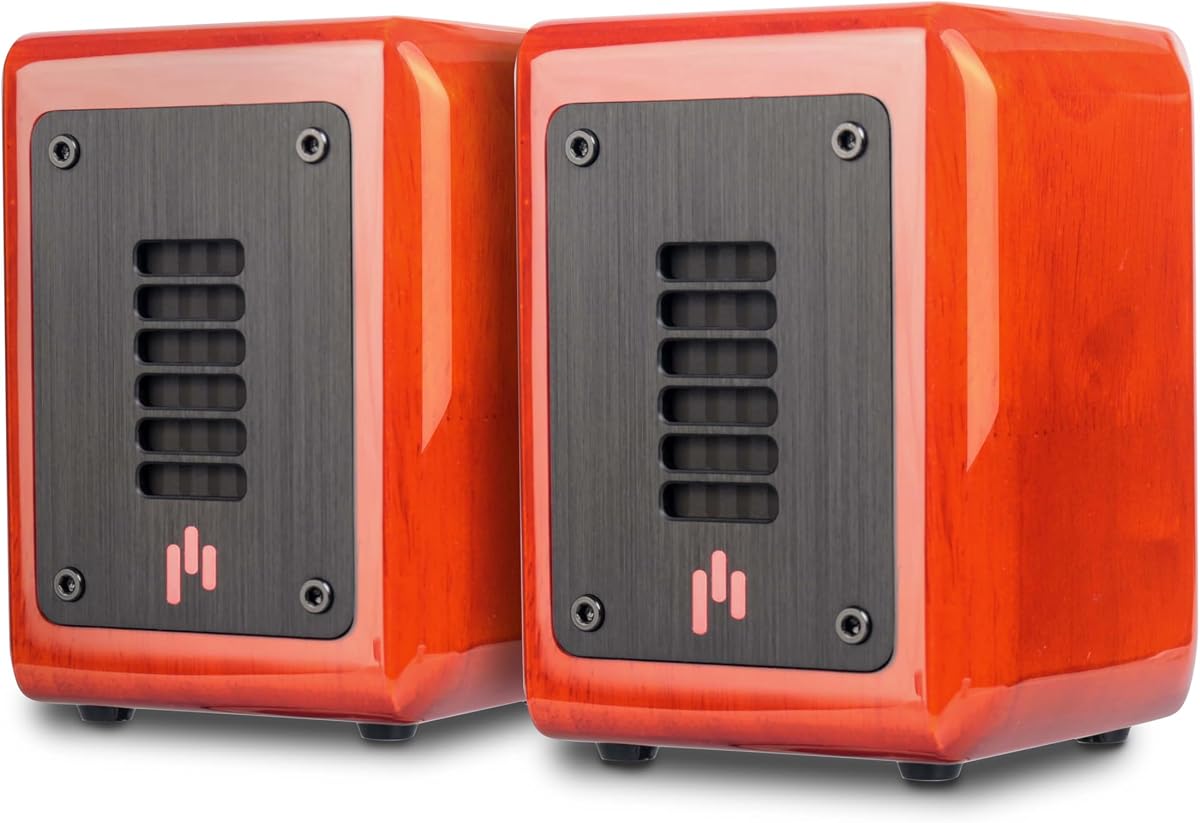
While technically a super tweeter, this unit adds crossover functionality with a 4.0-star rating. It boosts frequencies up to 40kHz, enhancing air and detail without overloading main drivers, ideal for critical home theater setups.
We may earn a commission when you buy through this link, at no additional cost to you.
Its key strength lies in delicate planar magnetic handling that blends seamlessly with various speaker brands. The 5 preset crossover points allow easy tailoring to your system's existing frequency response.
Trade-offs include not being an active processor and limited volume boost. However, for subtle high-frequency enhancement, these constraints are acceptable as it avoids harshness and maintains natural timbre.
Ideal for upgrading existing speakers, this unit refines highs effectively. If you seek extended high-frequency detail without full system changes, it adds a sophisticated layer to your sound.
Extend range to 40kHz for better resolution and clarity in airy passages, blending naturally with your current speakers.
Top-mounted design with 5 presets makes setup simple without rewiring, preserving speaker efficiency and compatibility.
We may earn a commission when you buy through this link, at no additional cost to you.
This 4-way passive crossover handles high power with a 3.6-star rating. It splits signals into dual high and low bands, optimized for home theater setups using robust oxygen-free copper and inductors for minimal loss.
We may earn a commission when you buy through this link, at no additional cost to you.
Strengths include solderless terminals for easy installation and power handling up to 400W, supporting powerful amplifiers. Adjustable crossover points offer some flexibility to match specific speaker needs.
Trade-offs involve fixed topologies and a lower user rating compared to active units. For passive setups needing power and durability, these are acceptable, though active offers more precision.
Ideal for DIY home theater builds needing robust passive splitting, this unit delivers value. If you need power and straightforward installation, its components and terminals simplify the process.
Rated up to 400W, this supports powerful systems without overheating, ensuring stable performance under demanding conditions.
10-pin solderless terminals make wiring fast and secure without tools, ideal for quick and safe connections.
We may earn a commission when you buy through this link, at no additional cost to you.
This 4-channel processor delivers solid car audio control with a 4.5-star rating. Its compact size and RCA inputs fit easily in tight spaces, while bass boost and customizable adjustments enhance sound quality and driver matching.
We may earn a commission when you buy through this link, at no additional cost to you.
Key strengths include dedicated channels for lows and highs, ensuring clean separation. The built-in bass boost adds depth to low frequencies, improving impact without needing external processors or complex setups.
Trade-offs involve RCA-only inputs limiting long cable runs and a compact build requiring careful mounting. For space-constrained car setups needing easy tweaks, these are minor drawbacks.
Ideal for compact car audio systems, this unit offers balanced control. If you need 4-way routing and bass adjustment in a small footprint, it provides practical value.
Small dimensions fit tight dash or console areas, preserving space while enabling 4-way active routing and control.
Enhance low-frequency impact with customizable boost settings, improving depth without overloading your subwoofer amplifier.
We may earn a commission when you buy through this link, at no additional cost to you.
This classic crossover offers 2/3-way stereo or 4-way mono flexibility with a 3.9-star rating. It uses 24dB/oct Linkwitz-Riley filters and limiters per output, ensuring precision and driver protection in professional setups.
We may earn a commission when you buy through this link, at no additional cost to you.
Strengths include zero phase difference when summed and switchable 25Hz subsonic filters. These features provide flat summed responses and low-frequency protection, critical for maintaining clarity and protecting drivers.
Trade-offs involve an older design lacking modern convenience features and a complex setup. However, for professional users needing reliable, flat summed responses and limiters, it remains a proven option.
Ideal for professional audio or live sound, this unit offers essential safety features. If you need precise control and limiters for driver protection, its legacy design delivers consistent performance.
Zero phase difference and flat amplitude ensure seamless transitions between drivers, preserving tonal balance and coherence.
Limiters and subsonic filters protect woofers from damaging low-frequency content, extending hardware life and stability.
We may earn a commission when you buy through this link, at no additional cost to you.
Selecting the right crossover depends on your audio system's complexity, budget, and usage environment. This guide breaks down the essential factors to help you narrow down options.
Active crossovers vary by channel count and topology. For stereo systems, 2-way units split lows and highs. For setups with subs, 3-way or 4-way units add midrange or sub-specific routing. Ensure the topology matches your speaker configuration.
Choose the number of channels based on speaker count. Multi-way units offer more flexibility but require more amps and wiring.
Analog crossovers preserve signal purity with no latency, preferred by audiophiles for warmth. Digital units offer more features like EQ and presets but add complexity. Consider your priority: simplicity and warmth vs advanced tuning.
Analog is better for critical listening; digital is ideal for complex, adjustable environments.
Check the adjustable range. Most units offer 20Hz to 4000Hz. Steeper slopes like 24dB/oct provide sharper separation, reducing driver overlap and distortion. Ensure the slope fits your speaker's capabilities.
Select steep slopes for clean separation; gentle slopes suit less demanding speakers.
Balanced XLR inputs reduce noise for long runs, crucial in live setups. RCA inputs suit home systems. Verify output count matches your amplifier channels. Ground loop isolation helps eliminate hum in electrically noisy environments.
Prioritize balanced I/O for professional environments; RCA suffices for home.
Look for phase inversion switches to align speakers. Built-in limiters protect drivers. Bass boost knobs or subsonic filters enhance low-frequency control. LED indicators help monitor signal status quickly.
Essential features include phase control and driver protection. Bonus features add convenience.
Rugged construction ensures durability in touring or installed setups. ISO mounting holes support rack or custom installs. Consider size and weight for placement in tight spaces or on stages.
Choose robust chassis for live use; compact builds suit home setups.
Entry-level units are affordable but may lack flexibility. High-end analog units cost more but offer unmatched purity. Balance cost against required features and long-term durability.
Assess total system cost. Investing in quality prevents future replacements.
Digital displays and preset options simplify tuning. Remote controls allow adjustments without accessing the unit. Complex setups require technical knowledge. Match interface complexity to your comfort level.
Simple interfaces reduce setup time; detailed controls offer precision.
Connect source devices to inputs via XLR or RCA cables. Ensure all connections are secure to prevent signal loss. Match input impedance to source outputs for best performance.
Set crossover frequencies based on speaker capabilities. Start with manufacturer recommendations then adjust for balance. Use phase switches to minimize cancellation. Monitor outputs to ensure drivers receive intended bands.
Regularly inspect cables and connectors for damage. Avoid exposing units to heat or moisture. For analog units, keep away from strong magnetic fields to prevent interference.
Active crossovers split signals before amplification, requiring dedicated amps for each band. Passive units split after amplification, often built into speakers. Active offers more control and lower distortion.
Yes. You connect the crossover to your amplifier inputs, then amplify each band separately. Each driver needs its own amp channel. Ensure total power matches speaker ratings.
Refer to speaker specifications for limits. Start with midrange like 2000Hz for tweeters, then adjust by ear. Steep slopes like 24dB/oct provide precise separation.
Phase inversion aligns drivers so sound waves combine constructively. Incorrect phase causes cancellation, reducing bass. Use switches to find the point of maximum low-frequency output.
Yes, for professional or long runs. XLR balanced lines reject noise and interference. RCA works for short home runs where noise is less critical.
Limiters protect drivers from over-excursion by capping output levels. They prevent damage during high-volume peaks. Essential for pro systems or subwoofers handling high power.
The Marchand XM66 leads for pure analog quality, while the Professional 2/3-Way Stereo and Audiopipe 6-Way offer budget and premium flexibility respectively. Each model delivers distinct strengths for various audio setups.
Prioritize features matching your needs: analog purity for audiophiles, multi-way routing for complex systems. Balance flexibility with simplicity to ensure long-term satisfaction and performance.
Always verify current prices and availability before purchasing. Crossover options evolve and prices fluctuate, so checking listings ensures you get the best deal on today's market.