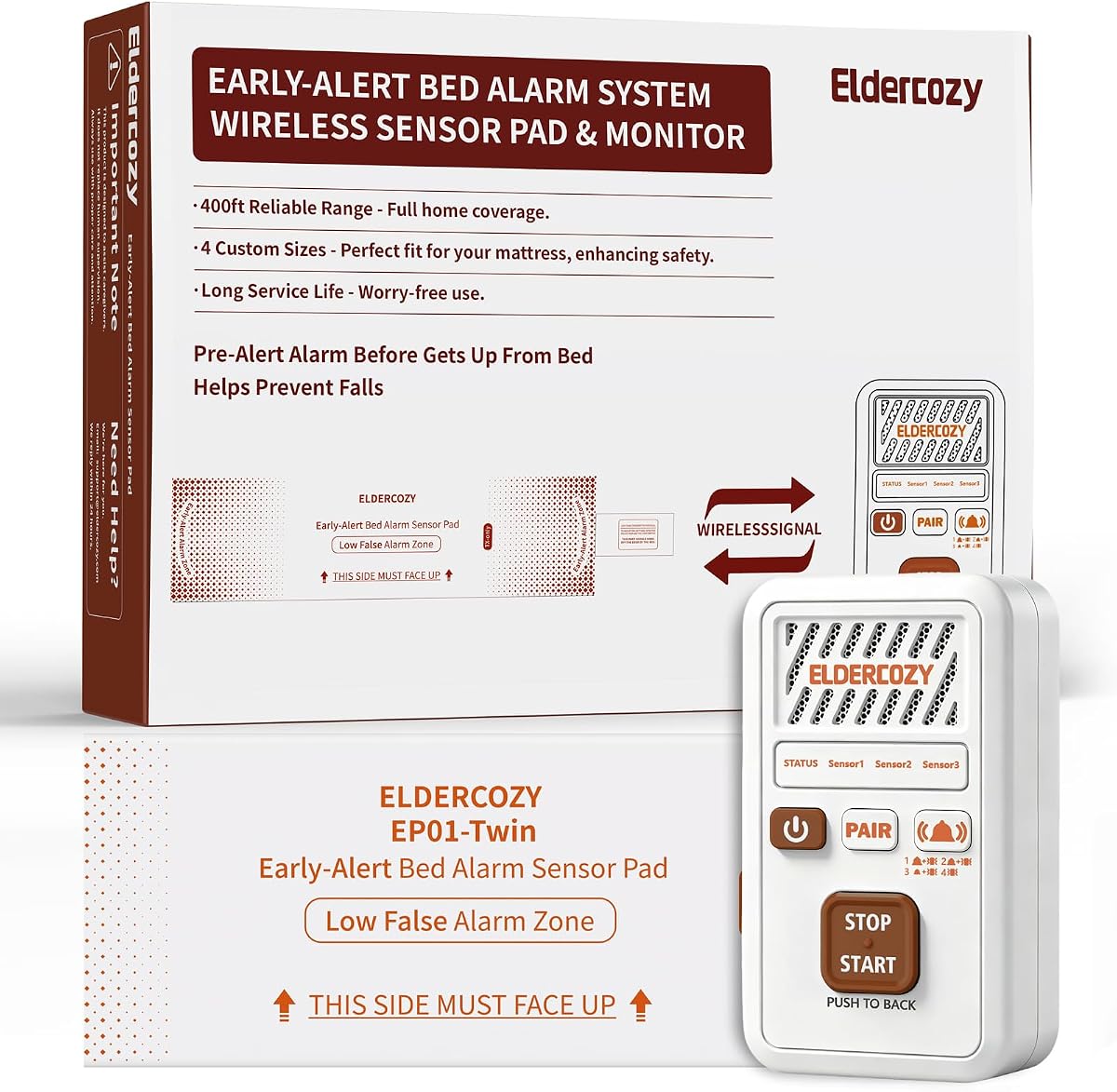
Twin Size Wireless Bed Alarms for Elderly Dementia Patients, Early Alert
4.8Editor score
Quiet TPU comfort mat
Hip level early alert
Wireless 400 ft range
Caregiver mode included
Finding the right bed alarm for elderly and dementia patients is crucial for ensuring safety and peace of mind. These devices help caregivers detect when a loved one is attempting to get out of bed, allowing for timely assistance to prevent falls and wandering incidents.
We have carefully compared ten leading bed alarm systems based on sensor sensitivity, wireless range, comfort, and ease of use. Each product offers unique features tailored to different caregiving needs, from motion sensors to pressure-sensitive pads and floor mats.
Every pick highlights specific strengths and potential limitations to help you choose the best system for your home or facility. Prices and availability can change frequently, so be sure to check the current details on the retailer page before making your final purchase decision.
4.8Editor score
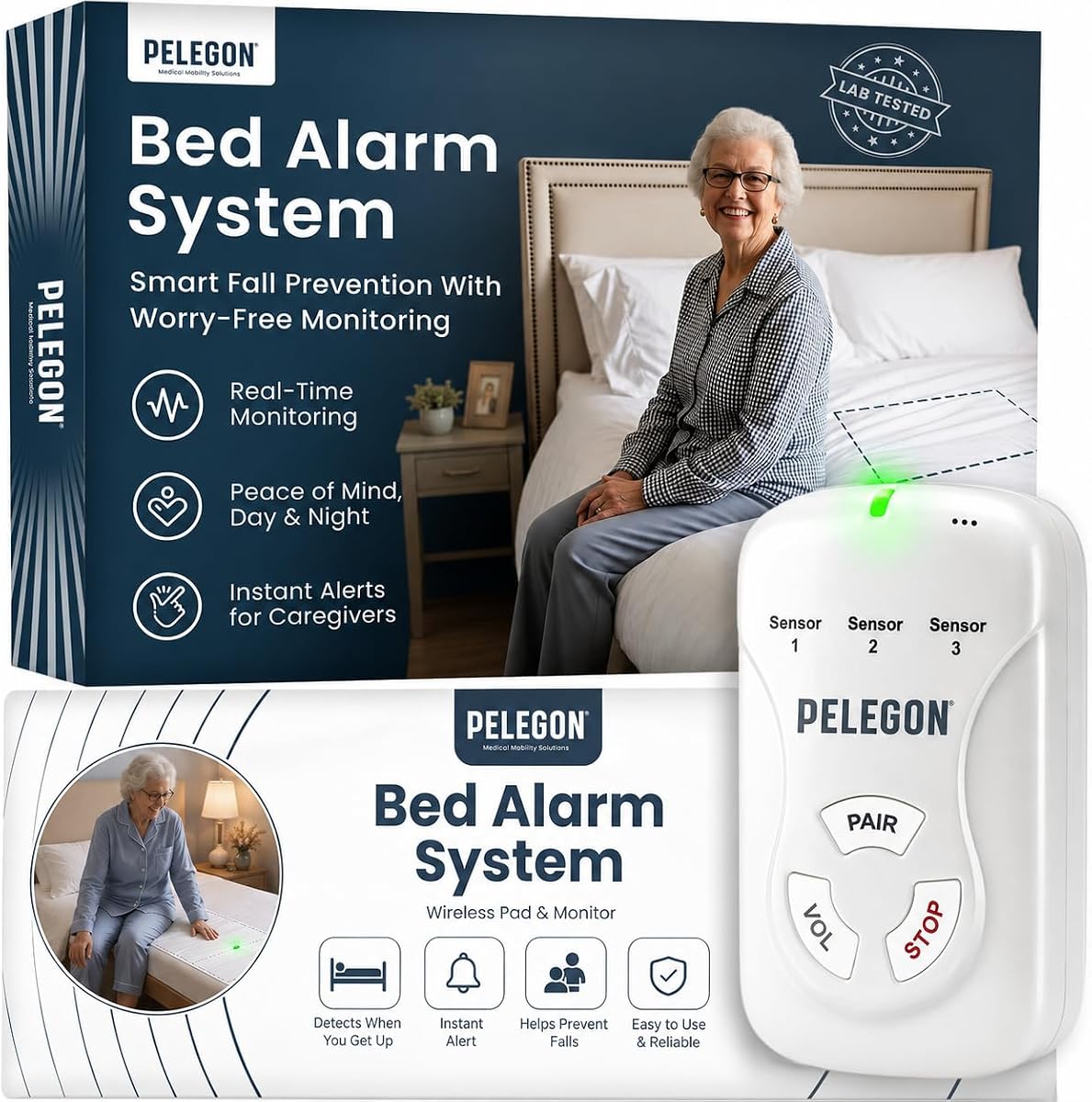
4.7Editor score

4.2Editor score
As an Amazon Associate we earn from qualifying purchases.
The following table provides a side-by-side comparison of all ten bed alarm systems to help you evaluate their key specifications and features at a glance.



The PELEGON Bed Alarms for Elderly Dementia Patients stand out as a reliable solution for caregivers seeking a balance of functionality and ease of use. With a strong rating of 4.7, this system is designed to detect movement as a loved one begins to rise, providing valuable seconds to assist before a fall risk occurs.
We may earn a commission when you buy through this link, at no additional cost to you.
Key strengths include its impressive wireless pager range of up to 328 feet, allowing caregivers to monitor from another room with confidence. The customizable alert modes let you choose between sound alerts, adjustable volume, or vibration-only for quiet monitoring in shared spaces. The tool-free setup ensures you can start monitoring in seconds without complicated installation.
While the system is highly effective, users should be mindful that the sensor pad might shift if not properly secured under the sheet. Additionally, like any battery-operated device, regular checks are needed to ensure the pager remains functional. These trade-offs are minor compared to the peace of mind the system offers.
This bed alarm is ideal for caregivers who need reliable early detection and flexible alert options without complex wiring. Its combination of long-range coverage and simple setup makes it a top choice for home-based dementia care and fall prevention.
The 328-foot range allows caregivers to move freely within the home while staying connected to the patient's status.
Choose from sound, volume adjustments, or vibration to match your specific caregiving environment and noise preferences.
We may earn a commission when you buy through this link, at no additional cost to you.
The Smart Caregiver Bed Alarm for Elderly Adults offers a straightforward and effective way to monitor when a loved one leaves the bed. This system uses a pressure-sensitive pad that instantly alarms when pressure is removed, giving caregivers peace of mind that the patient is safe in bed.
We may earn a commission when you buy through this link, at no additional cost to you.
Strengths include its durable soft vinyl sensor pad with a foam interior, which is sealed for incontinence protection and easy to clean. The in-room alarm can remind the patient to stay seated, while an optional wireless kit can send alerts directly to the caregiver. A reset button allows easy silencing, and status lights show battery and sensor health.
One limitation is the lack of a built-in vibration option, which might be important for noise-sensitive environments. Also, the wireless capability requires an additional purchase. However, for basic fall prevention needs, this system remains a dependable and affordable choice.
This alarm is best suited for caregivers who want a simple, no-frills solution that works reliably day and night. It is particularly useful in settings where in-room alerts are preferred to gently remind patients to seek help.
The vinyl pad is sealed and easy to wipe, making it suitable for environments where hygiene is a priority.
A front-facing reset button allows caregivers to quickly silence the alarm when they have reached the patient.
We may earn a commission when you buy through this link, at no additional cost to you.
The Twin Size Wireless Bed Alarms for Elderly Dementia Patients represent a premium option designed for comfort and early intervention. With a high rating of 4.8, this system uses a soft TPU composite pad that avoids the noisy crunching associated with traditional PVC sensors, ensuring uninterrupted sleep for the patient.
We may earn a commission when you buy through this link, at no additional cost to you.
Its standout feature is the hip-level early alert, which notifies caregivers the moment a loved one sits on the edge of the bed before standing up. The wireless pager reaches up to 400 feet, and the Caregiver Mode allows temporary pauses to assist without triggering false alarms. The system uses replaceable batteries for a long lifespan.
The main downside is the higher cost compared to standard alarms, and the variety of mattress sizes might require careful selection. However, the comfort, extended range, and advanced alert logic justify the investment for those prioritizing patient dignity and sleep quality.
This bed alarm is perfect for caregivers who need a high-performance system that respects the patient's comfort and independence. The early detection capabilities and long wireless range make it ideal for larger homes or complex care environments.
The TPU material ensures no noise when the patient moves, preserving sleep quality better than noisy alternatives.
A 400-foot wireless range allows caregivers to move throughout a large house while maintaining reliable monitoring.
We may earn a commission when you buy through this link, at no additional cost to you.
The Upgraded Version Bed Sensor Alarm takes a different approach by using a motion sensor placed on the floor under the bed or by a door. This method detects when a patient's foot touches the ground, triggering an alarm that does not sound in the patient's room to avoid startling them.
We may earn a commission when you buy through this link, at no additional cost to you.
Its strengths include an impressive open-area range of 918 feet and dual power options using batteries or Micro USB. The system supports 5 volume levels and can monitor both bed exits and room departures. A self-test procedure ensures the sensor is working correctly before use.
Because it relies on foot movement rather than weight shift, it may not alert as early as pressure pads. Proper placement is also critical to avoid missed detections. However, for those who want to avoid bed pads entirely, this is a versatile alternative.
This system is best for caregivers who prefer non-contact monitoring or want to track room exits in addition to bed exits. The high range and dual power options make it a flexible choice for various home layouts.
The sensor can be placed at a door to alert if a patient tries to wander out of a specific area.
Alerts occur only on the caregiver pager, avoiding loud noises in the patient room that could cause anxiety.
We may earn a commission when you buy through this link, at no additional cost to you.
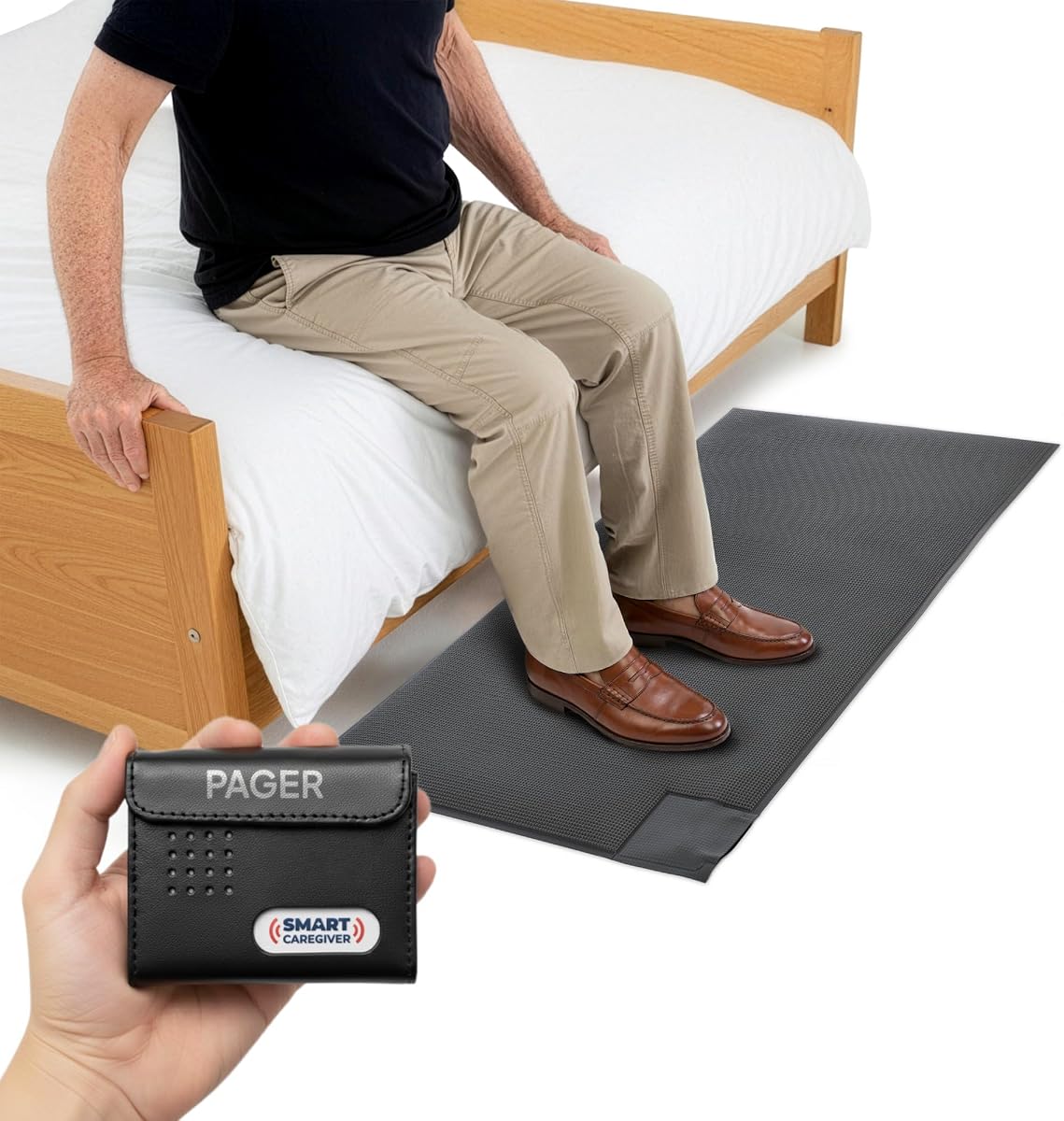
The Smart Caregiver Floor Mat Alarm and Pager System is designed to alert caregivers when a patient steps onto a weight-sensing floor mat. This large 24×48 inch mat can be placed by a bed or exit door to prevent wandering and falls as soon as a foot touches the ground.
We may earn a commission when you buy through this link, at no additional cost to you.
Its main strengths are the large surface area that catches steps reliably, silent pager alerts with vibration options, and the ability to pair with multiple other Smart Caregiver devices for broader home monitoring. The system is made by a trusted American company with decades of experience in safety solutions.
A limitation is that this system does not detect bed exit before the patient stands, so it is better suited for wandering prevention than fall prevention. Placement also requires sufficient floor space. However, it is highly effective for monitoring room exits.
This floor mat is ideal for caregivers who need to prevent wandering or monitor exits in addition to or instead of bed alarms. Its large size and silent alerts make it a robust addition to a comprehensive home safety setup.
By detecting steps, the system alerts when a patient tries to leave the room, helping prevent unsupervised wandering.
The pager can vibrate instead of sounding, avoiding loud alarms in the patient room during overnight hours.
We may earn a commission when you buy through this link, at no additional cost to you.
The Smart Caregiver Bed Exit Alarm with Wireless Pager provides early alert fall prevention through a weight-sensing bed pad. This system alerts caregivers wirelessly when pressure is removed from the pad, indicating that the patient has left the bed.
We may earn a commission when you buy through this link, at no additional cost to you.
Key strengths include an advanced pager that supports up to six different sensors, allowing comprehensive monitoring of beds, chairs, and doorways. The pad is engineered to reduce false alarms with an extra-large contact sensor, and the company offers dedicated US-based customer support with decades of experience.
The sensor pad has a cord connecting to the monitor, which is less discreet than fully wireless pads. Also, optimal detection requires shoulder placement, which might shift with movement. Despite this, the expandable network makes it highly versatile.
This system is best for caregivers who want a scalable monitoring solution that can grow with changing needs. The expandable sensor network and reliable alerts make it a smart choice for multi-area monitoring.
The pager connects to multiple sensors, enabling monitoring of beds, chairs, and doorways from one device.
A US-based team offers expert assistance, ensuring caregivers have help when setting up or troubleshooting.
We may earn a commission when you buy through this link, at no additional cost to you.
The CallToU Bed Alarms for Elderly/Dementia Patients use an infrared motion sensor to detect movement before a patient is fully standing. This system avoids false alarms from bed movements or repositioning, which is a common issue with traditional bed pads.
We may earn a commission when you buy through this link, at no additional cost to you.
Strengths include 360-degree sensor rotation for flexible placement, adjustable volume with 18 ringtones, and vibration-only modes for quiet monitoring. The receiver is portable and charges via USB, and the sensor uses replaceable AAA batteries for long-term use without disposal.
The detection range is limited to 3-10 feet, which requires careful positioning for optimal performance. Also, the sensor may need testing to find the right angle. However, the silent features and portability make it a user-friendly option.
This alarm is ideal for caregivers who need a portable and quiet solution for home or hospital care. Its ability to avoid false alarms from minor movements adds reliability in dynamic environments.
Infrared sensing reduces nuisance alerts from incontinence or restless sleep movements compared to pressure pads.
The receiver charges via USB and is portable, allowing caregivers to use it across different rooms easily.
We may earn a commission when you buy through this link, at no additional cost to you.
The Upgrade Professional Bed Sensor Alarm offers a simple and ready-to-use motion sensor system for monitoring bed exits and room departures. It detects when feet are about to touch the floor or when a door opens, transmitting alerts to a receiver within 918 feet.
We may earn a commission when you buy through this link, at no additional cost to you.
Its strengths include factory pairing that eliminates complex setup, dual power options for receiver and sensor, and four alert modes including light flashing and sound. The product has passed durability tests and includes a cable and batteries for immediate use.
The system does not explicitly mention vibration options, which might limit quiet monitoring. Also, it is limited to motion detection rather than pressure. However, its straightforward design and high range make it a practical choice for many users.
This system is best for caregivers who want a no-fuss setup with reliable range and clear alerts. The factory pairing and power flexibility make it a hassle-free option for home safety.
The sensor and receiver come factory paired, so users can start monitoring by just loading batteries.
Four modes including light and sound options let you adjust alerts to different environments.
We may earn a commission when you buy through this link, at no additional cost to you.
The Smart Caregiver Bed and Chair Exit Alarm System provides comprehensive fall prevention with both bed and chair sensor pads included. This allows caregivers to monitor when a patient attempts to get out of either location, offering versatility in daily care routines.
We may earn a commission when you buy through this link, at no additional cost to you.
Strengths include the convenience of a phone-style clip for switching between pads, durable vinyl pads sealed for incontinence, and adjustable volume with a reset button for silencing. The pads are easy to place under fitted sheets or on chair seats.
A limitation is that the monitor must be moved to switch between bed and chair use unless an additional monitor is purchased. Also, the sensor has a cord connecting to the monitor. Despite this, the dual-purpose design adds significant value.
This system is ideal for caregivers who need to monitor both bed and chair transitions throughout the day. The included pads and user-friendly controls make it a comprehensive solution for fall prevention.
Includes pads for both bed and chair, offering flexible monitoring for different patient positions.
The sealed vinyl material ensures hygiene and easy cleaning, making it suitable for incontinence care.
We may earn a commission when you buy through this link, at no additional cost to you.
The Bed Sensor Pad & Pager offers a simple motion detection solution for elderly and dementia patients. This system uses a large 32×13 inch pad that triggers an alarm when the patient attempts to leave the bed, reducing fall risks.
We may earn a commission when you buy through this link, at no additional cost to you.
Its strengths include latex-free water-resistant construction that is easy to clean, adjustable volume with music options, and a portable pager with 300-foot range. The setup is straightforward with secure clips under fitted sheets.
This product has a lower rating compared to other options on the list, suggesting some users may have experienced limitations. The feature set is more basic than premium models. However, it remains a cost-effective choice for basic fall prevention needs.
This system is best for caregivers looking for an affordable and simple solution without advanced features. The easy-to-clean design and portability make it a practical option for basic home care.
Installation is quick with secure clips, requiring no tools or complicated setup steps for caregivers.
The pad is latex-free and water-resistant, ensuring easy cleaning and long-lasting hygiene.
We may earn a commission when you buy through this link, at no additional cost to you.
Selecting the right bed alarm involves evaluating several key factors to ensure safety, comfort, and ease of use for both patients and caregivers.
Bed alarms typically use pressure pads, motion sensors, or floor mats to detect activity. Pressure pads placed under the sheet offer early detection of bed exits, while motion sensors detect movement on the floor or at doorways. Floor mats are ideal for wandering prevention but may not alert as early as pressure pads.
Choose a sensor type that aligns with your primary goal: early fall prevention or wandering monitoring.
The range of the wireless pager determines how far you can move from the patient's room while staying alerted. Systems offering 300 to 400 feet provide greater flexibility for larger homes, ensuring you receive notifications even when in another part of the house.
Look for a range that covers your entire living space to maintain reliable monitoring.
Alert modes vary from sound-only to customizable volume, vibration, or silent options. For shared rooms or nighttime use, vibration or silent alerts prevent startling the patient. Some systems offer multiple ringtones or adjustable brightness for light alerts.
Select alerts that match the environment and your personal preferences for quiet or audible notifications.
Patient comfort is vital for consistent use. Pressure pads made from soft, skin-friendly materials like TPU avoid the noisy crunching of older PVC pads. Waterproof and incontinence-resistant designs also simplify cleaning and maintenance.
Choose a comfortable, durable material that will not disturb sleep or degrade quickly with daily use.
Power options include replaceable batteries, rechargeable units, or dual-power systems using batteries and USB. Replaceable batteries offer long-term use without charging interruptions, while rechargeable models reduce waste. Check for low-battery indicators to avoid unexpected failures.
Consider a power solution that fits your routine and ensures continuous operation without frequent changes.
A simple, tool-free setup is essential for caregivers who may not have technical expertise. Systems that require only placing a pad under the sheet or on a floor mat with minimal adjustments are easier to deploy and maintain.
Prioritize solutions with straightforward installation to save time and reduce setup frustration.
Some systems allow pairing with multiple sensors for monitoring beds, chairs, and doorways. This expandability creates a comprehensive safety network for patients who wander or need multi-point fall prevention.
If you anticipate needing broader monitoring, choose a system that supports multiple connected sensors.
Reliable customer service can be crucial for troubleshooting or replacing parts. US-based companies often provide accessible support with clear warranty terms. Check for available phone or email support and warranty duration before purchasing.
Choose a brand with strong support to ensure assistance is available if issues arise.
To use a pressure-based bed alarm, place the sensor pad under the patient's fitted sheet at the hips or shoulders depending on sensitivity. Connect the pad to the monitor and plug in or insert batteries. Test the system by sitting or standing to trigger the alarm and ensure the pager receives the signal.
For motion sensors or floor mats, position the device on the floor beside the bed or at an exit. Ensure it is within the detection range and free from obstructions. Check that the pager is paired and charged, and adjust volume settings as needed for your environment.
Regular maintenance includes testing the system weekly, replacing batteries as needed, and cleaning sensor pads with a damp cloth if waterproof. Check for shifts in pad placement and reposition if necessary to maintain reliable detection. Store spare parts or extra sensors in an accessible location for quick replacements.
Most pressure-sensitive bed pads work with standard mattresses, but very firm or adjustable beds may require special placement for optimal detection. Always follow the manufacturer's instructions regarding size and placement to ensure reliable operation. Some systems offer sizes tailored for twin to king mattresses.
Wireless range typically varies from 300 to 400 feet in open areas, though walls and interference can reduce this distance. Check the product specifications for real-world performance ratings. Position the monitor or receiver where signal strength is strongest for reliable alerts.
Many modern systems feature sensitivity adjustments or advanced motion detection to minimize false alarms from tossing or turning. Choosing early alert designs with hip-level detection or infrared motion sensors also helps avoid unnecessary alerts. Proper placement and testing before regular use further reduce false triggers.
Yes, many bed alarms are designed for both home and hospital settings with portable and flexible mounting options. Ensure the device is approved for medical facility use if required. Check with facility policies to confirm compatibility and compliance with safety standards.
Most systems include low-battery indicators to alert you before the pager stops working. Replace batteries promptly to avoid missing alerts. Some models offer USB charging or replaceable battery options to extend continuous operation without interruption during critical times.
Some systems support connecting multiple pagers to one sensor, allowing several caregivers to monitor simultaneously. Check if your chosen system offers multi-pager capability or consider using a home monitoring setup that broadcasts to multiple devices. This ensures consistent monitoring across shifts.
Waterproof pads can be wiped down with a damp cloth and mild soap as needed. Avoid submerging the electronic components unless specified by the manufacturer. Always ensure the pad is completely dry before reinstalling under the sheet to maintain safety and functionality.
Many alarms are designed to notify the caregiver through a pager rather than sounding a loud alarm in the patient's room. This approach helps avoid startling the patient and reduces agitation. Choose systems with silent or vibration options for quiet monitoring.
We have reviewed ten bed alarm systems that offer varying features to suit different caregiving needs. The top picks include models with early alert detection, long wireless range, and flexible alert modes to provide reliable fall prevention and wandering protection.
When selecting a system, prioritize the sensor type that best matches your patient's behavior and your home layout. Comfort, wireless range, and power options are also critical factors that impact daily usability and peace of mind for caregivers.
Please remember that prices and availability are subject to change. Always check current product details on the retailer page before purchasing to ensure you get the most up-to-date specifications and features for your needs.