
Synology DS223j
4.6Editor score
Easy setup for beginners
Reliable Synology software
Affordable entry price
Network Attached Storage devices offer a centralized way to keep your files safe and accessible from any device. Finding a cheap NAS that balances performance with cost can be challenging for many home users and small business owners alike today.
We have compared ten top-rated models based on hardware specifications, software features, and user feedback to find the best value options. Each pick includes detailed insights into storage capacity, network speed, and ease of use for different needs.
Every selection shows key specs, pros, cons, and real-world performance notes to help you decide quickly. Prices and availability change frequently so check the latest deals on Amazon before making your final purchase decision for your home network.
4.6Editor score

4.5Editor score

4.4Editor score
As an Amazon Associate we earn from qualifying purchases.
This side-by-side comparison highlights the key differences between the top ten budget-friendly Network Attached Storage units available in 2026. Review each model's drive bays, processor type, and included features to find the right fit for your storage needs.


The UGREEN NAS DXP2800 is a powerful 2-Bay NAS that shines for advanced home users and content creators who need more than basic storage. With a 4.5 star rating, it delivers strong performance for media streaming and file management tasks.
We may earn a commission when you buy through this link, at no additional cost to you.
Its Intel N100 quad-core processor and 8GB of DDR5 RAM make it capable of handling heavier workloads like virtual machines and Docker containers. The dual M.2 NVMe slots allow for fast caching or dedicated storage for your most frequently accessed files.
While it costs more than entry-level models, the included AI photo management and robust app ecosystem justify the price for power users. The lack of built-in Wi-Fi means you will need a wired connection, which is standard for performance NAS units.
If you need a central hub for 4K videos, RAW photos, and home automation, this is a top choice. It balances speed and features well, making it ideal for those growing beyond simple cloud storage needs.
The built-in AI automatically organizes photos by recognizing people, objects, and scenes, making it easy to find specific memories without manual tagging.
Powered by the N100 CPU, this NAS runs Plex and other media server apps smoothly, supporting hardware transcoding for 4K streaming to any device in your home.
We may earn a commission when you buy through this link, at no additional cost to you.
The Synology DS225+ offers a premium private cloud experience with its powerful Intel processor and reliable DSM operating system. Rated at 4.6 stars, it stands out for its media streaming and backup capabilities.
We may earn a commission when you buy through this link, at no additional cost to you.
Its hardware transcoding support ensures smooth 4K streaming to any device without needing to upgrade your network or player devices. The multi-layered data protection features, including snapshots and RAID, give you peace of mind for your important files.
While the initial cost is higher, the 3-year warranty and professional-grade support justify the investment for users who depend on continuous data access. It is slightly more expensive than competitors but delivers consistent performance over time.
This is the ideal choice for users who want a setup-and-forget solution with top-tier software support. Whether for media libraries or critical business backups, it provides the reliability that Synology is known for.
DiskStation Manager (DSM) provides an intuitive interface and extensive app ecosystem, making it easy to manage files and backups without technical expertise.
Snapshot technology and automated backups protect against ransomware and accidental deletion, ensuring your data remains safe from various types of loss.
We may earn a commission when you buy through this link, at no additional cost to you.
The UGREEN NAS DH2300 is designed for beginners and personal users seeking a simple, private way to store their digital memories. With a 4.5-star rating, it excels in privacy and ease of use.
We may earn a commission when you buy through this link, at no additional cost to you.
Its AI photo tagging and duplicate detection help keep your photo library organized without manual effort. The TÜV SÜD certification ensures your data is handled securely, making it a trusted option for those concerned about cloud privacy.
While it lacks Docker support and Wi-Fi, these trade-offs keep the device affordable and simple for most home users. The one-time purchase model saves significant money over five years compared to recurring cloud storage subscriptions.
This NAS is perfect for anyone wanting to stop deleting photos due to storage limits and start building a secure local library. It balances cost, performance, and security well for personal use cases.
Being the first NAS certified by TÜV SÜD for ETSI standards, it offers verified protection against data leaks and unauthorized access.
Compared to cloud subscriptions costing hundreds of dollars over time, this device offers a one-time purchase that pays for itself in the first few years.
We may earn a commission when you buy through this link, at no additional cost to you.
The Synology DS223j is the go-to budget option for those entering the world of home storage. Rated 4.6 stars, it delivers the trusted Synology software experience at a very accessible price point.
We may earn a commission when you buy through this link, at no additional cost to you.
Its simple setup and intuitive DSM interface make it perfect for users who just need file sharing and photo backup. The secure private cloud features ensure you own your data without monthly subscription fees.
While it lacks the power for heavy multitasking or virtualization, it handles everyday tasks like backups and media streaming with ease. This makes it a practical choice for households that don't need enterprise features.
If you are on a tight budget but want reliable software, this model offers the best value. It proves you do not need to spend a fortune to get a reliable private cloud at home.
The full DSM experience allows for file syncing and sharing across platforms, giving you a familiar interface even at a low price.
Automated backups for PCs and mobile devices work seamlessly out of the box, protecting your data without complex configuration.
We may earn a commission when you buy through this link, at no additional cost to you.
The Yxk Zero1 is a unique, compact NAS that balances affordability with surprisingly modern specs. With a 4.4-star rating, it targets users who want fast transfer speeds in a small package.
We may earn a commission when you buy through this link, at no additional cost to you.
Its 2.5GbE network port offers faster file transfers than standard 1GbE units, making it great for transferring large media files quickly. The lightweight 2kg design makes it easy to move between desks or rooms.
While the software is basic compared to Synology, the inclusion of Docker support allows for some customization if you enjoy tinkering. It is a solid option for those who prioritize hardware speed over software features.
For users needing a portable and fast storage hub without paying a premium, this stands out. It proves that cheap NAS devices can still deliver high-speed performance for specific tasks.
The 2.5GbE connection doubles standard speeds, allowing you to move 4K video files faster without needing expensive networking gear.
Designed to be silent and small, it fits anywhere in a home office without taking up much desk space or drawing attention.
We may earn a commission when you buy through this link, at no additional cost to you.
The Seagate IronWolf 12TB is a top-tier hard drive designed specifically for NAS environments. Rated at 4.5 stars, it offers massive storage capacity for growing media libraries and backup needs.
We may earn a commission when you buy through this link, at no additional cost to you.
Its 7200 RPM speed and 256MB cache ensure fast data access for multiple users, while the IronWolf Health Management system helps prevent failures before they occur. It is built to run 24/7 without overheating or loud noise.
While the price is high, the included Rescue Data Recovery Service adds significant value for protecting critical files. This drive is essential for anyone building a large NAS system who needs reliability.
If you need to store terabytes of data reliably, this drive is an excellent foundation. It pairs well with any modern NAS unit to provide consistent and fast storage performance.
Engineered to reduce vibration and wear, this drive maintains performance even when installed in multi-drive enclosures with other hard drives.
The included three-year service helps restore data if the drive fails, offering peace of mind for valuable personal or business files.
We may earn a commission when you buy through this link, at no additional cost to you.
The BUFFALO LinkStation 210 is a unique option that comes with the hard drive already included, making it ready to plug and play. With a 3.9-star rating, it is simple but less feature-rich than modern units.
We may earn a commission when you buy through this link, at no additional cost to you.
Its closed system architecture improves security by reducing vulnerabilities from third-party apps. The included NAS Navigator software handles backups easily for Windows and macOS users looking for simple file sharing.
While the hardware is durable and made in Japan, the limited storage capacity of 2TB restricts growth. It is best for users who need a basic backup station without the complexity of a full NAS OS.
If you want a hassle-free setup without buying a drive separately, this is a solid choice. It is best for light users who need a secure, single-bay backup solution.
With the drive included, you can start backing up files immediately without worrying about compatibility or assembly.
The closed system approach reduces attack vectors, ensuring your stored data remains safe from external threats or software exploits.
We may earn a commission when you buy through this link, at no additional cost to you.
The Seagate IronWolf 8TB offers a great balance between capacity and performance for home users. Rated at 4.5 stars, it is a reliable choice for those who need more space than smaller drives provide.
We may earn a commission when you buy through this link, at no additional cost to you.
Its 7200 RPM speed ensures fast file transfers, making it suitable for media streaming and backups. The NAS-optimized design ensures it runs smoothly in multi-bay environments without excessive noise or heat.
While it is a premium drive, the value comes from its long-term reliability and data protection features. It is an excellent upgrade path for users looking to expand their existing storage systems.
If you need a solid mid-capacity drive for your cheap NAS, this is a strong contender. It delivers professional-grade performance at a reasonable cost for its size.
With high RPM and cache, this drive handles multiple user requests efficiently, ensuring smooth streaming and backups for home networks.
Designed for 24/7 operation, it reduces the risk of failure, giving you confidence in your storage solution for years to come.
We may earn a commission when you buy through this link, at no additional cost to you.
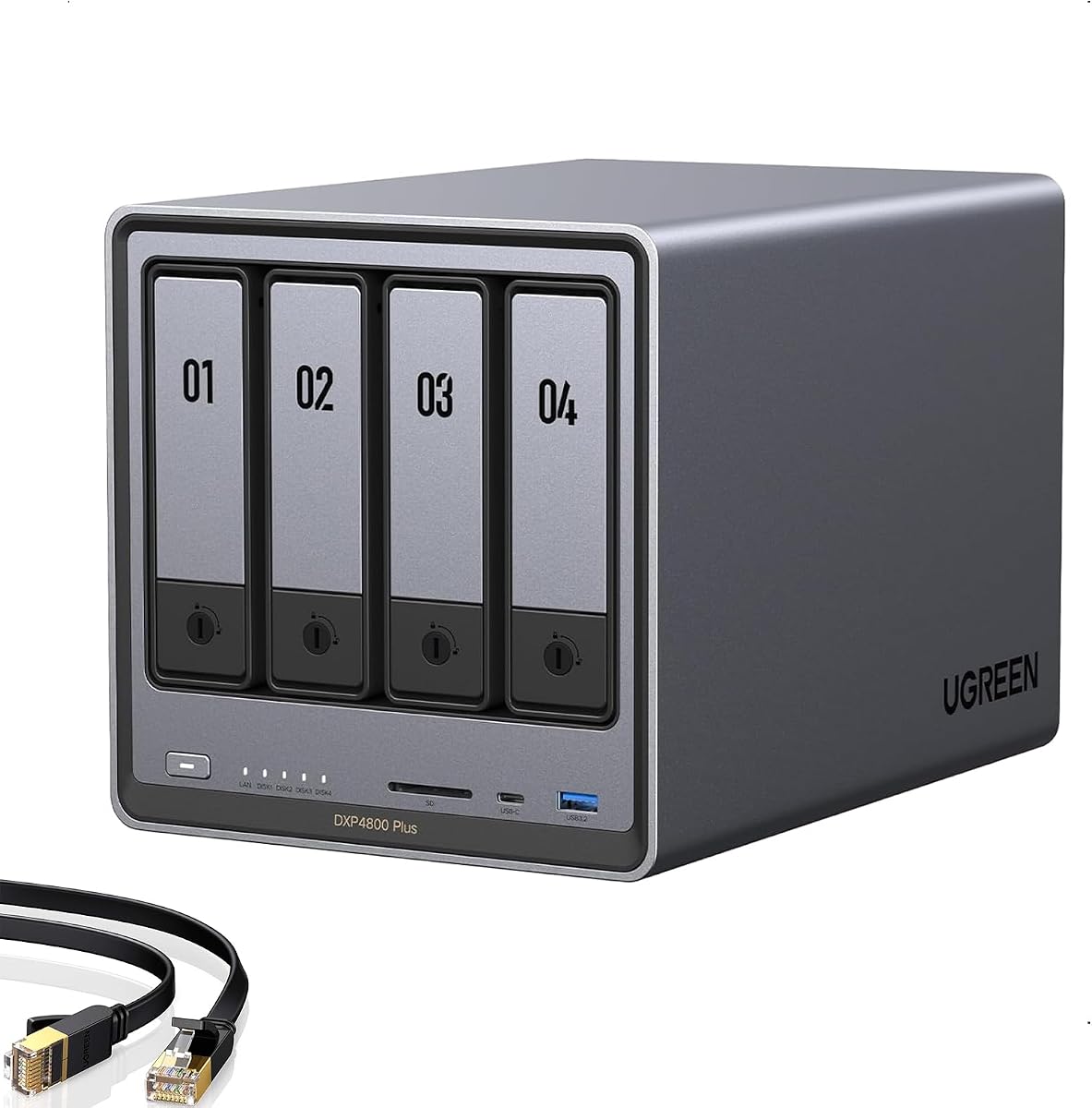
The UGREEN DXP4800 Plus is a powerful 4-Bay NAS designed for families and small teams needing serious storage. With a 4.6-star rating, it excels in speed and flexibility for collaborative projects.
We may earn a commission when you buy through this link, at no additional cost to you.
Its 10GbE network port offers ultra-fast transfers, perfect for video editors or creative teams working with large files. Docker support and virtual machines allow you to run custom apps like home servers or media tools.
While it requires initial setup and separate drive purchases, the massive 144TB capacity ensures you never run out of space. It is a professional-grade unit available at a reasonable price point for enthusiasts.
If you need a central hub for a team or growing family, this model is unmatched in performance. It balances power and ease of use better than many competitors in this price range.
The 10GbE port ensures you can back up or transfer large video files in seconds, making it ideal for professional workflows.
Supporting Docker and VMs, it transforms from simple storage into a full home server for apps and media management.
We may earn a commission when you buy through this link, at no additional cost to you.
The UGREEN DXP4800 Pro is the ultimate powerhouse for developers and IT professionals. Rated 4.4 stars, it brings workstation-level power to home storage with its Intel Core i3 processor and DDR5 RAM.
We may earn a commission when you buy through this link, at no additional cost to you.
Its dual network ports, including 10GbE, allow for simultaneous high-speed transfers and network segmentation. The ability to add up to 96GB of RAM makes it capable of running heavy virtualization tasks without slowing down.
While the price is higher, the performance is unmatched for cheap NAS units. It offers flexibility with dual M.2 SSD slots for caching, ensuring your system stays fast even with large HDD storage pools.
This is the best choice for power users who need a NAS that can act as a personal server. It delivers the speed and expandability required for complex home lab environments.
The Intel Core i3 provides enough power to run multiple virtual machines simultaneously, making it a true home server solution.
Having both 10GbE and 2.5GbE allows you to separate traffic or bond connections for maximum network efficiency and reliability.
We may earn a commission when you buy through this link, at no additional cost to you.
Choosing the right NAS involves balancing hardware specs, software needs, and your budget. This section breaks down the key factors to consider before making a purchase.
Storage capacity is the most critical factor when choosing a NAS. You need to decide between 1-Bay or 2-Bay and 4-Bay units based on how much data you plan to store. Most cheap NAS units are sold diskless, meaning you must buy hard drives separately. This gives you flexibility to choose specific drive sizes and brands like Seagate IronWolf. Always calculate your current data needs and plan for future growth, as expanding later can be costly and require migration.
In summary, determine your storage needs in terabytes and choose a unit with enough bays to support that capacity now and in the future.
The processor and RAM determine how fast your NAS handles files and runs apps. Entry-level models use basic CPUs that are great for backups but struggle with media transcoding or virtual machines. Higher-end cheap NAS units often include Intel N100 or Core i3 processors with 8GB DDR5 RAM. These allow for running Docker containers and multiple users simultaneously. If you plan to stream 4K videos or run home labs, prioritize models with stronger CPUs and RAM.
In summary, opt for units with at least 4GB RAM and a modern multi-core processor if you plan to do more than just store files.
Network speed affects how fast you can access files over your home network. Most budget NAS units come with 1GbE ports, which are sufficient for basic file sharing but bottleneck 4K video streaming. Newer models offer 2.5GbE or even 10GbE ports for much faster transfers. Also check if the NAS supports Wi-Fi or is Ethernet-only, as wireless connections are rarely fast enough for reliable NAS use. Ensure your router supports the speed the NAS offers to avoid bottlenecks.
In summary, look for 2.5GbE or higher network ports if you need fast access to large media files on your network.
The operating system controls how easy it is to set up and manage your NAS. Synology offers the most intuitive and supported software, but costs more. Other brands like UGREEN provide good alternatives with features like AI photo organization. Check for mobile app support, automatic backup tools, and whether you can run third-party apps. A user-friendly interface reduces setup time and makes daily use much easier for non-technical users.
In summary, choose a model with a well-reviewed software platform that supports your device types and preferred features.
Data security is paramount for home storage units. Look for features like two-factor authentication, encrypted file transfers, and RAID support. RAID allows you to keep data safe even if one drive fails. Some models also include snapshot technology to recover from accidental deletions or ransomware. Certification from trusted bodies like TÜV SÜD adds an extra layer of assurance. Ensure the vendor provides regular security updates to protect against new threats.
In summary, prioritize models with encryption, RAID support, and regular security updates to keep your data safe.
A good warranty protects your investment against hardware failures. Most reputable brands offer 2 to 3-year warranties. Check if the vendor provides local customer support or online resources. Some include data recovery services as a bonus. Reliable support can save you time and money if something goes wrong with the unit. Always verify the warranty terms before purchasing to ensure you are covered for the expected lifespan of the hardware.
In summary, select a NAS with a solid warranty and accessible support options to minimize downtime and risk.
NAS units often run 24/7, so power consumption matters for long-term costs. Look for models with efficient CPUs and sleep modes that reduce power draw when idle. Energy-efficient devices also generate less heat, reducing the need for fans and noise. High efficiency is also better for the environment. Compare power specs if you plan to run the unit continuously to ensure it fits your utility budget.
In summary, choose a low-power unit to save on electricity bills and reduce heat output in your home.
Consider how easy it is to upgrade your NAS in the future. Some units allow you to swap drives easily without tools, which is great for maintenance. Check if RAM is expandable or if additional M.2 SSD slots are available for caching. Models that support Docker and virtual machines offer more flexibility for adding new functions later. A unit that is easy to expand saves you from replacing the whole system when your needs grow.
In summary, pick a model that allows easy drive swapping and upgrades to extend its useful life as your needs change.
Start by installing your hard drives into the NAS bays and connecting the unit to your router via Ethernet. Power on the NAS and follow the on-screen or web setup wizard to create your admin account. Ensure you set up regular backups to an external drive or cloud service for additional safety. Keep your NAS in a well-ventilated area to prevent overheating and extend its lifespan. Regularly update the firmware through the system settings to patch security vulnerabilities. Monitor drive health using the built-in tools to catch potential issues before they lead to data loss. Finally, share folders with family members by setting permissions to ensure everyone has access only to what they need.
Yes, a cheap NAS is often better because you pay once instead of monthly fees. You own your data, avoid privacy concerns, and get faster transfer speeds. Over five years, the savings can be thousands of dollars compared to cloud subscriptions. Also, you access your files locally without needing an internet connection.
Most cheap NAS units are sold diskless, meaning you must buy hard drives separately. This allows you to choose the exact capacity and brand you prefer. You can pick from NAS-optimized drives like Seagate IronWolf for reliability. Always check the maximum supported capacity before purchasing drives.
Yes, many cheap NAS units support media streaming apps like Plex. If you want to stream 4K videos, look for a model with hardware transcoding support. The processor speed determines how well it handles this. Higher-end models make streaming smoother than entry-level units.
For photos, a 2TB drive can hold millions of images. Even with high-resolution RAW files, 2TB is plenty for most households. If you store videos as well, consider 4TB or 8TB drives. It is best to overestimate needs to avoid running out of space.
Yes, modern cheap NAS devices include strong security features like encryption and two-factor authentication. Brands like UGREEN and Synology provide regular security updates. However, always keep firmware updated and use strong passwords. This ensures your data remains safe from hackers and unauthorized access.
Many cheap NAS units support Docker or virtual machines to run home apps. These include smart home hubs or personal websites. Entry-level models might lack this feature, so check specs before buying. High-end cheap NAS units offer more app flexibility.
Choosing a cheap NAS offers a smart way to store your data without ongoing cloud subscription fees. The models reviewed range from basic entry units to powerful 4-Bay units for advanced users. Each option provides a reliable way to back up photos and files securely.
When deciding, prioritize your storage capacity needs and the features that matter most to your daily workflow. If you need strong performance, models like the UGREEN DXP4800 Pro offer the best power. For simple backups, Synology DS223j remains the reliable standard.
Always check current prices and availability on Amazon before buying since deals change frequently. This guide helps you find a reliable and affordable storage solution. Start building your private cloud today to keep your memories and files safe.