
Alstar Laser Collimator Alignment for Marca Newtonian Telescopes 1.25 Inch
4.5Editor score
Pre-adjusted laser unit included
Clear step-by-step instructions provided
Compact lightweight portable design
Achieving sharp stellar images requires precise optical alignment. A laser collimator for telescope alignment streamlines this process, ensuring mirrors and lenses work together seamlessly for optimal viewing clarity and detail.
We evaluated ten top-rated models based on build quality, ease of use, and calibration stability. Our analysis covers budget-friendly options to premium electronic units suitable for serious astrophotography setups and visual observers.
Each pick highlights key strengths and ideal user scenarios to simplify your decision. Product availability and pricing fluctuate frequently, so verify current listings and specifications before finalizing your purchase to ensure compatibility.
4.5Editor score

4.5Editor score
4.7Editor score
As an Amazon Associate we earn from qualifying purchases.
This side-by-side comparison highlights the unique features and specifications of each selected laser collimator for telescope alignment. Review the details to find the tool that best matches your telescope type and observing needs.
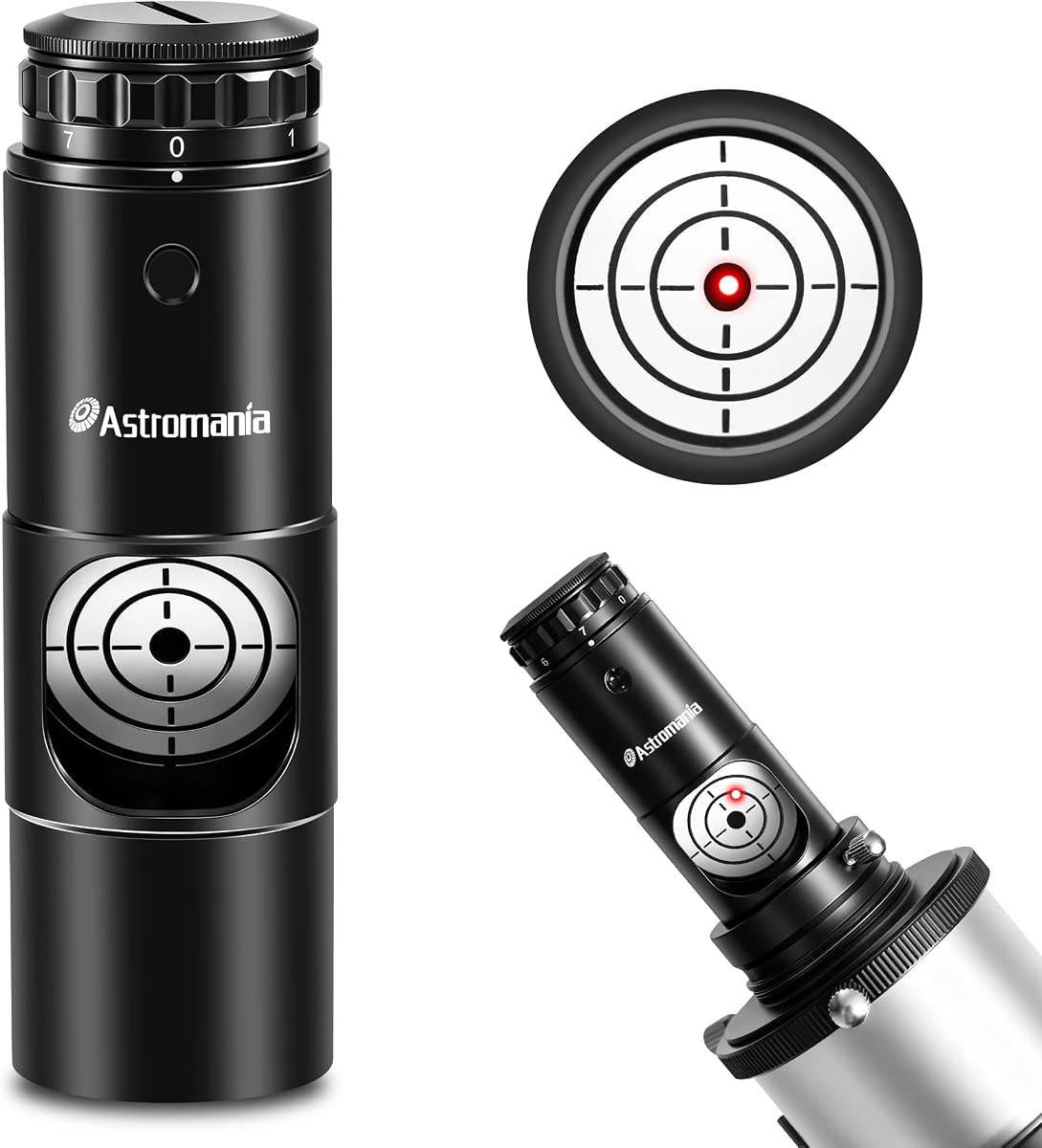


The Astromania Laser Collimator stands out as a top-tier option for aligning Newtonian reflector telescopes. With a strong 4.5 rating, it balances performance and ease of use effectively. Its dual adapter compatibility makes it versatile for various telescope setups.
We may earn a commission when you buy through this link, at no additional cost to you.
This unit features seven adjustable brightness levels to suit different observing environments. The Class 3R laser safety standard ensures safer use compared to stronger models. The anodized aluminum body resists wear while maintaining precise optical alignment.
While generally reliable, users should check calibration periodically if the unit is dropped. The battery included is standard but may need replacement after extended use. These minor trade-offs do not significantly impact its overall utility.
Beginners and experienced astronomers alike will appreciate the detailed instructions provided. It simplifies the collimation process into a single-person task. For those seeking a dependable tool without high cost, this remains a compelling choice.
The included removable 2 inch adapter allows seamless transition between 1.25 and 2 inch focusers without needing separate tools.
Seven brightness levels let you match the laser intensity to ambient light conditions while maintaining eye safety with Class 3R compliance.
We may earn a commission when you buy through this link, at no additional cost to you.
This model focuses on 1.25 inch focusers specifically, simplifying design while retaining core functionality. It holds a 4.5 rating for consistent performance in routine telescope alignment tasks. The compact size makes it easy to carry to dark sky sites.
We may earn a commission when you buy through this link, at no additional cost to you.
Like its larger counterpart, it offers seven brightness levels and safe laser output. The metal construction ensures durability against daily handling. Instructions are provided in multiple languages to assist new users starting their collimation journey.
The lack of a 2 inch adapter limits versatility for upgraded telescopes. Battery life is typical but not exceptional for heavy users. These constraints are minor if you primarily use standard 1.25 inch accessories.
It suits observers seeking an affordable, no-frills tool for quick alignment. The reliability and ease of use make it a strong contender in the budget category. Verify focuser size before purchasing to ensure fit.
The body fits naturally in your palm, allowing smooth movement within focusers without strain during adjustment sessions.
Precise instructions in German and English help newcomers adjust their Newtonian telescope correctly without external resources.
We may earn a commission when you buy through this link, at no additional cost to you.
SVBONY delivers a straightforward collimator with strong customer satisfaction. It allows easy collimation for both 1.25 and 2 inch reflector telescopes. The triple cemented lens enhances the stability of the red dot projection during use.
We may earn a commission when you buy through this link, at no additional cost to you.
Build quality is solid with metal materials ensuring longevity. Brightness is adjustable for day or night alignment. The included 2 inch adapter adds value for users planning to upgrade their focusers later on.
Battery replacement may be needed if not included long-term. Lens stability is generally good but might need occasional checks after transport. These issues are typical for this price range.
Ideal for those seeking simplicity and value. Instructions make the process accessible even for new astronomers. It is a great gift option for birthdays or holidays to enhance observing experiences.
Improved stability of the red dot ensures consistent alignment results across different lighting conditions and telescope movements.
The included 2 inch adapter means you do not need an additional calibrator when upgrading from 1.25 to 2 inch focusers.
We may earn a commission when you buy through this link, at no additional cost to you.
This bundle combines a collimator with an eyepiece for immediate observing setup. It features a 62 degree wide field for immersive viewing. The collimator itself remains user adjustable with familiar brightness levels for flexibility.
We may earn a commission when you buy through this link, at no additional cost to you.
Safety is emphasized with Class I laser standards. The standard 1.25 inch fitting ensures compatibility with most scopes. Instructions guide users through collimation quickly without confusion during setup.
The bundle adds cost compared to standalone collimators. Rating shows some variation due to new product status. These factors may affect value perception depending on individual needs.
Best for observers wanting a complete package. It simplifies acquiring accessories needed for lunar or deep sky targets. Verify exact compatibility before purchasing to avoid mismatch issues.
A 62 degree apparent field of view provides an unforgettable lost in space feeling during lunar or deep sky observation sessions.
Output power less than 1mW complies with Class I laser safety standards, making it safer for eyes during alignment.
We may earn a commission when you buy through this link, at no additional cost to you.
Alstar provides a straightforward alignment tool designed for reflector telescopes. It comes fully adjusted out of the box to save setup time. The side window allows reflection checks without moving to the primary mirror.
We may earn a commission when you buy through this link, at no additional cost to you.
Instructions are clear and precise for newcomers. The unit runs on a CR2032 cell which is not included. Users must supply the battery before first use to avoid delays.
Sealed adjustment openings protect internal parts from dust initially. The 7 brightness levels cover bright or dark environments easily. Battery absence is a small inconvenience for most buyers.
It suits those needing a compact reliable unit. The sturdy build ensures durability for transport. Verify battery compatibility before starting your first collimation session.
A disk oriented at 45 degrees with a central hole lets you see if the laser reflects back on itself for precise checks.
The laser comes fully adjusted so you can start aligning immediately without manual calibration setup.
We may earn a commission when you buy through this link, at no additional cost to you.
This model extends compatibility to 2 inch focusers with an included adapter. It is rated as a professional telescope alignment tool for its sturdy build. The CR2032 battery comes included for immediate use.
We may earn a commission when you buy through this link, at no additional cost to you.
Three adjustment openings allow fine-tuning when needed. The triple cemented lens ensures stable beam projection. Instructions and package details help beginners start confidently.
Initial sealed adjustments maintain calibration integrity during shipping. Users must unscrew caps to access internal tuning if required. The slightly lower rating may stem from minor fit issues.
Best for those needing 2 inch support without extra parts. The included battery adds convenience. Check focuser fit to ensure proper alignment during setup.
The removable 2 inch adapter ensures compatibility with both standard 1.25 inch focusers and upgraded 2 inch systems.
A CR2032 battery is included, allowing you to begin collimating immediately without waiting for a separate purchase.
We may earn a commission when you buy through this link, at no additional cost to you.
This bundle targets astrophotographers wanting phone compatibility for capturing images. It supports multiple phone brands with an adjustable clamping mechanism. The collimator itself aligns reflectors with standard 2 inch adapter included.
We may earn a commission when you buy through this link, at no additional cost to you.
Eyepiece support ranges from 25 to 48mm which covers most setups. EVA pads protect phones during clamping. It is tested on many models to ensure stability during use.
It does not fit 2 inch eyepieces directly. Focus remains on mobile imaging rather than heavy-duty professional photography. These limits suit casual astrophotographers well.
Ideal for sharing celestial views quickly via smartphone. The locking mechanism is reliable for transport. Ensure phone size fits before purchasing to avoid compatibility issues.
Works with iPhone, Samsung, Sony and other brands, allowing easy integration with popular mobile devices for capturing images.
A steel bolt provides an adjustable locking mechanism with EVA pads, securing your phone firmly without risking damage during use.
We may earn a commission when you buy through this link, at no additional cost to you.
This bundle offers both laser and Cheshire methods for aligning Newtonian and SCT telescopes. The Cheshire eyepiece works during the day without batteries. The laser component matches other SVBONY collimators with 7 brightness levels.
We may earn a commission when you buy through this link, at no additional cost to you.
Precision machining ensures durability and clear crosshairs. The laser aligns accurately and quickly at night. Combining tools gives flexibility for different conditions and user preferences.
Cheshire alignment requires daytime lighting which limits use. Overall cost is higher for dual tool value. These trade-offs suit those wanting comprehensive setup options.
Recommended for serious observers needing both tools. It ensures accuracy even if battery fails. Verify scope compatibility before purchasing to maximize utility.
Using both laser and Cheshire tools ensures reliable alignment in day or night without depending on a single method.
Machined aluminum with fine crosshairs and bright mirror provides clear sighting and durable performance over time.
We may earn a commission when you buy through this link, at no additional cost to you.
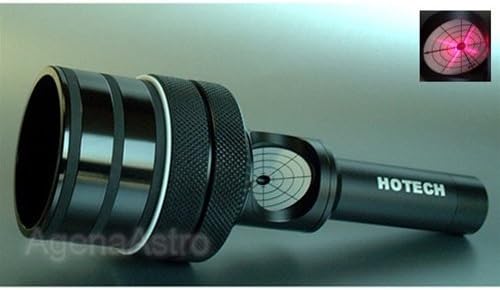
HoTech introduces self-centering adapter tech to solve common alignment slop. It is rated highest at 4.7 for precision and reliability. The unit comes with a CR123 battery and detailed manuals.
We may earn a commission when you buy through this link, at no additional cost to you.
Patent technology ensures repeatable installation across all brands. Focuser gaps no longer destroy precision on the optical axis. This feature separates it from other market collimators significantly.
Higher cost reflects advanced engineering. Specific battery type may be harder to source. These factors suit serious users prioritizing accuracy over budget.
Ideal for imaging enthusiasts needing precise results. It delivers professional-grade performance. Consider your priorities before investing in this premium option.
The patented mechanism allows precise and repeatable installation in all brands of 1.25 and 2 inch focusers to eliminate slop issues.
Designed to separate from all other collimators with a focus on eliminating off-axis installs that destroy precision along the optical axis.
We may earn a commission when you buy through this link, at no additional cost to you.
This electronic tool offers software-guided calibration circles for precise alignment. It is compatible with both Newtonian and Schmidt Cassegrain scopes. The unit arrives factory centered for optimal baseline accuracy immediately.
We may earn a commission when you buy through this link, at no additional cost to you.
Calibration circles ensure quick adjustments with pixel-level precision. The all-in-one design supports mobile astronomy setups on the go. It is engineered for specific telescope types to maximize utility.
New product status means fewer verified reviews. Smartphone dependency may not suit all observers. These points suit those embracing modern tech in astronomy.
Best for tech-savvy users seeking precision. It elevates the astronomy experience significantly. Check current status before purchasing as it is newer to market.
Built-in calibration circles enable quick and precise optical axis adjustments with factory-centered pixel-level accuracy for high standards.
Complete collimation functionality is available on-the-go, perfect for field adjustments and mobile astronomy setups without extra tools.
We may earn a commission when you buy through this link, at no additional cost to you.
Selecting the right laser collimator for telescope alignment involves weighing several factors. This section breaks down the most important criteria to guide your purchase decision.
Ensure the collimator matches your telescope's focuser diameter. Some models include removable 2 inch adapters, while others are 1.25 inch only. Check your scope's specifications before buying to avoid compatibility issues.
Match the collimator diameter to your focuser size.
Class 3R or lower is standard for safe operation. Higher classes increase risk during use. Verify the safety class to protect your eyes while aligning optics during sessions.
Prioritize models meeting safety standards for eye protection.
Adjustable brightness levels help in varying lighting. Self-centering adapters reduce alignment errors. Stable calibration over time ensures consistent results without frequent adjustments.
Look for models with calibration features to maintain precision.
Metal bodies resist wear better than plastic. Anodized aluminum protects against weather. A sturdy design ensures longevity when transporting to dark sky sites.
Choose metal construction for reliable long-term use.
Accessories like adapters, batteries, or eyepieces add value. Ensure the package meets your needs. Missing accessories increase total cost later.
Verify included accessories to avoid extra purchases.
Clear instructions simplify setup for newcomers. Multiple language options help international buyers. Step-by-step guides reduce confusion during first use.
Prioritize clear instructions for easier collimation.
Balance cost against features and build. Budget units suit casual users, while premium models suit imaging enthusiasts. Avoid overpaying for unnecessary features.
Align price with your specific needs and budget.
Known brands offer better support and warranty. Check reviews for reliability. Established brands often provide consistent quality and customer service.
Opt for reputable brands to ensure support.
Insert the collimator into the focuser and secure it. Turn on the laser and check the beam projection. Align secondary mirror screws so the dot centers on the primary mirror.
Use the side window if available to verify reflection. Adjust primary mirror screws until the beam returns to the source. This ensures optical axis alignment.
Store the collimator in a padded case. Keep lenses clean and dry. Avoid dropping the unit to maintain calibration integrity.
It is a device using a laser beam to align the optical axis of a reflector telescope. It helps ensure the primary and secondary mirrors are positioned correctly for optimal image quality.
Yes, it significantly improves image clarity for visual observers. Proper alignment ensures light focuses correctly on the eyepiece.
Check it every time you set up your telescope. Transport often misaligns optics, so regular checks ensure consistent performance.
Most models work in daylight but may need higher brightness. Some use a Cheshire eyepiece instead for daytime alignment.
No, a laser collimator allows single-person operation. This simplifies setup and makes it easier for solo observers.
Common types include CR2032 or CR123. Check the specific model's requirements before purchasing replacement batteries.
No, it is designed for reflectors like Newtonians. Refractors require different alignment methods like star testing.
Most are Class 3R with power under 5mW. This is safe for eyes but avoid direct staring into the beam.
We reviewed ten models ranging from budget picks to premium electronic tools. The Astromania, Alstar, and HoTech options stood out for reliability and precision.
Prioritize compatibility with your focuser and build quality. Safety classes and included accessories add value to your choice.
Prices change frequently, so verify current listings. Choosing the right tool ensures clear views and smoother setup for your next session.