
Construction Adhesive – Fast Curing Anchoring Adhesive + Extra Nozzle
4.2Editor score
Extra nozzle included
Fast curing resin
Suitable for hollow materials
This guide compares the best chemical anchors for concrete to help you find the right high-strength epoxy or adhesive for your specific construction project
Chemical anchors provide a reliable way to secure heavy loads into concrete structures without relying on mechanical expansion. These systems use high-strength resins to bond rods or bars directly to the base material ensuring maximum stability and safety for your project.
We evaluated ten top-rated products based on curing time, strength ratings, and ease of application. Our comparison includes two-part epoxies and polyester resins suitable for both dry and wet conditions to help you choose the right fit for your work.
Each pick highlights key features and performance traits to guide your decision. Prices and availability change often so check the current listings before purchasing. This list covers everything from small DIY repairs to large-scale industrial anchoring tasks you might encounter.
4.2Editor score
4.5Editor score

5.0Editor score
The table below provides a side-by-side overview of the ten selected products including their key specifications and intended uses. This helps you quickly identify which formula matches your project requirements without reading every detailed review.





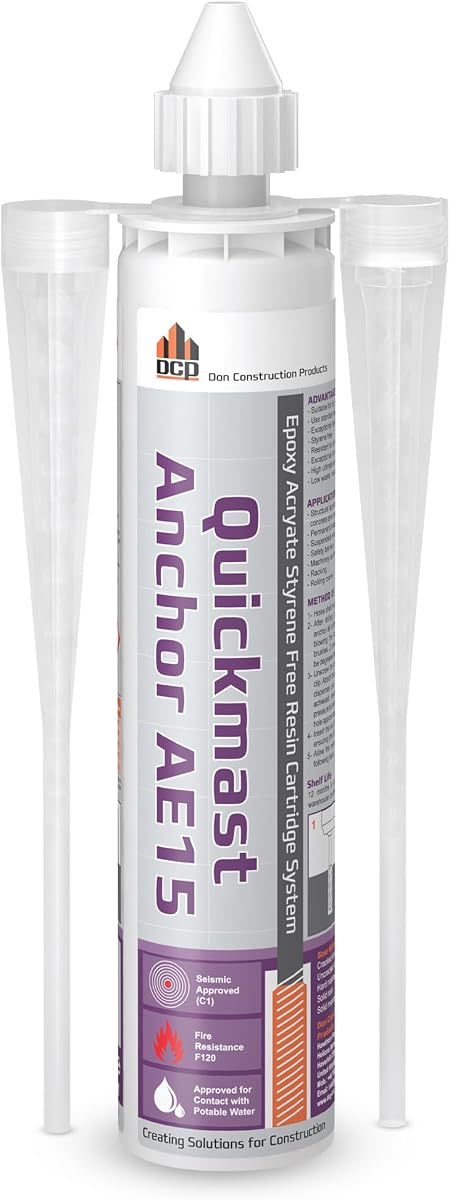
The DCP Quickmast AE15 stands out as a top performer for demanding concrete tasks. It earns a 4.5 rating from users who value its reliability in diverse conditions. This two-part acrylate epoxy is designed to deliver high-strength fastening solutions across a wide range of load requirements.
We may earn a commission when you buy through this link, at no additional cost to you.
Its standout quality lies in its versatility. You can use it in dry wet and even flooded concrete holes without losing bond strength. The system includes a 10.1 fl oz cartridge that fits standard caulking guns making application straightforward. It cures rapidly allowing you to achieve full load-bearing capacity in as little as 40 minutes depending on temperature.
One trade-off is the mixing time which requires attention during application. You must ensure the epoxy is fully mixed before injecting it into the hole to avoid weak spots. Despite this the benefits of its rapid cure and wet hole compatibility make it a worthy investment for critical anchoring projects.
Who should buy it? Contractors and DIYers working on heavy machinery handrails or structural rods will appreciate its performance. If you need a reliable anchor that handles moisture without failing this epoxy should be your first choice for concrete fastening tasks.
This epoxy maintains strong bonds even when the hole is wet or flooded ensuring safety in rainy or damp environments.
With a full load-bearing capacity in under three hours you can finish jobs faster compared to traditional mechanical anchors.
We may earn a commission when you buy through this link, at no additional cost to you.
For those seeking cost-effective solutions this construction adhesive offers excellent value. It carries a 4.2 rating from users who prioritize speed and simplicity. The fast-curing polyester resin sets quickly allowing you to move on to the next task without long waits.
We may earn a commission when you buy through this link, at no additional cost to you.
Its key strength is the extra nozzle included which reduces downtime between jobs. You can drill clean inject the resin and insert the fastener without expansion pressure. This makes it ideal for light to medium-duty anchors where heavy machinery loads are not expected.
The trade-off is that hollow materials require a mesh sleeve for stability. If you use it in cavity walls without a sleeve the bond may fail under stress. However for solid bricks or concrete slabs the performance is solid and consistent for general fastening needs.
Who should buy it? Homeowners or small contractors tackling basic wall mounts or fixtures will find this budget-friendly. It is a practical choice when you need reliability without breaking the bank on specialized industrial epoxies.
The fast-curing formula means you spend less time waiting for the adhesive to set and more time finishing your work.
Including an extra nozzle helps you save on replacement costs and keeps your project running smoothly without interruptions.
We may earn a commission when you buy through this link, at no additional cost to you.
This premium option delivers top-tier performance for professional-grade applications. It holds a perfect 5.0 rating from users who demand consistency and strength. The inclusion of an epoxy gun makes it a complete system ready to use right out of the box.
We may earn a commission when you buy through this link, at no additional cost to you.
Its standout feature is the 25:1 thrust ratio which ensures a smooth and easy dispense every time. This precision reduces mess and helps you place the epoxy accurately in the hole. You get enough working time to install rebar or threaded rods without rushing.
The trade-off is the higher price point compared to smaller cartridges. However if you have multiple anchors to install the cost per application becomes reasonable. It is ideal for those who want a reliable tool and resin in one package for efficiency.
Who should buy it? Professionals or large scale DIYers who need high-strength bonding for railway tracks or ground anchors should choose this. It balances cost and quality effectively for extensive projects requiring multiple installations.
Having the epoxy gun included saves you the hassle of buying a separate applicator and ensures compatibility with the resin.
The high thrust ratio allows for controlled dispensing reducing waste and improving the accuracy of your anchoring work.
We may earn a commission when you buy through this link, at no additional cost to you.
The Akona Fast-Setting Anchoring Epoxy is a strong choice for marine and construction applications. It holds a 4.4 rating for its ability to bond well in moisture-prone environments. This high-strength epoxy resists chemicals and solvents making it durable over time.
We may earn a commission when you buy through this link, at no additional cost to you.
Its key strength is the gray color which blends in with existing concrete surfaces. This makes it ideal for visible repairs where aesthetics matter. The no mess application tube ensures you can apply it cleanly without spills on your hands or tools.
The trade-off is the small 8.45 ounce size which may not be enough for large projects. You might need to buy multiple tubes for bigger jobs. Despite this its fast set time and chemical resistance make it a reliable option for smaller anchor points.
Who should buy it? Boat owners or homeowners fixing driveways and stairs will find this formula useful. It works well for dowels and rebar where blending in and resisting moisture are top priorities for a seamless repair.
The gray color matches most concrete and masonry surfaces ensuring your repairs look neat and professional after curing.
Resisting chemicals and solvents allows this epoxy to hold up in harsh environments where other adhesives might fail.
We may earn a commission when you buy through this link, at no additional cost to you.
This product focuses on the hardware side of chemical anchoring providing the rod needed for the system. It has a 5.0 rating for its high precision and consistent quality. The Fischer FIS A Anchor Rod is designed to work seamlessly with compatible epoxy resins.
We may earn a commission when you buy through this link, at no additional cost to you.
Its standout quality is the M8 x 130 mm size which fits standard drilled holes for medium loads. Buying a pack of ten ensures you have enough for multiple projects without repeated orders. The steel construction provides the necessary tensile strength for secure fastening.
The trade-off is that it does not include the resin so you must buy it separately. This adds steps to your purchasing process. However the rod's reliability makes it a staple for contractors who need dependable anchors for consistent structural performance.
Who should buy it? Professionals who already have a preferred resin brand can use this rod for their needs. It is a practical choice when you need high-quality steel rods for threaded bar installations in concrete or masonry.
Fischer ensures high precision in manufacturing which guarantees the rod fits perfectly into drilled holes for a secure bond.
The M8 x 130 mm dimensions make it suitable for a wide variety of applications from brackets to fixtures.
We may earn a commission when you buy through this link, at no additional cost to you.
The SIKA AnchorFix-2 is known for its safety and performance in professional settings. It holds a 4.1 rating for its ability to create strong secure holds in uncracked concrete. This epoxy is certified safe for use in drinking water systems which adds to its reliability.
We may earn a commission when you buy through this link, at no additional cost to you.
Its key strength is the narrow tip design which allows for accurate placement of the epoxy. You can cut the tip and screw on the static mixer easily to begin application. It cures quickly so your bar stays in position without slipping during the curing process.
The trade-off is the requirement to clean the hole thoroughly to ensure maximum bond. If dust remains the epoxy may not adhere correctly to the base material. This extra step ensures safety but demands attention to detail during preparation.
Who should buy it? Professionals working on projects involving water systems or public structures should choose this. Its safety certification makes it ideal for applications where environmental health is a priority alongside strength.
Being free of styrene and solvents ensures safer handling and use in environments where air quality matters.
The high performance epoxy formula ensures that threaded bars remain firmly fixed in place over time.
We may earn a commission when you buy through this link, at no additional cost to you.
This heavy-duty option is designed for the toughest fastenings like railway tracks and ground anchors. It boasts a 4.7 rating for its durability and bonding strength. The epoxy system provides high strength bonds to both concrete and steel surfaces for lasting performance.
We may earn a commission when you buy through this link, at no additional cost to you.
Its standout feature is the sufficient working time of 3 to 20 minutes which allows you to install rebar without rushing. The 20.2 fl oz cartridge fits standard dual cartridge application guns making it accessible for many users. You do not need special equipment to use it effectively.
The trade-off is the larger package size which can be bulky to transport. However for jobs where you need to fill larger holes or perform crack repair this volume is beneficial. It is robust and ready for extensive anchoring needs.
Who should buy it? Contractors handling heavy loads or repair tasks will find this formula ideal. It ensures you can complete tough projects with a reliable adhesive that supports high-strength fastenings across various conditions.
With up to 20 minutes to install you can take your time to position the rod correctly before the epoxy sets.
Using standard application tools means you can integrate this epoxy into your existing toolkit without extra costs.
We may earn a commission when you buy through this link, at no additional cost to you.
This anchor is built for situations where vibration is a major concern. It is rated for theater and stadium seating or machinery conveyor belts. The internal threaded design allows for secure fastening in materials that might otherwise shift or loosen under load.
We may earn a commission when you buy through this link, at no additional cost to you.
Its key strength is its vibration resistance which makes it better for close edge installations than mechanical anchors. The zinc plated steel provides durability against corrosion. This ensures longevity in environments where movement is constant and safety is critical.
The trade-off is the specific thread size which may require you to match your hardware carefully. If your project uses different sizes you might need to adapt your design. However the performance in vibratory conditions justifies the attention to detail.
Who should buy it? Professionals installing equipment in industrial settings or public venues should choose this. It offers a secure solution for heavy-duty fasteners where traditional anchors might fail due to constant motion.
Designed for vibratory conditions like conveyor belts or machinery it ensures your installation remains stable over time.
Zinc plating provides protection against rust ensuring the anchor stays functional even in harsh environments.
We may earn a commission when you buy through this link, at no additional cost to you.
These filters are essential accessories for anchoring systems in complex environments. They support higher load levels by using two mortar cartridges effectively. This saves attachment points making the system more economical to set up for large projects.
We may earn a commission when you buy through this link, at no additional cost to you.
Its key strength is its suitability for filled holes and overhead mounting. You can use it even when temperatures drop to -30 degrees Celsius ensuring versatility in various climates. It complements epoxy systems to enhance structural integrity where needed.
The trade-off is that it is an accessory and not a standalone anchor. You must pair it with compatible resins to function. Despite this it plays a vital role in ensuring the resin stays in place during installation.
Who should buy it? Engineers and contractors working on overhead installations should consider these filters. They provide added security and efficiency for projects requiring precise resin control and high load capabilities.
Using two cartridges increases load capacity while reducing the number of attachment points required for stability.
Processing at low temperatures ensures you can work in winter conditions without compromising the anchor's integrity.
We may earn a commission when you buy through this link, at no additional cost to you.
The PC-Concrete PRO is a code-compliant system for both cracked and uncracked concrete. It holds a 4.3 rating for its adherence to strict building standards. This makes it a reliable choice for projects where regulatory compliance is non-negotiable.
We may earn a commission when you buy through this link, at no additional cost to you.
Its standout quality is that it works in smooth bore holes without roughing the interior walls. You can use it in dry water saturated or water-filled conditions with threaded rod or rebar. This flexibility saves time during the prep phase.
The trade-off is the smaller 254 ml volume which requires careful planning for larger anchors. However for high-strength professional applications the compliance and ease of use make it a strong contender in the market.
Who should buy it? Contractors on commercial jobs must adhere to IBC or Florida Building Codes should choose this. It ensures your work meets engineering requirements while providing a durable bond in various environmental conditions.
Meeting building and engineering codes ensures your anchoring work is safe and approved for use in regulated areas.
Avoiding roughing interior walls saves time and labor while still achieving a strong bond with the base material.
We may earn a commission when you buy through this link, at no additional cost to you.
Selecting the right chemical anchor requires understanding your project requirements and conditions. We break down the factors you should consider to ensure safety and effectiveness.
Determine if your concrete is cracked uncracked or damp. Some epoxies work in dry holes while others are rated for wet or water-filled environments. Knowing this helps you pick a product that will not fail due to moisture.
Always check if the product is suitable for wet conditions before you start drilling.
Chemical anchors have different working times ranging from minutes to hours. You need enough time to insert your rod before the adhesive sets. Curing time affects when you can apply load to the anchor so plan your schedule accordingly.
Choose a formula with a working time that matches your installation pace.
Light fixtures require less strength than heavy machinery. Ensure the anchor you choose supports the specific load you intend to hang. Manufacturers provide load ratings for different concrete grades and hole depths so verify these values.
Always select an anchor rated for heavier loads than you expect to handle for safety.
Most chemical anchors come in cartridges that fit standard caulking guns. Some kits include an epoxy gun while others require you to buy one separately. Check if your tools match the cartridge size to avoid frustration during installation.
Verify you have the right applicator gun for the product you choose.
For public or water systems look for anchors certified safe for drinking water or compliant with building codes. Safety certifications ensure the adhesive does not release harmful chemicals and meets structural engineering standards.
Choose certified products for projects involving public safety or strict regulations.
Chemical anchors vary in price based on volume and brand. A smaller tube may be cheaper but cost more per ounce than a bulk option. Consider how many anchors you need and calculate the total cost before purchasing.
Compare the volume and total project cost to find the best value.
Some anchors are designed for internal threading or specific rod types. Others work with mesh sleeves for hollow blocks. Understanding the application method helps you avoid mistakes that could weaken the bond.
Read the instructions to ensure you apply the anchor correctly for the intended base material.
Established brands often provide reliable performance and consistent quality. Check user reviews to see how the product performs in real-world conditions. A strong reputation can indicate better quality control and support.
Trust brands with positive feedback from other professionals and contractors.
Start by drilling a hole to the specified diameter and depth for your anchor. Use a hammer drill to ensure a clean straight hole. Blow out any dust with compressed air or a brush to guarantee the resin bonds effectively to the base material.
Prepare the cartridge by cutting the tip and attaching the static mixer nozzle. Insert the cartridge into the gun and dispense a small amount until the color is uniform. Inject the resin into the hole starting from the bottom to avoid air pockets.
Insert the threaded rod or rebar into the hole and twist slightly to ensure full contact. Wipe away any excess resin before it cures. Allow the anchor to cure for the recommended time before applying any load to ensure maximum strength.
Yes many epoxy anchors are rated for wet or water-filled holes. However you must check the product specifications to ensure it is designed for damp conditions. Some formulas may fail in wet environments if they require dry surfaces.
Curing times vary by product and temperature. Typically full load-bearing capacity is reached within 4 to 24 hours. Always check the packaging for exact times and allow extra time in colder weather.
You need a hammer drill a brush or blower for cleaning and a caulking gun for the cartridge. Some kits include an epoxy gun so check the contents. Standard dual cartridge guns work with most 600ml cartridges.
Some high-quality epoxies like SIKA AnchorFix-2 are certified safe for drinking water. These do not contain styrene or harmful solvents. Always verify the safety certification before using in plumbing or public water infrastructure.
Yes but you often need a mesh sleeve to hold the resin in place. Without a sleeve the epoxy may flow through the holes and fail to anchor. Insert the sleeve before injecting resin for hollow materials.
Epoxies generally offer higher strength and chemical resistance while polyesters cure faster. Epoxies are better for heavy-duty applications whereas polyesters are suitable for light to medium loads. Choose based on your load requirements.
Store cartridges in a cool dry place away from direct sunlight. Keep them sealed until ready to use to prevent premature curing. Once opened use the resin promptly as it cannot be stored after mixing.
Most products do not require roughening but PC-Concrete PRO allows use in smooth holes. Check your specific product guidelines to see if roughing is needed for optimal bonding. Generally a clean hole is sufficient for most anchors.
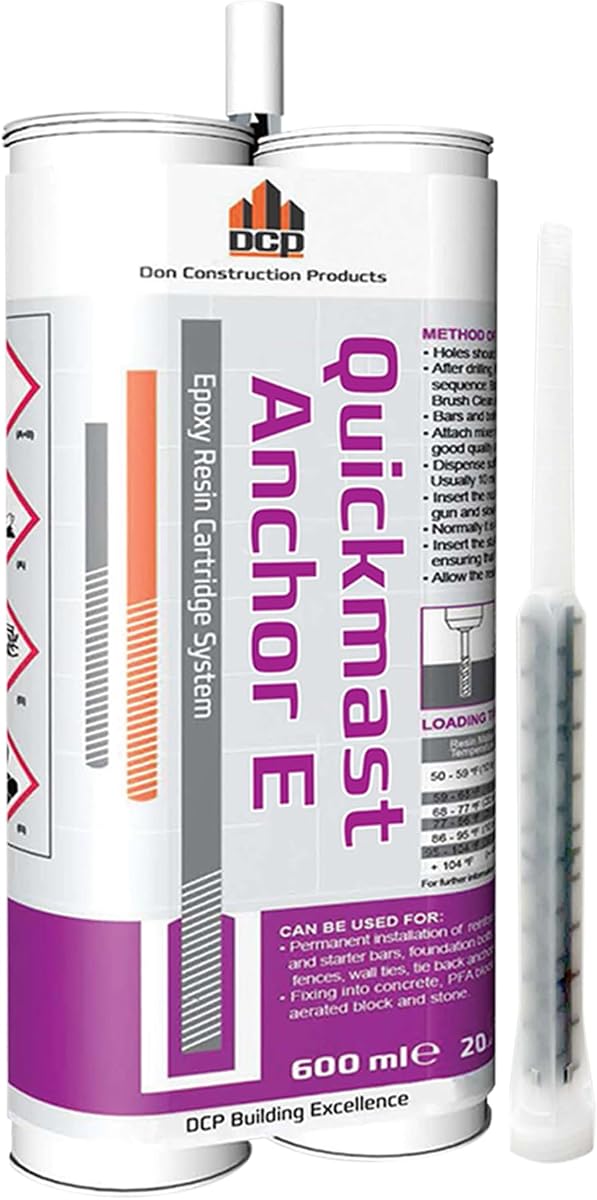
We covered ten high-quality anchors from budget options like Construction Adhesive to premium choices like Quickmast E. Each product brings unique strengths for tasks ranging from light repairs to heavy machinery.
Prioritize the anchor that matches your load and environmental needs. Safety should be your primary focus so always check specifications before installation to ensure a secure bond.
Prices and availability change so verify current listings before purchasing. This guide helps you make an informed decision for your next project with confidence and clarity.